
The paddock of the premier class of motorcycle racing has once again been gripped by a war of words, drawing sharp lines between elite manufacturers as the championship battle reaches its most critical juncture. Following the conclusion of the high-stakes Malaysian Grand Prix at the Sepang International Circuit, Aprilia Racing CEO Massimo Rivola has fired back at Ducati Lenovo standout Marc Marquez. The response from the Italian factory executive comes in the wake of public mockery from Marquez concerning Aprilia’s internal team orders, with Rivola boldly highlighting that the multi-time world champion is hardly in a position to criticize, given his own reliance on familial ties within the sport to secure competitive advantages.
This latest war of words underscores the intense strategic pressures that define the modern era of MotoGP. As constructors and teams fight tooth and nail for championship supremacy, the fine line between individual racing glory and corporate team strategy has become increasingly blurred. The controversy in Sepang highlights a broader narrative of tactical maneuvering, where team orders, satellite team dynamics, and even personal relationships are scrutinized under the relentless microscope of international motorsport journalism.
The Genesis of the Sepang Contretemps
The friction at the Malaysian Grand Prix originated from the complex operational dynamics between Aprilia Racing and its satellite outfit, the Trackhouse MotoGP Team. During the race weekend, Ai Ogura, representing the Trackhouse setup, inadvertently created significant hurdles for Aprilia factory rider Marco Bezzecchi as the latter battled for vital championship points.
Team orders within MotoGP have always been a contentious subject. While manufacturing giants invest heavily in securing world titles, independent or satellite teams often operate with a degree of autonomy that can occasionally conflict with the broader corporate goals of the factory. At Sepang, Aprilia’s attempts to implement a cohesive team strategy experienced friction on the track. Although Ogura eventually relented and yielded his position to Bezzecchi during the high-intensity Sprint Race, the interim resistance sparked immediate commentary from rival competitors observing the unfolding drama from the front of the grid.
Marc Marquez, never one to shy away from psychological warfare in the media pen, seized upon the visible friction within the Aprilia ranks. Finishing second in the Saturday Sprint Race, the Spanish champion offered a pointed critique of the tactical deployment observed on the tarmac.
Marc Marquez Weighs In on Track Tactics
Speaking to the press after the Saturday afternoon Sprint Race at the Sepang International Circuit, Marc Marquez did not hold back his assessment of the racing incidents that had played out in front of him. His remarks directly targeted the operational harmony of the Aprilia camp and the positioning of Ai Ogura.
"Ogura tried to stay in front of me during the Sprint Race because he knew he was going to lose a podium," Marquez remarked, dissecting the closing stages of the race. "He was not going to be able to keep staying between me and Bezzecchi, or he was going to make Bezzecchi lose a lot of points."
For Marquez, the situation illustrated the inherent flaws of attempting to manipulate race outcomes through corporate directives. The 2025 MotoGP World Champion framed the tactical shuffling as an act of desperation rather than a streamlined sporting strategy. By pointing out that riders were forced into uncomfortable compromises to protect their manufacturer’s title ambitions, Marquez sought to expose vulnerabilities within the Aprilia structure. His comments quickly rippled through the paddock, setting the stage for a sharp rebuttal from the executive leadership of the Noale-based manufacturer.
Massimo Rivola Strikes Back: The Family Factor
It did not take long for the comments to reach the ears of Aprilia Racing CEO Massimo Rivola. Known for his outspoken nature and fierce defense of his squad, Rivola dismissed Marquez’s criticisms with a counter-narrative that shifted the spotlight directly back onto the Ducati star and his inner circle.
In an interview following the weekend’s events, Rivola made it clear that he was entirely unimpressed by the Spaniard’s public assessment of Aprilia’s tactical decisions. Rather than engaging directly with the mechanics of the Sepang race strategy, the Aprilia executive elected to expose what he perceived as a glaring hypocrisy in Marquez’s commentary.

"What Marquez says does not interest me, honestly," Rivola stated. "Also, because I think they play team tactics at home, utilizing his family."
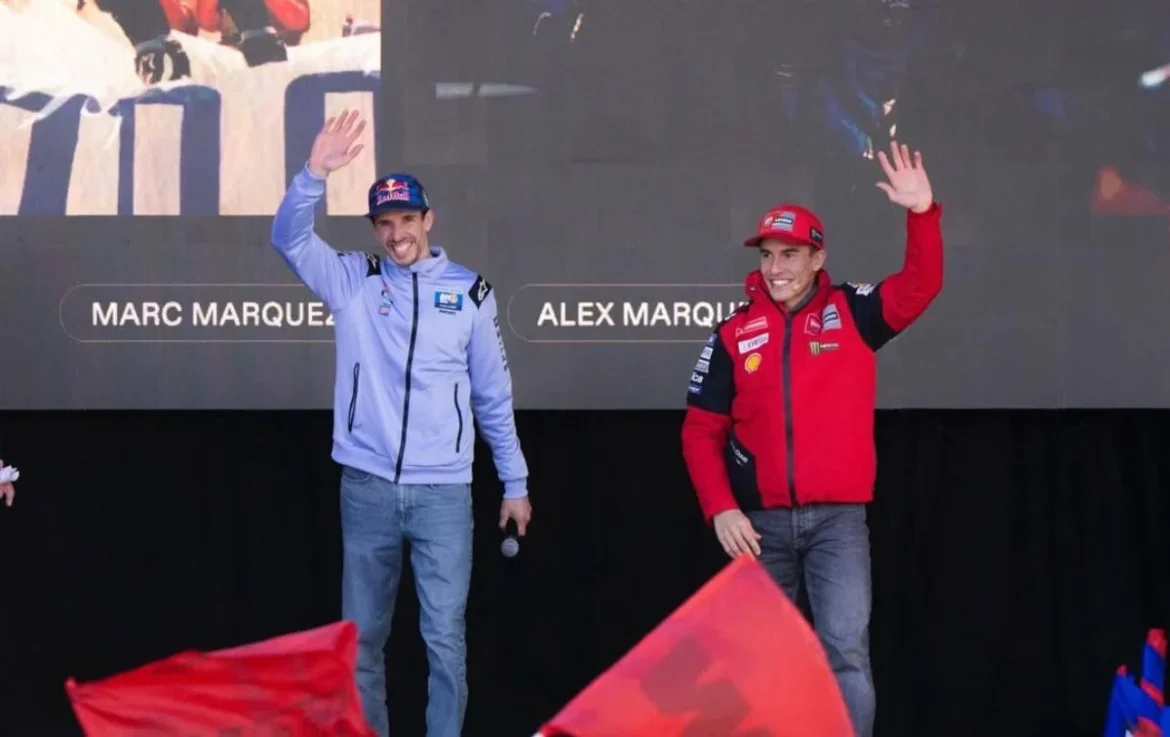
The reference was an unmistakable nod to Gresini Racing and the broader Ducati ecosystem, where Marc Marquez shares the premier class grid with his younger brother, Alex Marquez. The presence of the younger Marquez has frequently been a talking point among racing analysts and rival teams, who have often observed unspoken or implicit on-track accommodations between the siblings during fierce battles for position. By bringing this dynamic to the forefront, Rivola effectively neutralized Marquez’s critique, suggesting that complaints about corporate team orders ring hollow when familial alliances play a parallel role in shaping race outcomes.
Broader Implications for the MotoGP Championship Battle
The public exchange between Rivola and Marquez is emblematic of the suffocating pressure cooker that defines the concluding rounds of a modern MotoGP season. As margins for error shrink to milliseconds and every single point carries immense financial and historical weight, psychological positioning becomes just as crucial as mechanical development.
The utilization of team orders and satellite support networks has evolved into a vital chess match for manufacturers like Ducati, Aprilia, KTM, and Yamaha. While factory teams naturally prioritize their primary championship contenders, the presence of independent squads introduces unpredictable variables. Trackhouse Racing, despite its operational partnership with Aprilia, maintains its own competitive identity and individual rider ambitions, creating an environment where corporate directives cannot always be executed seamlessly.
Furthermore, the involvement of family units within the elite tier of motorcycle racing adds a unique sociological dimension to the sport. The Marquez brothers represent a rare and powerful phenomenon in Grand Prix history—competing at the absolute zenith of the sport while maintaining a profound personal bond. Rival manufacturers have occasionally chafed at this dynamic, arguing that the presence of a sibling on the grid introduces an invisible layer of tactical deference that transcends traditional team boundaries. Rivola’s pointed remarks serve as a reminder that every team on the grid utilizes whatever advantages—structural, corporate, or familial—at their disposal to maximize their competitive standing.
Timeline and Chronological Context of the Dispute
The war of words did not occur in a vacuum; it was the culmination of a tense race weekend characterized by high stakes and fierce on-track duels.
The weekend commenced with Free Practice and Qualifying sessions at Sepang, where Aprilia sought to solidify its championship positioning against a dominant Ducati contingent. As the pressure mounted, internal strategies regarding how factory riders and satellite representatives should interact on track were deliberated within the team garages.
During Saturday’s Sprint Race, the tactical friction boiled over. Ai Ogura’s defensive driving temporarily disrupted the optimal flow for Marco Bezzecchi, prompting a frantic recovery and subsequent position swap. Immediately following the conclusion of the Sprint Race, Marc Marquez addressed the media in the press conference room, delivering his critique of Ogura’s defensive stance and Aprilia’s broader team order methodology.
By Wednesday, the media cycle had amplified these sentiments, culminating in Massimo Rivola’s published response via international motorsport outlets. Rivola’s counter-attack successfully shifted the narrative away from Aprilia’s internal execution hurdles and refocused attention on the broader, industry-wide utilization of tactical alliances and familial protection on the grid.
The Evolving Landscape of Team Strategy in Modern Motorsport
As the championship progresses toward its final showdowns, the debate over team orders and tactical racing is unlikely to subside. Modern MotoGP is no longer merely a contest of individual bravery and engineering brilliance; it is a meticulously managed corporate enterprise where data analytics, satellite team synergy, and psychological warfare play decisive roles.
The clash between Massimo Rivola and Marc Marquez highlights the razor-thin margins separating triumph from turmoil in the premier class. While Marquez sought to expose Aprilia’s internal growing pains, Rivola’s calculated counter-punch demonstrated that no top-tier competitor operates in a tactical vacuum. As manufacturers continue to push the boundaries of strategic cooperation and racing politics, the paddock remains a theater where psychological maneuvers are executed with the same precision as a final-lap overtaking maneuver.
