
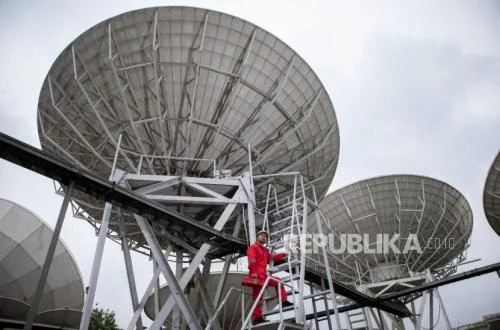
Indonesia, a vast archipelago nation comprising over 17,000 islands, continues to grapple with significant disparities in internet access, a challenge acutely felt across its eastern provinces. Despite robust national efforts to expand digital infrastructure, geographical complexities, including rugged mountains, dense forests, and expansive maritime territories, present formidable obstacles to establishing pervasive terrestrial network coverage. This persistent digital divide leaves numerous communities in what are termed "blank spots," effectively isolating them from the burgeoning digital economy, essential public services, and the wealth of information available online. The latest data from the Indonesian Internet Service Providers Association (APJII) 2025 survey underscores this disparity, revealing a national internet penetration rate of 80.66 percent, yet showing significantly lower figures, around 69.26 percent, for eastern regions such as Maluku and Papua. This gap highlights not only a technical infrastructure deficit but also a profound socio-economic challenge that necessitates innovative and strategic solutions, with satellite technology increasingly recognized as a vital component of the national connectivity strategy.
The Geographic Imperative: Indonesia’s Unique Connectivity Challenges
Indonesia’s unique geography is both its greatest asset and its most significant hurdle in achieving universal digital access. Spanning across three time zones and straddling the equator, the nation’s diverse topography includes volcanic mountain ranges, vast rainforests, and thousands of inhabited and uninhabited islands. Laying fiber optic cables across deep ocean trenches, navigating dense jungle terrain, or building cellular base transceiver stations (BTS) in remote, sparsely populated areas presents monumental logistical, technical, and financial challenges. The cost per subscriber in these isolated regions often far outweighs the potential revenue, making conventional terrestrial infrastructure development economically unviable for private operators without substantial government subsidies or innovative partnership models.
Historically, Indonesia’s connectivity efforts have largely focused on expanding terrestrial networks in more populated western and central regions, leveraging fiber optics and cellular towers. While successful in urban and semi-urban areas, this approach has inadvertently exacerbated the rural-urban and west-east digital divide. The sheer scale of the eastern Indonesian archipelago, with its scattered populations and lack of pre-existing infrastructure, demands a different paradigm—one that is inherently flexible, scalable, and resilient to geographical constraints. The limitations extend beyond mere access; even where some form of connectivity exists, it often suffers from poor quality, low bandwidth, and high latency, hindering its utility for critical applications like remote learning, telemedicine, or sophisticated digital business operations.
A Deeper Dive into Disparity: The Numbers Speak
The APJII 2025 survey serves as a stark reminder of the uneven digital landscape across Indonesia. While the national average of 80.66 percent internet penetration suggests widespread adoption, this figure masks significant regional inequalities. The 69.26 percent penetration rate in Maluku and Papua, for instance, stands in sharp contrast to figures in more developed regions, where penetration can exceed 90 percent. This nearly 11 percentage point difference represents millions of individuals and thousands of communities in Eastern Indonesia who are left behind in the digital age.
Further contextualizing these statistics, reports from the Ministry of Communication and Informatics (Kominfo) and global bodies like the International Telecommunication Union (ITU) consistently highlight that digital literacy, quality of access, and affordability also vary drastically. Even within regions with seemingly adequate penetration, the type of access (e.g., 2G/3G vs. 4G/5G) and the cost of data can be prohibitive, creating secondary layers of digital exclusion. For instance, while a 4G signal might be available, the data packages might be too expensive for the average income in a remote village, or the network capacity too limited to support multiple users simultaneously. These factors collectively limit the effective participation of eastern Indonesian communities in the digital transformation agenda that is sweeping the rest of the nation.
Terrestrial Limitations and the Cost of Isolation
Andri Yunianto, Commercial Director of Telkomsat, a leading Indonesian satellite telecommunications provider, articulates the core of the problem: "The limitations of terrestrial infrastructure, such as fiber optic networks and BTS, mean that blank spots still exist, impacting limited public access to information, public services, and digital economic activities." This statement encapsulates the multifaceted consequences of inadequate infrastructure.
The construction of terrestrial networks is a capital-intensive and time-consuming endeavor. Laying a single kilometer of fiber optic cable through mountainous terrain or dense jungle can cost exponentially more than in urban areas, not to mention the challenges of securing land rights, environmental permits, and ensuring long-term maintenance in remote locations. Similarly, deploying and powering BTS towers in areas without stable electricity grids requires complex and expensive solutions, often relying on diesel generators which incur high operational costs and environmental footprints. These challenges collectively contribute to the slow pace of terrestrial expansion in the 3T (Tertinggal, Terdepan, Terluar – Disadvantaged, Frontier, Outermost) regions, which are predominantly located in Eastern Indonesia.
The cost of this isolation is immeasurable. Communities without reliable internet access are deprived of timely information, hindering their ability to make informed decisions about health, education, and local governance. Public services, which are increasingly migrating online, become inaccessible, creating bureaucratic hurdles and inefficiencies. Economically, the lack of digital connectivity stifles the growth of Micro, Small, and Medium Enterprises (UMKM) that could otherwise tap into broader markets, innovate, and contribute to regional development. Farmers cannot access real-time market prices or agricultural best practices, fishermen cannot leverage weather forecasts or navigation aids effectively, and local artisans struggle to sell their products beyond their immediate vicinity. This perpetuates economic stagnation and limits opportunities for upward mobility for millions of Indonesians.
Government’s Ambitious Vision: The Digital Transformation Agenda
Recognizing the critical importance of digital inclusion for national development, the Indonesian government has consistently prioritized the acceleration of digital infrastructure development, particularly in the 3T regions. Initiatives like the Palapa Ring project, a national fiber optic backbone network, represent a monumental effort to connect the entire archipelago. Completed in 2019, the Palapa Ring aimed to provide high-speed internet to 514 districts/cities across Indonesia, serving as a critical foundation for digital transformation.
However, as Andri Yunianto pointed out, while the Palapa Ring provides the backbone, the "last mile" connectivity remains a significant challenge, especially in the most remote areas. This is where entities like BAKTI (Badan Aksesibilitas Telekomunikasi dan Informasi – Telecommunication and Information Accessibility Agency) under Kominfo play a crucial role. BAKTI is mandated to provide telecommunication and information access to underserved areas, deploying various technologies, including cellular towers and satellite broadband, to fill the gaps left by commercial operators. The government’s broader "Making Indonesia 4.0" roadmap and the "Indonesia Digital 2045" vision underscore a commitment to leveraging digital technology for economic growth, improved public services, and enhanced national competitiveness. Achieving these ambitious goals hinges on ensuring equitable access for all citizens, irrespective of their geographical location. This holistic approach involves not only infrastructure deployment but also digital literacy programs, fostering local content, and creating a conducive regulatory environment for technological innovation.
Satellite Technology: A Strategic Backbone for the Archipelago
In light of the persistent challenges faced by terrestrial networks, satellite technology has emerged as a truly strategic solution for connecting Indonesia’s remote and geographically challenging areas. Its inherent advantage lies in its ability to provide ubiquitous coverage over vast areas, irrespective of terrain. Unlike fiber optics that require physical trenches or cellular towers that demand line-of-sight and ground infrastructure, a single satellite in geostationary orbit (GEO) can cover an entire continent, or a constellation of low-Earth orbit (LEO) satellites can provide global coverage with low latency.
Indonesia has a long history with satellite technology, dating back to the launch of the Palapa-A satellite in 1976, which revolutionized communication across the archipelago. Today, advancements in satellite technology, particularly the advent of High-Throughput Satellites (HTS) and emerging LEO constellations, have significantly enhanced their capabilities. HTS systems offer dramatically increased bandwidth and efficiency compared to traditional satellites, making satellite broadband a viable and competitive option for high-speed internet access. LEO constellations, while requiring more ground infrastructure, promise even lower latency, rivaling terrestrial fiber in certain applications, which is critical for real-time services like video conferencing and cloud computing.
For an archipelagic nation like Indonesia, satellite development offers unparalleled flexibility. Deploying a satellite ground station and user terminals is considerably faster and less disruptive than constructing physical infrastructure across difficult terrain. This speed of deployment is crucial for disaster recovery, temporary events, or rapidly bringing connectivity to newly developed remote sites. Furthermore, the cost-effectiveness of satellite solutions has improved dramatically, with the total cost of ownership becoming increasingly competitive, especially when considering the alternative expenses of building and maintaining terrestrial networks in challenging environments. Telkomsat, for example, operates a fleet of geostationary satellites and is actively exploring the integration of LEO satellite services to offer a comprehensive range of connectivity solutions tailored to Indonesia’s diverse needs.
Telkomsat’s Perspective and Industry Momentum
Andri Yunianto’s assertion that "This is where satellites play an important role as the backbone of connectivity in these regions" reflects a growing consensus within the telecommunications industry. Telkomsat, as a subsidiary of Telkom Indonesia, the state-owned telecommunications giant, is at the forefront of this effort. Their expertise in satellite operations, combined with a deep understanding of Indonesia’s unique market, positions them as a key player in bridging the digital divide. The company’s strategy involves not only leveraging existing satellite assets but also investing in new technologies and partnerships to expand its reach and service offerings.
The broader industry also sees the potential. International satellite operators are increasingly looking at Indonesia as a vital market, recognizing the unmet demand for connectivity. This competitive landscape is driving innovation and helping to lower costs, making satellite broadband more accessible. Furthermore, the development of local expertise in satellite technology, from ground segment operations to service delivery, contributes to national technological sovereignty and creates high-skilled jobs. The collaboration between government agencies like BAKTI, state-owned enterprises like Telkomsat, and private sector players is essential for pooling resources, sharing risks, and accelerating the deployment of satellite-based solutions across the country. This collaborative spirit is vital for overcoming the financial and logistical hurdles inherent in connecting such a vast and diverse nation.
Transformative Applications: Education, Health, and Economy
The impact of robust satellite connectivity extends far beyond mere internet access; it is a catalyst for transformative change across multiple sectors in Eastern Indonesia. In education, satellite broadband enables remote schools to access online learning platforms, digital libraries, and educational resources, leveling the playing field for students in isolated villages. During the COVID-19 pandemic, satellite connectivity proved indispensable for facilitating remote learning when physical schools were closed, demonstrating its resilience and critical role in educational continuity.
In healthcare, telemedicine becomes a reality, allowing patients in remote areas to consult with specialists in urban centers without the need for arduous and costly travel. This can significantly improve health outcomes, especially for chronic conditions or emergencies where timely medical advice is crucial. Satellite links can connect remote clinics to central hospitals, facilitating data sharing, remote diagnostics, and virtual training for local healthcare workers.
Economically, digital connectivity is a powerful engine for growth. It empowers local governments to develop digital public services, enhancing efficiency and transparency. It opens up new economic opportunities for UMKM, allowing them to participate in e-commerce, access online marketplaces, and reach customers beyond their immediate geographical confines. Farmers can leverage precision agriculture tools, access weather forecasts, and connect with buyers directly, improving their livelihoods. The tourism sector, particularly ecotourism in remote natural parks and islands, can benefit immensely from improved connectivity, allowing for online bookings, digital marketing, and enhanced safety for visitors. The ability to process digital payments and conduct online banking further integrates these communities into the formal economy, fostering financial inclusion.
Navigating the Future: Policy, Investment, and Sustainable Connectivity
Andri Yunianto emphasizes the enduring importance of strengthening connectivity infrastructure in Eastern Indonesia to support national digital transformation, ensuring that "the benefits of connectivity can be felt more evenly by all segments of society, while also encouraging economic growth and improving the quality of life in various regions." This forward-looking perspective highlights that the journey towards a truly connected Indonesia is ongoing, requiring sustained effort, strategic investment, and adaptive policies.
The government’s commitment to this vision is underscored by ongoing investments in satellite infrastructure, including the SATRIA-1 (Satellite of the Republic of Indonesia) project, a multi-function satellite designed to provide internet access to public service facilities across 3T regions. Such large-scale projects, often involving public-private partnerships, are crucial for expanding capacity and ensuring affordability. However, beyond mere infrastructure, policy frameworks must evolve to support the sustainable deployment and utilization of satellite technology. This includes regulatory clarity, incentives for private sector participation, and programs to enhance digital literacy and adoption among the populace.
Challenges remain, including the need for continuous technological upgrades, managing the operational costs of satellite services, and ensuring cybersecurity. The rapid evolution of satellite technology, particularly the emergence of LEO constellations, presents both opportunities and complexities, requiring policymakers and operators to remain agile. Furthermore, addressing the affordability of satellite services for low-income communities will be paramount to truly bridge the digital divide. Subsidies, innovative business models, and community-based access points will play a vital role in making connectivity not just available but also accessible and affordable for all.
Conclusion: Towards a Truly Connected Indonesia
Indonesia’s aspiration for a fully connected and digitally empowered nation hinges on its ability to overcome the formidable geographical barriers that have historically fragmented its digital landscape. While terrestrial networks continue to expand, the strategic deployment of satellite technology has proven to be an indispensable solution, particularly for the vast and remote regions of Eastern Indonesia. By leveraging the unique advantages of satellites—their ubiquitous coverage, rapid deployment capabilities, and increasing cost-effectiveness—Indonesia is steadily progressing towards its goal of equitable digital access.
The combined efforts of government initiatives, state-owned enterprises like Telkomsat, and the broader telecommunications industry are transforming the connectivity landscape, bringing vital information, services, and economic opportunities to millions who were once left behind. As technology continues to advance, the role of satellites is only set to grow, solidifying their position as the critical backbone for an inclusive and prosperous digital future for all Indonesians. The journey is complex, but the commitment to ensuring that no citizen is left in a digital blank spot underscores a national resolve to harness the full potential of the digital age for sustainable development and improved quality of life across the entire archipelago.
