
Entering its 18th anniversary, South Tangerang City, widely known as Tangerang Selatan or Tangsel, stands at a critical juncture in its administrative and socioeconomic evolution. As a relatively young municipality born from the division of Tangerang Regency in 2008, Tangsel has experienced rapid physical and economic transformations. However, this growth has also triggered complex urban challenges, ranging from environmental degradation and infrastructural disparities to the perennial issues of waste management and recurring floods.
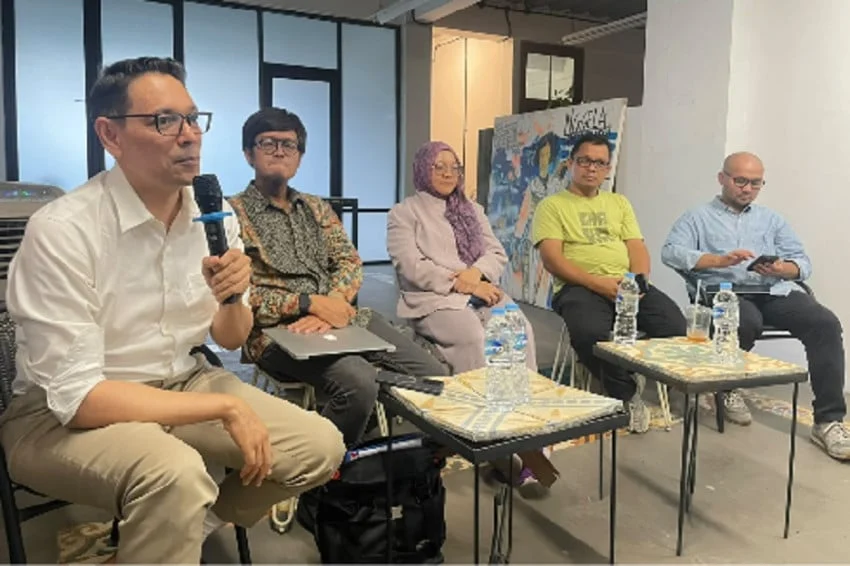
These pressing concerns took center stage during a high-profile public discussion titled Potret 18 Tahun Kota Tangsel, Menjadi Kota #Autopilot? (Portrait of Tangsel at 18: Becoming an Autopilot City?). Organized by Malika for Urban Studies, the forum brought together a diverse group of stakeholders, including public policy observers, academic researchers, journalists, university students, and representatives from the Tangerang Selatan City Government (Pemkot Tangsel). The event served as a rigorous evaluation platform and a brainstorming space to redefine the municipality’s developmental trajectory, directly confronting the provocative moniker of an autopilot city—a term suggesting a municipality drifting forward without deliberate, visionary leadership or active citizen engagement.
The Genesis of Tangsel and the Quest for Decentralized Maturity
To understand the current debate surrounding Tangerang Selatan, one must look back at its foundational history. Officially established on November 26, 2008, via Undang-Undang Nomor 51 Tahun 2008 (Law No. 51/2008), Tangsel was carved out of Tangerang Regency to accelerate public services, bring governance closer to the populace, and boost regional development. Comprising seven sub-districts—Ciputat, East Ciputat, Pamulang, Pondok Aren, Serpong, North Serpong, and Setu—the city rapidly transitioned from a patchwork of semi-rural settlements and emerging dormitory towns into a bustling urban hub heavily influenced by large-scale private real estate developers.
Over the past nearly two decades, Tangsel’s strategic location bordering Jakarta, Depok, and Bogor has made it an economic magnet. Its fiscal capacity has grown substantially, propelled by commercial centers, private educational institutions, and sprawling residential estates. Yet, this rapid urbanization has occurred at a fragmented pace. The juxtaposition of hyper-modern, developer-built townships alongside organically grown, densely populated traditional villages has created deep infrastructural disparities.
It was against this historical and socio-spatial backdrop that the Malika for Urban Studies forum convened on Friday, November 20, 2026. The discussion was designed not merely to celebrate the municipality’s upcoming legal adulthood at 18 years, but to critically assess whether the city’s governance model has kept pace with its physical expansion.
Fiscal Strength Versus Policy Effectiveness
Opening the substantive dialogue at the forum, Armand Suparman, Executive Director of the Committee for Monitoring the Implementation of Regional Autonomy (KPPOD), delivered a sharp critique regarding the utilization of regional autonomy. According to Armand, the foundational philosophy of decentralization is to empower local governments to manage their own affairs efficiently, equitably, and transparently, utilizing local fiscal potentials to maximize public welfare.
Armand noted that Tangerang Selatan possesses robust economic capital and a healthy fiscal capacity relative to many other newly autonomous regions in Indonesia. This financial strength should theoretically grant the local government the agility to prioritize urgent urban problems and accelerate infrastructural solutions. However, he cautioned that financial muscle alone does not automatically translate to societal well-being. Effective governance requires stringent policy alignment, meticulous execution, and tangible outcomes that directly touch the daily lives of ordinary residents.
During his presentation, Armand outlined four critical pillars that must serve as the diagnostic lens for evaluating Tangsel’s governance: public service delivery, infrastructural development, administrative accountability, and governmental oversight and control. He argued that persistent urban bottlenecks—such as chronic seasonal flooding, poorly managed municipal solid waste, and fractured inter-regional connectivity—must not be treated as routine administrative inconveniences. Instead, they must be rigorously integrated into every stage of governance, from high-level spatial planning and municipal budgeting to final field execution.
A Call to Dismantle Elitist Barriers and Oligarchic Tendencies
Perhaps one of the most resonant points raised by the KPPOD executive director was the warning against exclusionary governance structures. Armand emphasized that rapid urban development must remain democratic and inclusive, cautioning local authorities against the creeping influence of oligarchic networks or dynastic political structures that could choke off public participation.
"We must ensure that oligarchies or political dynasties do not close the space or restrict public access from participating in the entire process, ranging from planning, budgeting, to policy formulation," Armand asserted during the panel discussion. He stressed that genuine urban resilience relies heavily on collaborative governance, where marginalized communities, grassroots organizations, and everyday citizens have a legally protected voice in shaping their neighborhoods.
Furthermore, Armand highlighted the glaring socio-spatial inequality between corporate-backed master-planned communities and traditional, organic villages (kampungs). While upscale residential enclaves often enjoy well-maintained infrastructure, private security, and modern drainage systems, surrounding indigenous settlements frequently grapple with inadequate sanitation, narrow access roads, and vulnerability to environmental hazards.
"We want growth to be balanced and inclusive; we want to grow together," Armand emphasized, advocating for a policy pivot that prioritizes equity over sheer economic output.
Urban Planning Perspectives: Bridging the Divide
Complementing the public policy critique, Forina Lestari, a researcher and lecturer in the Urban and Regional Planning Department at the National Institute of Technology (ITN/ITI), provided a technical assessment of Tangsel’s spatial evolution. From a master-planning perspective, Forina identified regional integration as one of the most formidable homework assignments facing the city administration.
Forina pointed out that Tangsel’s developmental history is heavily characterized by piecemeal, developer-led expansion. Real estate giants have historically carved out autonomous, self-contained enclaves that cater to upper-middle-class commuters working in Jakarta. While these developments generate high local revenues, they frequently operate as isolated islands within the broader urban fabric. This spatial fragmentation has exacerbated traffic congestion, hindered cohesive public transportation networks, and complicated municipal efforts to manage environmental systems like watersheds and green open spaces.
Integrating these disparate spatial components into a unified, sustainable municipal ecosystem requires visionary urban planning, strict zoning enforcement, and heavy investments in public transit arteries that connect peripheral villages to commercial epicenters. Forina argued that an autopilot city label often sticks precisely because municipal planners are forced to react to private sector developments rather than proactively steering the city’s long-term spatial identity.
The Municipal Response: Defending Against the Autopilot Stigma
The public forum did not unfold in a vacuum; it drew direct responses from the Tangerang Selatan City Government (Pemkot Tangsel), which moved swiftly to address the "autopilot" characterization. Recognizing the political and psychological weight of the term, municipal authorities asserted their commitment to open governance, constructive criticism, and structural reform.
In official statements responding to the discourse, the Pemkot Tangsel leadership emphasized that the city administration is far from passive. Officials pointed to various ongoing institutional reforms, digital public service initiatives, and infrastructural projects designed to modernize bureaucracy and improve civic responsiveness. The administration highlighted that being open to criticism is a prerequisite for a mature democracy, welcoming the analytical rigor brought forward by think tanks like Malika for Urban Studies and academic institutions like ITI.
To counter critiques regarding environmental management and sustainable innovation, the city administration has increasingly turned to experimental and adaptive urban governance models. A notable example of this proactive stance is the recent pilot project involving floating rice cultivation (padi apung) at the Ciater Retention Basin (Tandon Ciater). Initiated as an innovative response to climate variability, shifting hydrological patterns, and the need to optimize urban water bodies for dual purposes—flood mitigation and urban agriculture—the project demonstrates the administration’s willingness to explore unconventional solutions to localized environmental hurdles.
Similarly, the city has sought to address its chronic waste management challenges through localized waste bank programs (bank sampah) and attempts to upgrade processing facilities. However, independent observers note that while such pilot initiatives are commendable, their scalability remains a significant test for the municipal bureaucracy.
Implications and the Road Ahead for Tangerang Selatan
As Tangerang Selatan officially marks its 18th year, the implications of the Malika for Urban Studies forum extend far beyond academic and policy circles. The debate over whether Tangsel risks becoming an "autopilot city" touches upon a fundamental tension experienced by many suburban municipalities across Indonesia’s metropolitan peripheries: the struggle between rapid economic accumulation and equitable, sustainable human development.
The analysis presented by KPPOD and academic researchers underscores several pragmatic lessons for the municipal government as it enters adulthood:
- Fiscal Autonomy Must Match Service Quality: Strong local revenues must directly translate into visible improvements in basic public goods, particularly drainage systems to mitigate floods and comprehensive waste collection networks.
- Spatial Equity is Non-Negotiable: Closing the gap between elite real estate enclaves and organic urban kampungs is essential to prevent social friction and ensure that the fruits of regional autonomy are shared universally.
- Institutional Transparency and Public Inclusion: Institutionalizing participatory planning processes ensures that citizens are active co-creators of their city rather than passive subjects of top-down bureaucratic decisions.
- Proactive Regional Integration: As urban spillover from Jakarta intensifies, Tangsel must enhance its cross-border coordination in transportation, environmental conservation, and disaster management.
The transition of Tangerang Selatan from a newly minted autonomous region into a mature, resilient urban center will depend heavily on the administration’s capacity to internalize these critiques. By shedding defensive postures and embracing institutional accountability, Pemkot Tangsel has the opportunity to prove that at 18 years old, the city is not cruising on autopilot, but is instead gripping the steering wheel with deliberate, inclusive, and visionary intent.
