
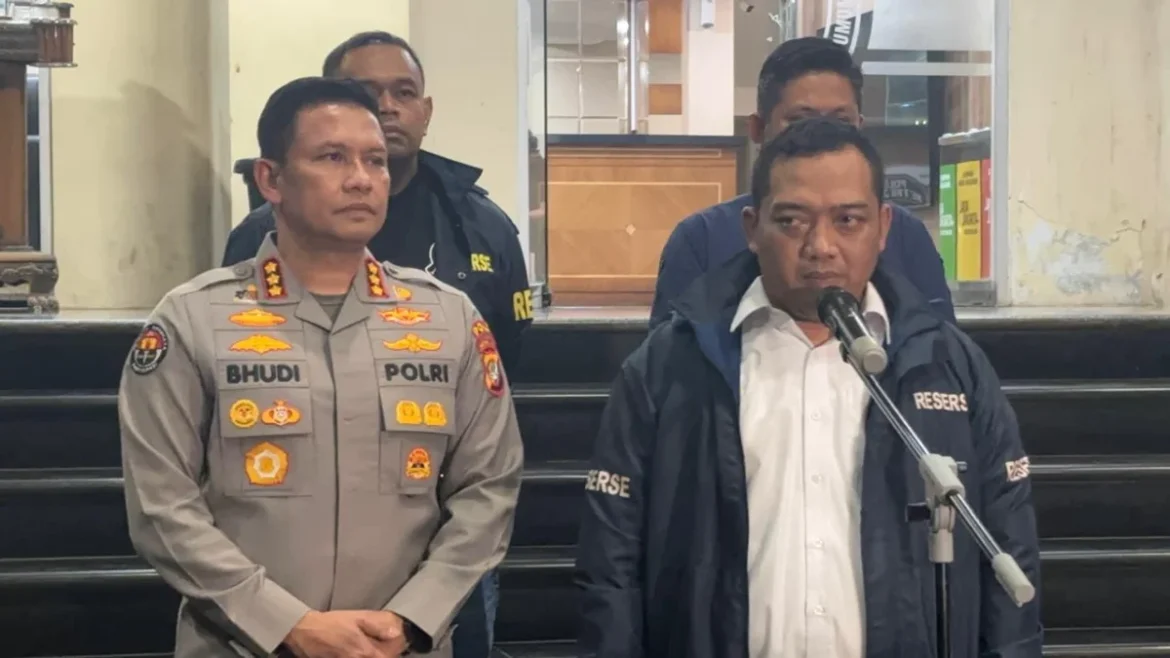
JAKARTA – The Jakarta Metropolitan Police (Polda Metro Jaya) has responded to the recent interlocutory decision by the East Jakarta District Court, which accepted the exception (eksepsi) filed by Dr. Tifauzia Tyassuma in the high-profile case concerning allegations about the authenticity of former Indonesian President Joko Widodo’s academic diploma. While respecting the court’s procedural ruling, the police emphasized that this decision does not signify the conclusion of the legal process and that the prosecution retains avenues to proceed with the case.
Kombes Pol Iman Imanuddin, the Director of General Criminal Investigation (Dirreskrimum) of Polda Metro Jaya, articulated the police’s stance on Friday, July 24, 2026. "Regarding the response to the interlocutory decision concerning Dr. Tifa, as citizens who abide by and respect the law, we naturally honor the decision made by His Honor the Judge. However, this is neither a final verdict nor the end of everything," Kombes Imanuddin stated to reporters. His comments underscore the nuanced position of law enforcement in acknowledging judicial processes while maintaining their commitment to the investigation and prosecution of alleged offenses.
The core of the police’s argument rests on the procedural nature of an eksepsi and an interlocutory decision (putusan sela) within the Indonesian legal framework. An eksepsi is a preliminary objection raised by the defense, typically challenging the formal aspects of the indictment (dakwaan), such as its clarity, completeness, or jurisdiction, rather than the merits of the case itself. When an eksepsi is accepted, it means the court has found procedural flaws in the prosecution’s indictment. This leads to an interlocutory decision that can, in some instances, halt the trial or instruct the prosecution to amend its formal charges.
Kombes Imanuddin elaborated that the Public Prosecutor (JPU) still possesses the prerogative to rectify the deficiencies identified by the court in the indictment. "Because why? Because the Public Prosecutor still has the opportunity to improve the indictment and will promptly return the indictment to the East Jakarta District Court," he affirmed. This indicates that the prosecution intends to revise its formal charges, address the court’s concerns, and potentially re-submit the case for trial, thereby keeping the legal proceedings against Dr. Tifauzia Tyassuma active.
Background and Chronology of the Jokowi Diploma Controversy
The case against Dr. Tifauzia Tyassuma stems from public allegations she made regarding the authenticity of former President Joko Widodo’s academic diploma, specifically questioning his graduation from Gadjah Mada University (UGM). These claims gained traction in various online circles and social media platforms, particularly in late 2022 and early 2023, during a period of heightened political discourse in Indonesia. Dr. Tifa, a medical doctor and often an outspoken public figure on social media, became a prominent voice in disseminating these doubts, which were widely refuted by UGM and the former President’s legal team.
Gadjah Mada University, one of Indonesia’s most prestigious educational institutions, consistently and unequivocally affirmed the authenticity of Joko Widodo’s diploma and his status as an alumnus, providing official statements and documentation to support their assertions. Despite these clarifications, the allegations persisted, prompting legal action from parties associated with the former President and eventually leading to a police investigation into Dr. Tifa’s claims.
- Late 2022/Early 2023: Dr. Tifauzia Tyassuma begins to widely circulate claims and raise questions on social media platforms concerning the authenticity of Joko Widodo’s academic diploma from UGM. These claims often involved visual comparisons of photos and purported inconsistencies.
- Early 2023: Gadjah Mada University issues multiple official statements unequivocally affirming Joko Widodo’s alumni status and the authenticity of his diploma, providing detailed explanations and refuting the allegations.
- Mid-2023: A formal police report is filed against Dr. Tifa, alleging defamation and the spread of false information, potentially under Indonesia’s Electronic Information and Transactions (ITE) Law, or articles related to defamation in the Criminal Code.
- Late 2023/Early 2024: Following an extensive investigation, Dr. Tifa is named a suspect by Polda Metro Jaya. Police gather evidence, including digital footprints and statements, before handing over the case files (P-21) to the Public Prosecutor’s Office.
- Mid-2024: The Public Prosecutor’s Office reviews the case files, determines them complete, and subsequently files the indictment (dakwaan) with the East Jakarta District Court, officially initiating the trial process.
- Late 2024/Early 2025: Pre-trial proceedings and initial court sessions commence, during which Dr. Tifa’s legal team submits an eksepsi (exception) challenging the formal aspects of the prosecution’s indictment.
- July 24, 2026: The East Jakarta District Court issues an interlocutory decision (putusan sela), accepting Dr. Tifa’s eksepsi, indicating formal deficiencies in the prosecution’s initial indictment.
Understanding the Legal Nuances: Eksepsi and Putusan Sela
The Indonesian criminal justice system, rooted in civil law tradition, incorporates specific procedural steps designed to ensure fairness and adherence to legal form. An eksepsi (exception or objection) is a formal defense argument presented at the outset of a trial, challenging the procedural validity of the indictment rather than the factual guilt or innocence of the accused. Common grounds for an eksepsi include:
- Jurisdiction: The court lacks the authority to hear the case.
- Formal Defects: The indictment is unclear, incomplete, or contains errors in its drafting (e.g., obscuur libel, meaning vague or ambiguous).
- Ne Bis in Idem: The accused is being tried for the same offense twice.
- Expiration of Statute of Limitations: The legal period for prosecution has passed.
In this instance, the acceptance of Dr. Tifa’s eksepsi by the East Jakarta District Court suggests that the presiding judges found the Public Prosecutor’s initial indictment to be procedurally flawed, likely due to a lack of clarity in the charges, inconsistencies in the factual narrative, or a failure to meet specific legal requirements for a valid indictment.
A putusan sela (interlocutory decision) is a non-final ruling made by a court during the course of a trial. Unlike a final verdict, it does not determine guilt or innocence but rather addresses preliminary matters or procedural issues. When an eksepsi is accepted through a putusan sela, it typically means the court instructs the prosecution to revise and resubmit a corrected indictment. It does not mean the defendant is acquitted or that the charges are dropped permanently. The case is effectively sent back to the prosecution for refinement.
Implications for the Prosecution and the Rule of Law
Kombes Iman Imanuddin’s statement clearly outlines the path forward: the Public Prosecutor (JPU) will undertake the necessary revisions to the indictment. This process involves a meticulous review of the court’s decision, identifying the specific deficiencies highlighted by the judges, and redrafting the indictment to meet the formal legal requirements. Once revised, the JPU will resubmit the updated indictment to the East Jakarta District Court, effectively restarting the trial process from the indictment phase.
For the prosecution, this represents a temporary setback but not a defeat. It necessitates additional legal work and precision in articulating the charges and supporting facts. The JPU’s ability to successfully revise and resubmit a legally sound indictment will be crucial for the continuation of the case. Legal experts often note that while an accepted eksepsi can delay proceedings, it often serves as a corrective mechanism to ensure due process and the clarity of charges, ultimately strengthening the foundation of the trial if the prosecution can remedy the flaws.
The case also touches upon broader discussions concerning freedom of expression versus the prevention of defamation and the spread of false information, particularly in the digital age. Indonesia’s ITE Law, often invoked in cases of online defamation, has been a subject of intense debate, with critics arguing it can be used to stifle dissent and legitimate criticism. While the specific articles under which Dr. Tifa was charged are not explicitly detailed in the original report, it is understood that the allegations of questioning the former President’s diploma fall within the purview of such legal frameworks designed to protect reputations and prevent the dissemination of hoaxes.
The court’s decision to accept the eksepsi in this high-profile case serves as a reminder of the strict procedural requirements that prosecutors must adhere to. It underscores the judiciary’s role in upholding legal standards and ensuring that indictments are precisely formulated, irrespective of the prominence of the individuals involved or the public interest surrounding the case. This procedural rigor is a cornerstone of a fair legal system, ensuring that defendants are fully aware of the charges against them and that the prosecution’s case is built on a solid formal foundation.
Broader Impact and Future Outlook
While the acceptance of Dr. Tifa’s eksepsi is a procedural victory for her defense team, it does not definitively conclude the legal battle. The police and prosecution’s resolve to continue with the case, as expressed by Kombes Iman Imanuddin, suggests that this matter is far from over. The upcoming revised indictment will be a critical juncture, setting the stage for the potential resumption of the trial on its merits.
The ongoing nature of this case, even through procedural challenges, highlights several significant aspects of the Indonesian legal and political landscape:
- Judicial Independence: The court’s willingness to accept an eksepsi in a politically sensitive case involving a former President demonstrates the judiciary’s commitment to procedural fairness, independent of external pressures.
- Prosecutorial Diligence: It places renewed emphasis on the need for impeccable drafting and legal precision from the Public Prosecutor’s Office, particularly in cases that attract significant public and media scrutiny.
- Freedom of Speech Debates: The underlying allegations and the charges against Dr. Tifa will continue to fuel discussions about the boundaries of free speech, the responsibility of public figures in disseminating information, and the application of defamation laws in Indonesia.
- Public Trust: The transparency and fairness of the subsequent legal proceedings will be crucial in maintaining public trust in the justice system, especially concerning high-profile individuals and politically charged issues.
As the Public Prosecutor’s Office prepares to revise and resubmit the indictment, all eyes will remain on the East Jakarta District Court. The eventual outcome of Dr. Tifauzia Tyassuma’s case will not only determine her legal fate but also contribute to the ongoing discourse on legal accountability, freedom of expression, and the meticulous application of procedural law within Indonesia’s justice system. The police’s firm stance that "it is not the end of everything" signals a continued pursuit of justice, contingent on the prosecution’s ability to meet the rigorous demands of the court.
