
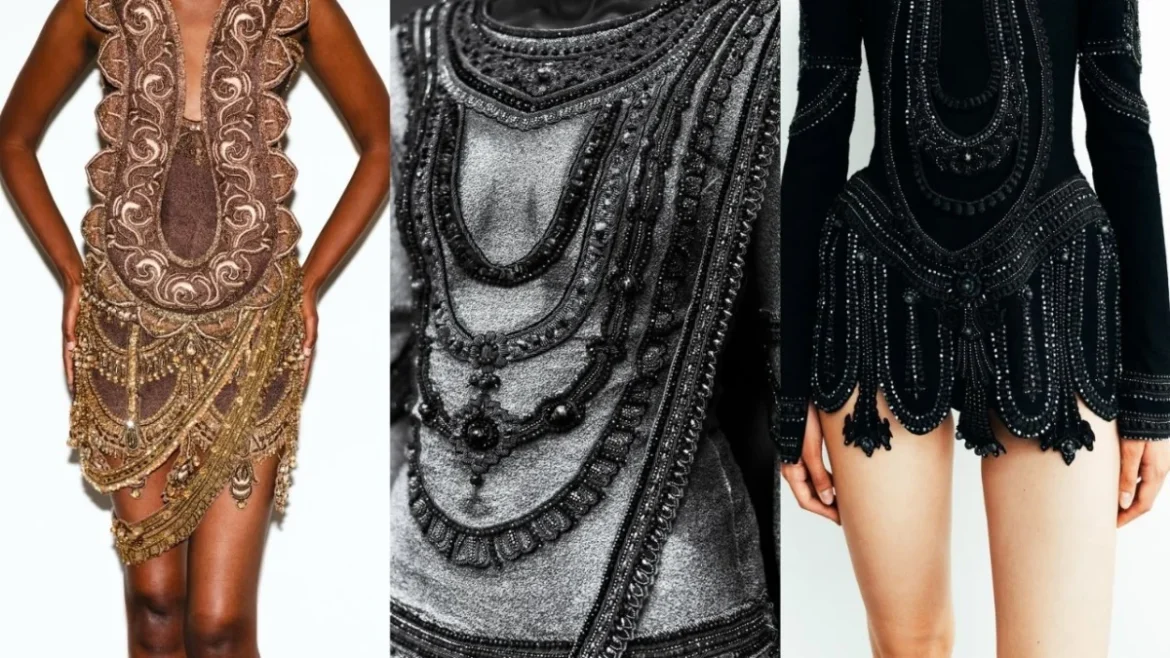
The hallowed runways of Paris Haute Couture Week served as the stage for a profound intersection of ancient Indian philosophy and avant-garde sartorial engineering as Rahul Mishra unveiled his Fall/Winter 2026–2027 collection. Titled "Devi," the collection is a monumental tribute to the primordial feminine energy that, in Indian Vedic tradition, represents the source of all creation, protection, and transformation. By synthesizing centuries-old hand-embroidery techniques with modern architectural silhouettes, Mishra has once again positioned Indian craftsmanship not merely as a decorative element, but as a sophisticated language capable of articulating complex global narratives.
The Philosophical Genesis of Devi
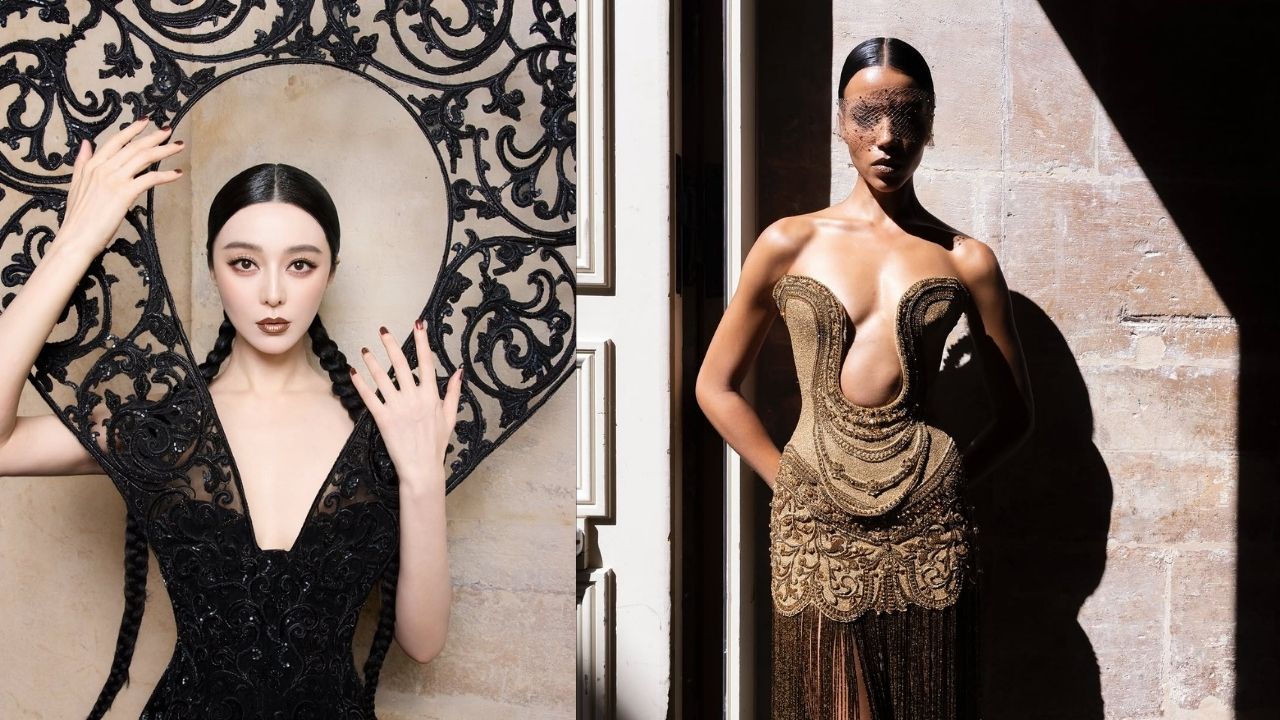
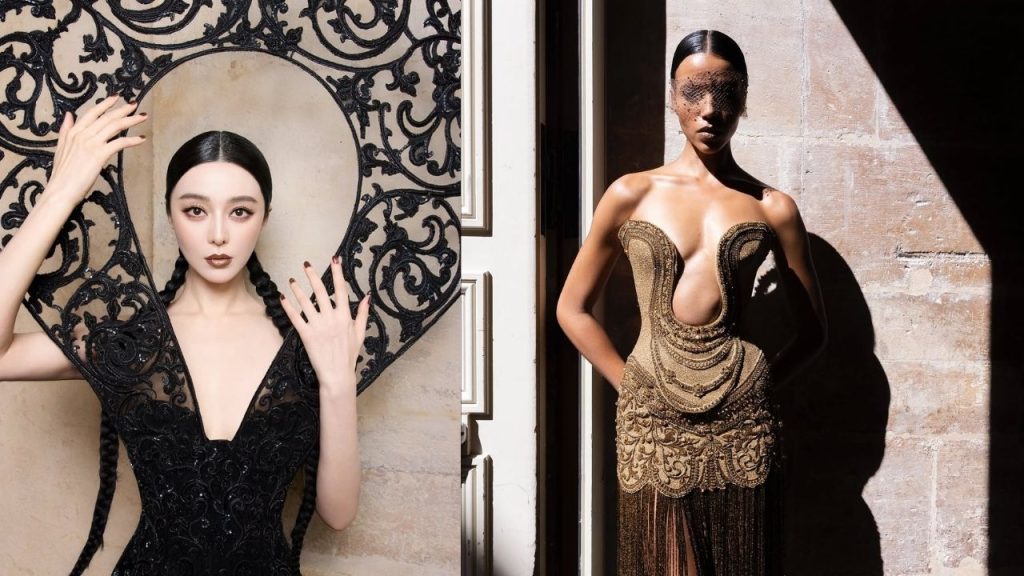
In Sanskrit, "Devi" translates to "Goddess," but within the context of Mishra’s creative vision, it transcends religious iconography to embody the universal principle of "Shakti"—the cosmic energy that animates the universe. The collection seeks to explore the duality of the feminine experience: the coexistence of nurturing softness and indomitable strength. This philosophical grounding serves as the bedrock for a series of garments that are as much works of art as they are wearable couture.
Mishra’s interpretation of Devi is rooted in the belief that nature is the ultimate manifestation of feminine power. This is reflected in the organic motifs that dominate the collection, where floral patterns, celestial bodies, and terrestrial landscapes are rendered with such precision that they appear to breathe. The designer’s intent was to create a visual hagiography of the modern woman, acknowledging her role as a creator of life and a guardian of heritage in an increasingly mechanized world.
Technical Mastery: The Illusion of Sculpted Stone
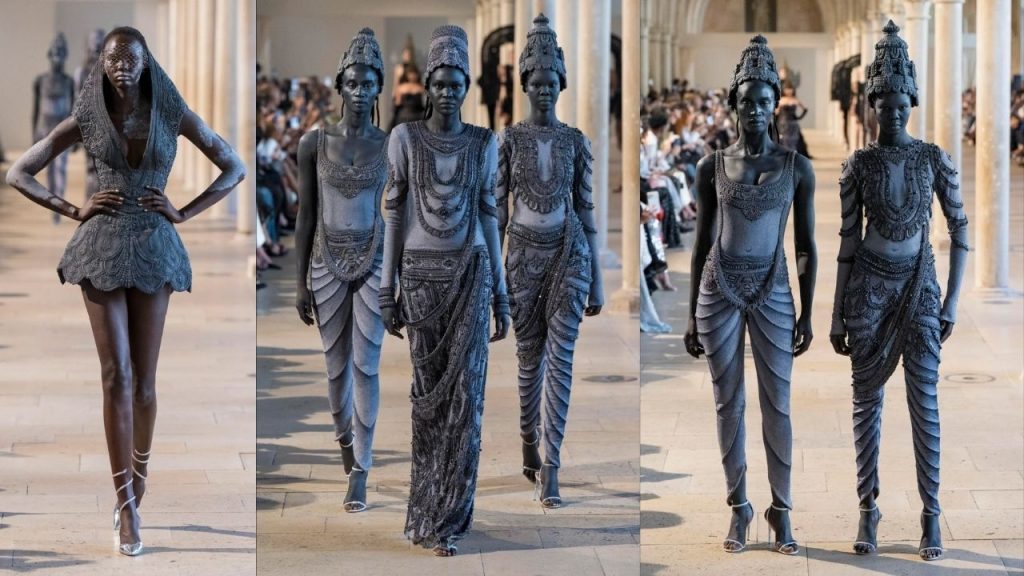
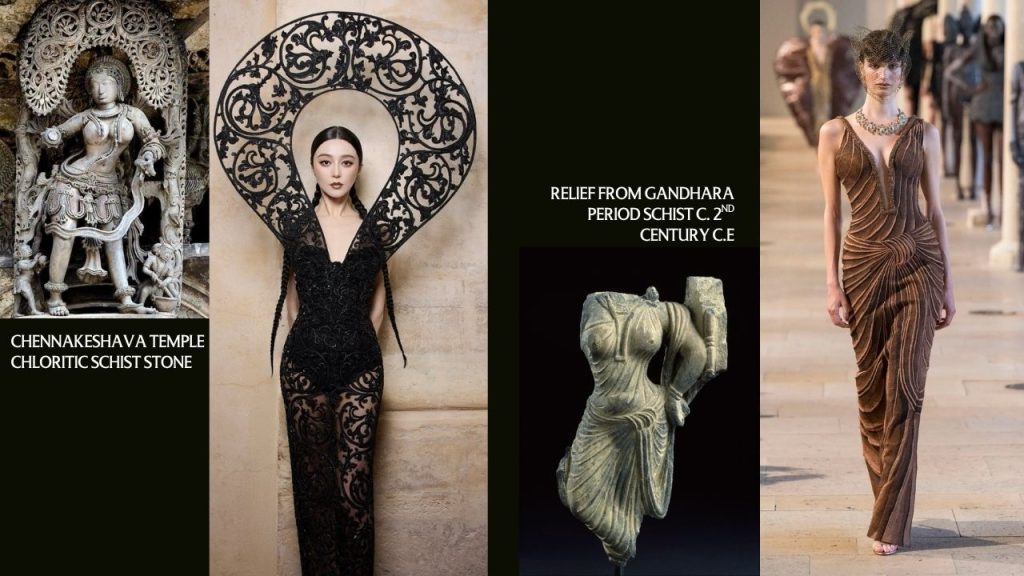
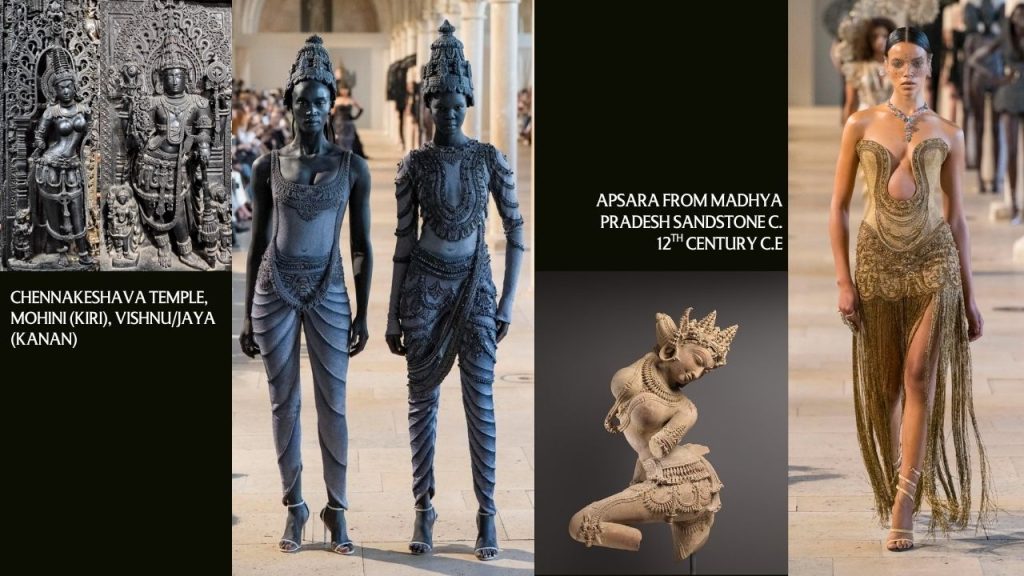
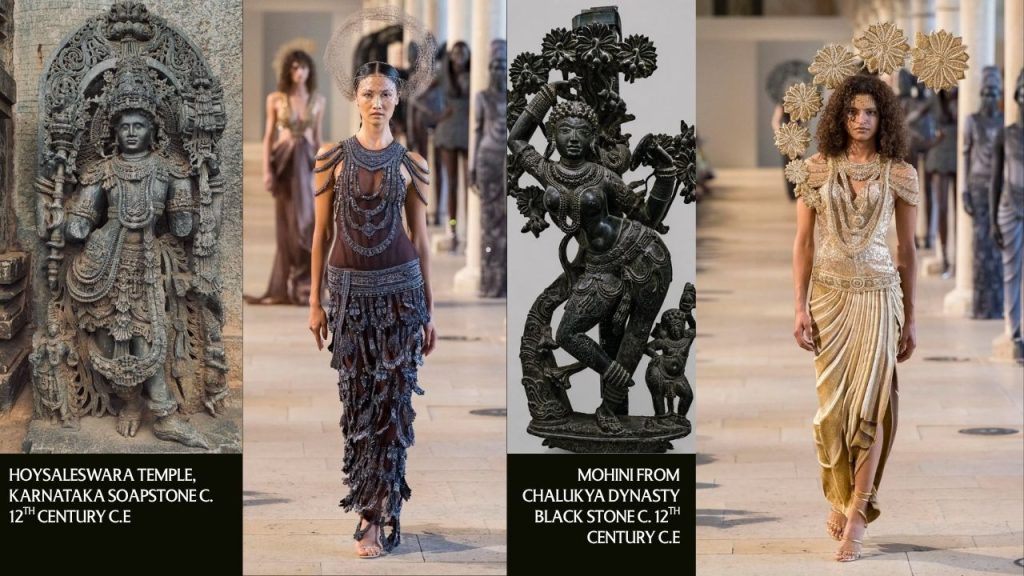
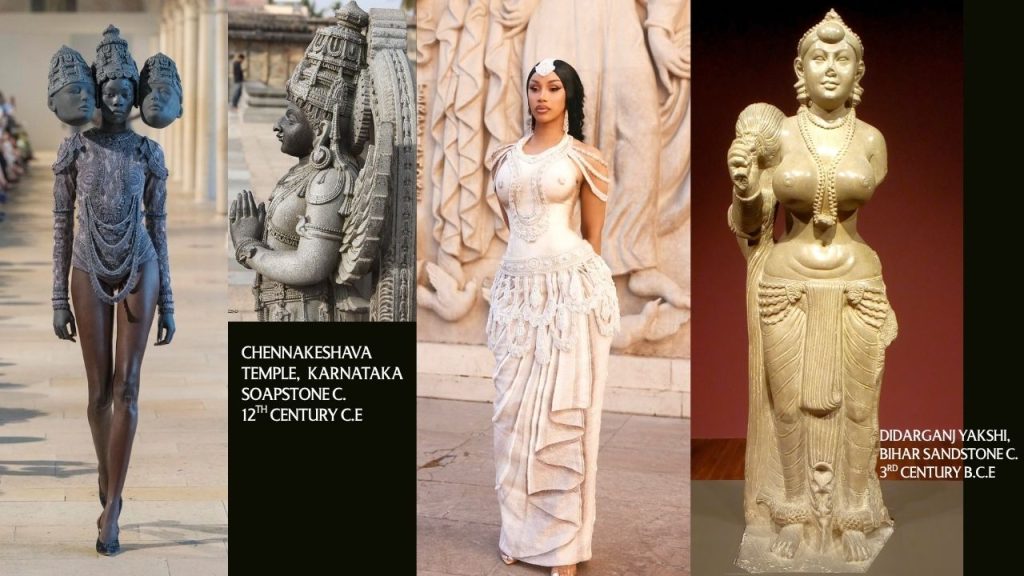
The undisputed technical highlight of the Devi collection is Mishra’s exploration of "lithic" textures—fabrics manipulated to resemble ancient stone carvings. While traditional sculpture involves the subtractive process of chiseling away material, Mishra utilizes an additive technique known as single-thread embroidery. Through this painstaking method, artisans layer thousands of individual stitches to build volume and relief, creating an optical illusion of heavy, weathered stone.
Remarkably, these "sculpted" pieces remain exceptionally lightweight and fluid. By using elasticated base fabrics and strategically placed metallic threads, the atelier achieved a structural integrity that mimics the friezes found in the temples of Khajuraho or Ajanta, yet retains the comfort required for high-fashion movement. This juxtaposition—the appearance of rigid, eternal stone against the reality of soft, ephemeral silk—serves as a metaphor for the enduring yet flexible nature of the feminine spirit.
A Symphony of Traditional Indian Kriya
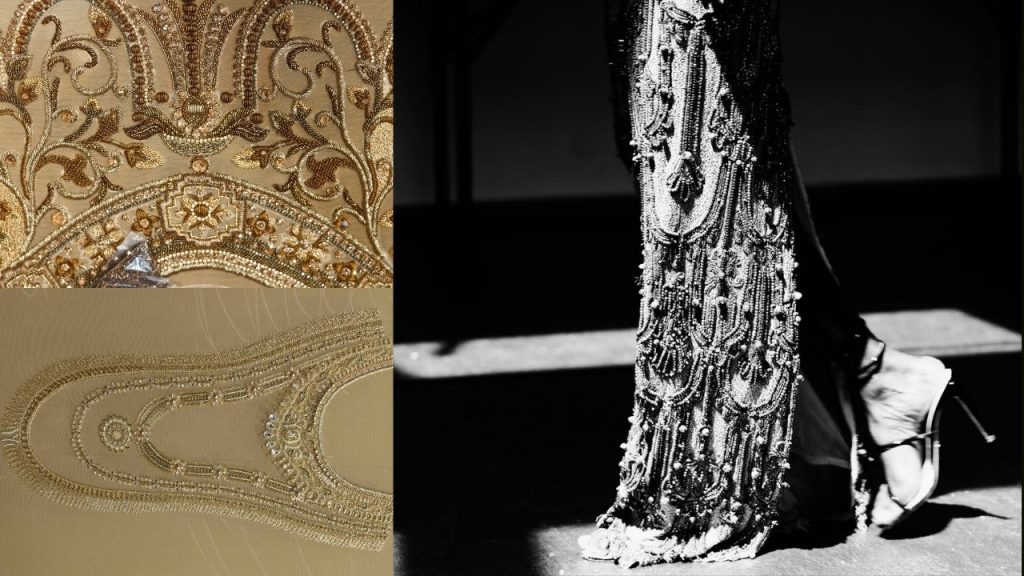
Rahul Mishra has long been a champion of the "Reverse Migration" model, which empowers rural Indian artisans by bringing couture-level work to their villages rather than forcing them into urban slums. The Devi collection is a showcase for several distinct embroidery traditions that have been preserved through this social enterprise:
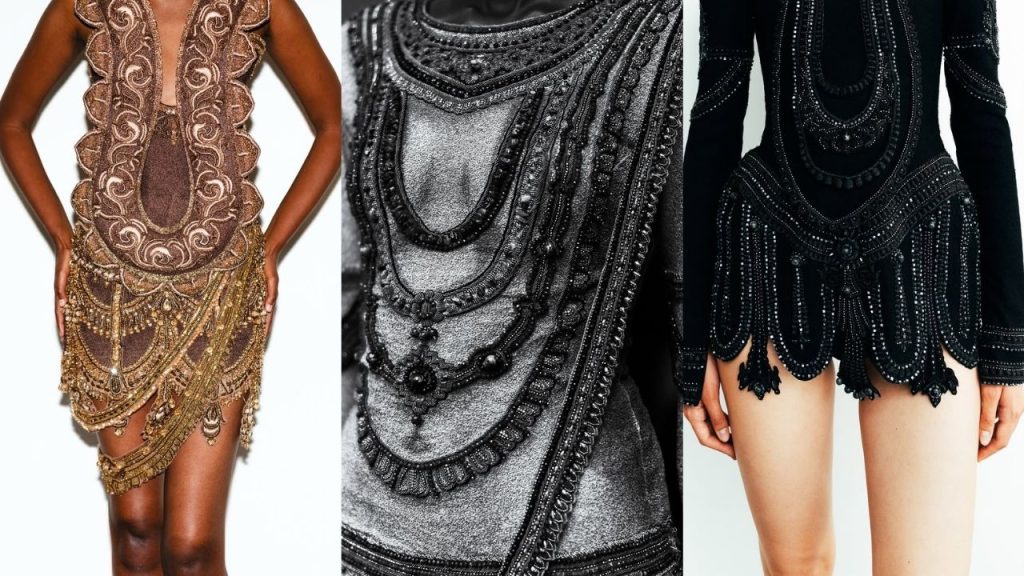
- Zardozi: This ancient form of metal embroidery, which dates back to the Mughal Empire, uses gold and silver threads to create opulent, raised patterns. In this collection, Zardozi is utilized to frame bodices and hemlines, lending a regal weight to the silhouettes.
- Aari: A fine hooked-needle technique that allows for intricate, continuous chain-stitching. This was used to render the delicate floral vines and microscopic nature scenes that are a signature of the Mishra brand.
- Naqshi: A technique involving the twisting of wire to create texture. In the Fall/Winter 2026–2027 lineup, Naqshi was employed to simulate the shimmering surfaces of water and the crystalline structures of minerals.
By integrating these techniques into a Paris Haute Couture framework, Mishra challenges the Eurocentric definition of "luxury," proving that the complexity of Indian hand-work is equivalent to, if not more demanding than, the traditional techniques of the French ateliers.
Color Palette and Materiality
The color story of the Devi collection is a deliberate departure from the pastel-heavy palettes often seen in spring collections, opting instead for a rich, dramatic spectrum that reflects the gravity of the Fall/Winter season.
- Midnight Black and Ivory: These serve as the foundational tones, representing the void of the cosmos and the purity of creation.
- Crimson and Deep Scarlet: Symbolic of life force, passion, and the traditional vermillion used in Indian rituals.
- Emerald Green and Forest Tones: A nod to the "Prakriti" (Nature) aspect of the Devi, emphasizing growth and the cycles of the earth.
- Metallic Gold and Copper: These hues are achieved through the use of genuine metallic wires and crystals, creating a play of light that mimics the "Aura" of a divine being.
The materials used are a testament to the brand’s commitment to sustainability and quality. Hand-loomed silks, organza, and recycled tulles provide the canvas for the heavy embroidery, ensuring that the garments maintain their ethereal quality despite the density of the hand-work.
Chronology and Presentation at Paris Haute Couture Week
The presentation of the Devi collection followed a carefully curated narrative arc. The show opened with monochromatic looks—stark blacks and whites that focused on silhouette and the "stone-wash" embroidery effects. These initial pieces established the theme of "emergence," as if the models were statues coming to life.
As the show progressed, color began to bleed into the collection. Deep reds and greens appeared in the form of voluminous capes and structured gowns, symbolizing the infusion of life and energy into the form. The final sequence featured the "Golden Devi" looks—garments entirely encrusted in gold thread and crystals, representing the peak of spiritual and creative realization.
The atmosphere in the Parisian salon was one of reverent silence, broken only by the rustle of stiffened silks. Observers noted that the pacing of the show allowed for a close inspection of the details, which is essential for a collection where a single square inch of fabric can represent over 100 hours of manual labor.
Broader Impact and Market Implications
The Devi collection arrives at a pivotal moment for the global luxury market. As consumers increasingly move away from logomania and toward "quiet luxury" and "meaningful consumption," Mishra’s focus on storytelling and artisan welfare resonates deeply.
From a business perspective, Mishra’s continued success in Paris reinforces the viability of the Indian luxury sector on the global stage. He is no longer viewed as an "ethnic" designer but as a global couturier whose medium happens to be Indian craft. This shift is significant for the Indian economy, as it elevates the status of the handicraft sector—India’s second-largest employer after agriculture—from a low-margin commodity to a high-value luxury export.
Furthermore, the Devi collection sets a new benchmark for sustainable couture. By focusing on hand-work rather than machine production, the carbon footprint of the collection is significantly reduced. The "slow fashion" ethos inherent in these pieces—where a single gown may take four months to complete—serves as a critique of the industry’s fast-paced cycle and an endorsement of longevity.
Critical Reception and Symbolic Legacy
Fashion critics have hailed Devi as Mishra’s most cohesive work to date. By narrowing his focus to a singular philosophical concept, he has achieved a depth of detail that surpasses his previous outings. The collection is being praised for its ability to be "culturally specific yet universally accessible."
The legacy of the Fall/Winter 2026–2027 collection will likely be defined by its "stone" embroidery. This innovation has successfully bridged the gap between fashion and sculpture, challenging the boundaries of what fabric can represent. In a broader sense, Devi serves as a reminder that Haute Couture is not merely about the display of wealth, but about the preservation of human skill and the celebration of the narratives that define our shared humanity.
As the curtains close on this season’s Paris Haute Couture Week, Rahul Mishra’s Devi stands as a beacon of how heritage can be modernized without being diluted. It is a celebration of the feminine not as a passive muse, but as an active, creative force—a "Devi" who crafts the world with her own hands. Through this collection, the designer has ensured that the stories of Indian artisans are told on the world’s most prestigious stage, stitched into the very fabric of fashion history.
