
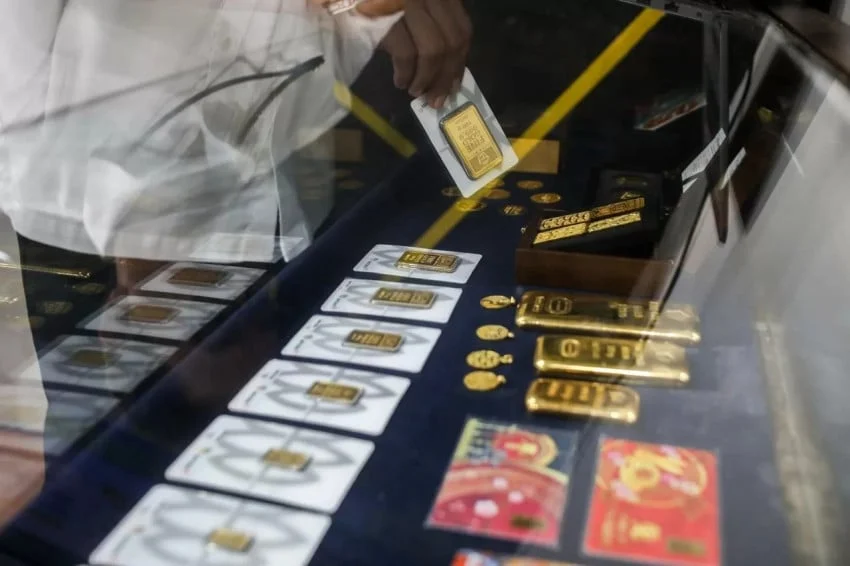
The global gold market and domestic precious metal prices in Indonesia are bracing for a period of heightened volatility in the upcoming week, as investors weigh the lingering effects of recent geopolitical shifts, macroeconomic data, and shifting sentiment regarding the United States dollar. Following a period of significant price adjustments triggered by the U.S. midterm elections, analysts suggest that the precious metal will navigate a narrow corridor of technical corrections and potential bullish momentum. Market participants are closely monitoring the interplay between global inflation expectations, central bank policies, and safe-haven demand, which continues to drive gold toward record-setting valuations.
Market Outlook: The Technical Landscape
According to projections shared by Ibrahim Assuaibi, a prominent analyst specializing in currencies and commodities, the international gold price is expected to fluctuate between USD 3,955 and USD 4,269 per troy ounce throughout the week beginning November 9, 2026. This forecast follows a robust closing performance on Saturday morning, where gold stood firm at USD 4,070 per troy ounce.
From a technical perspective, the market is currently at a crossroads. Ibrahim notes that if selling pressure emerges during the early sessions of the week, gold could experience a systematic correction, retreating toward the USD 4,021 support level. Should that floor fail to hold, the metal may test the lower support threshold of USD 3,955 per troy ounce. Conversely, if bullish sentiment persists, fueled by renewed institutional interest or intensified safe-haven buying, the metal could test a resistance level of USD 4,139 per troy ounce early in the week, with the potential to push further upward if global economic uncertainty persists.
Domestic Implications for PT Aneka Tambang (Antam)
The ripple effect of global volatility is mirrored in the domestic Indonesian market, specifically regarding gold bullion produced by PT Aneka Tambang (Antam). As of the close of business on Saturday, Antam gold was priced at Rp 2,545,000 per gram. Projections indicate a wide trading range for the coming week, spanning from a low of Rp 2,410,000 per gram to a peak of Rp 2,600,000 per gram.
The domestic price movement remains highly sensitive to the exchange rate between the Indonesian Rupiah and the U.S. Dollar. Since gold is denominated in USD globally, a strengthening dollar typically makes gold more expensive for domestic buyers, while a weaker dollar provides a tailwind for potential price increases. If market corrections prevail, analysts anticipate a potential dip of approximately Rp 10,000 from the current baseline, reaching Rp 2,535,000, before potentially sliding toward the lower support band of Rp 2,410,000. On the bullish end of the spectrum, the commodity has the technical potential to climb to Rp 2,550,000 and potentially touch the Rp 2,600,000 milestone by the close of the week.
Chronology of Recent Market Shifts
The current market behavior is deeply rooted in the political and economic events of the past few weeks. Following the conclusion of the U.S. midterm elections, the gold market witnessed a significant surge. This rally was largely attributed to the sudden weakening of the U.S. Dollar, which often serves as the primary inverse correlation to gold. When investors lose confidence in the dollar or fear that political gridlock might hamper fiscal policy, they move capital into physical gold, a traditional "store of value."
In the days leading up to the current forecast, gold prices experienced a sharp trajectory upwards. The post-election atmosphere has been characterized by uncertainty regarding federal spending and the future trajectory of the Federal Reserve’s interest rate hikes. As investors digested the results, gold broke through several psychological barriers, reaching the USD 4,000 per troy ounce territory, a level that was considered speculative just months prior.
Supporting Data and Macroeconomic Context
The rise in gold prices is not an isolated event; it is part of a broader trend in the commodities sector. Several key factors are currently influencing the gold market:
- Central Bank Accumulation: Central banks globally, particularly in emerging markets, have been aggressive in diversifying their foreign exchange reserves away from the U.S. dollar and toward gold. This consistent institutional buying acts as a fundamental floor for gold prices.
- Inflationary Pressures: While headline inflation has moderated in some jurisdictions, the underlying costs of goods and services remain elevated. Gold remains the preferred hedge against long-term currency devaluation.
- Geopolitical Tensions: Ongoing regional conflicts and trade tensions have ensured that safe-haven demand remains elevated. When risk appetite wanes, gold is the primary beneficiary in global portfolios.
- Yield Curve Dynamics: The relationship between U.S. Treasury yields and gold prices is currently in a state of flux. Generally, as real interest rates rise, gold (which pays no interest) becomes less attractive. However, in the current cycle, the fear of systemic financial instability has overridden the traditional interest rate logic, keeping gold prices elevated despite high nominal yields.
Analysis of Implications for Retail Investors
For the retail investor in Indonesia, the current volatility underscores the importance of a disciplined investment strategy. While the potential for price appreciation toward Rp 2,600,000 per gram is significant, the downside risk to Rp 2,410,000 highlights the dangers of short-term speculation.
Financial analysts generally advise that gold should constitute a portion of a diversified portfolio rather than a singular speculative bet. For long-term holders, the volatility expected next week may offer a "buy-the-dip" opportunity if prices move toward the lower end of the projected range. Conversely, those holding physical gold for short-term gains must be aware that the market is currently reacting to high-frequency news cycles, particularly those involving U.S. fiscal policy and global trade updates.
Industry Reaction and Future Outlook
Market observers are maintaining a cautious stance regarding the remainder of the quarter. While the current momentum is undeniably bullish, the sustainability of prices above the USD 4,000 mark will depend on whether the U.S. Federal Reserve signals a pause in rate hikes or if the labor market data begins to show significant cooling.
The consensus among commodity analysts suggests that the current volatility is a period of "price discovery." As the market adjusts to the new political reality in the United States, gold is attempting to find a new equilibrium. Investors are encouraged to monitor the daily closing prices of both the London Bullion Market Association (LBMA) and the domestic Antam prices, as these will serve as the primary indicators of where the market is heading.
Furthermore, the influence of the Indonesian Rupiah cannot be overstated. If the Rupiah faces pressure from external factors, the domestic price of gold in Indonesia may remain elevated even if global USD-denominated prices experience a slight correction. This creates a dual-layer risk profile for domestic investors: they are exposed not only to the volatility of gold itself but also to the fluctuating strength of the domestic currency.
Conclusion
As the new trading week approaches, the gold market is set to remain in the spotlight. The projections of a range between USD 3,955 and USD 4,269 per troy ounce indicate that market participants should be prepared for rapid shifts. Whether the metal reaches its resistance targets or undergoes a necessary technical correction, the fundamental demand for gold remains robust.
For the Indonesian market, the range of Rp 2,410,000 to Rp 2,600,000 per gram for Antam gold provides a clear roadmap for what to expect. Investors and traders are advised to stay informed through official market updates and to approach the coming week with a strategy that balances the potential for gains with the reality of market risk. As always, the intersection of global political shifts and macroeconomic data will be the primary driver of price action in the days ahead. The stability of the global financial system remains the ultimate anchor for the gold price, and as that system navigates post-election adjustments, gold will continue to play its historic role as the ultimate barometer of market sentiment.
