
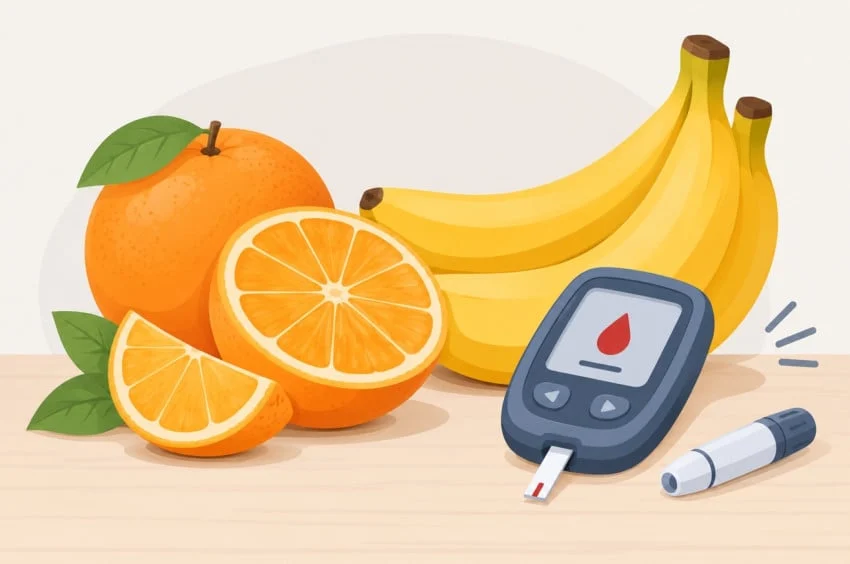
Maintaining optimal blood glucose levels is a cornerstone of metabolic health, particularly for the millions of individuals globally living with diabetes, prediabetes, or insulin resistance. While fruits are universally recognized as vital sources of essential vitamins, minerals, fiber, and antioxidants, they are not created equal in their impact on the endocrine system. For those monitoring their glycemic response, understanding the nuances between common dietary staples like oranges and bananas is essential for informed nutritional planning. Recent clinical insights highlight that while both fruits contain naturally occurring sugars, their physiological effects differ significantly due to their distinct glycemic indices and structural compositions.
Understanding the Glycemic Index Framework
To comprehend why oranges and bananas elicit different responses in the bloodstream, one must first understand the Glycemic Index (GI). The GI is a standardized ranking system—ranging from 0 to 100—that measures how quickly a carbohydrate-containing food elevates blood glucose levels after consumption. Foods with a high GI are digested and absorbed rapidly, resulting in sharp spikes in blood sugar and insulin. Conversely, low-GI foods are digested more slowly, facilitating a gradual, sustained release of glucose into the bloodstream.
According to data compiled by nutritional research institutions such as the Harvard T.H. Chan School of Public Health, foods with a GI of 55 or less are categorized as low-glycemic. Oranges generally fall within the range of 35 to 40, depending on the variety and size. Bananas, however, typically register between 45 and 55, placing them on the higher end of the low-GI spectrum. This disparity is primarily driven by the fiber content and the specific configuration of carbohydrates within the fruit’s cellular matrix.
Comparative Nutritional Profiles
Oranges are frequently lauded for their high vitamin C content and their relatively high water and fiber ratio. The presence of soluble fiber, specifically pectin, acts as a functional buffer, slowing the gastric emptying process and preventing rapid glucose absorption. When an individual consumes a whole orange, they are not merely consuming fructose and glucose; they are consuming these sugars within a fibrous "scaffold" that the body must dismantle before the sugars can reach the bloodstream.
Bananas, by contrast, are denser in total carbohydrates and potassium. While they provide an immediate energy boost, their sugar concentration is more readily bioavailable compared to the fibrous structure of citrus. This makes bananas a preferred choice for athletes requiring rapid glycogen replenishment, but it necessitates caution for those attempting to avoid postprandial hyperglycemia. However, the nutritional value of a banana is not static; it is heavily influenced by the stage of the fruit’s ripening process, a factor often overlooked by the general public.
The Role of Ripening and Starch Composition
A critical aspect of the banana’s metabolic impact is the transition of starch to sugar. In a green or slightly under-ripe banana, the majority of the carbohydrate content is in the form of resistant starch. Resistant starch functions similarly to dietary fiber, resisting enzymatic digestion in the small intestine and instead fermenting in the large intestine. Because it is not fully broken down into glucose, a green banana yields a lower glycemic response than a fully ripened, yellow-brown banana.
As the fruit ripens, enzymes such as amylase break down these long-chain starches into simpler sugars, including sucrose, glucose, and fructose. Consequently, the GI of a banana increases in tandem with its sugar content and softness. For clinical management of blood sugar, dietitians often advise patients to consume bananas while they are still firm, as this significantly mitigates the glucose spike compared to consuming a soft, overly ripe banana.
Historical Context and Dietary Evolution
The focus on glycemic management in fruit consumption has evolved over the last several decades, paralleling the global rise in Type 2 diabetes cases. In the early 20th century, dietary guidelines for diabetes were significantly more restrictive, often banning many types of fruit entirely. It was not until the widespread adoption of the Glycemic Index in the 1980s and 1990s that clinical nutrition moved toward a more nuanced "ranking" system. This allowed patients to integrate fruit back into their diets, provided they understood the quantitative impact of their choices.
This transition marked a shift in how medical professionals advise patients. Rather than viewing all fruit as a singular category of "sugar," the focus shifted to the "glycemic load" (GL)—a measure that considers both the GI and the total portion size. An orange, with its lower GI, allows for a larger portion size compared to a banana before reaching the same threshold of blood glucose elevation.
Clinical Perspectives and Professional Guidance
Health experts emphasize that the context of consumption is as important as the fruit itself. Clinical nutritionists often suggest "pairing" fruits with sources of healthy fats or proteins to further stabilize blood glucose. For example, consuming a banana alongside a handful of almonds or a tablespoon of nut butter introduces fats and proteins into the digestive tract. This combination slows down the speed at which the stomach empties, thereby flattening the glucose curve that would otherwise occur if the banana were eaten in isolation.
Furthermore, medical associations such as the American Diabetes Association (ADA) do not categorize any whole fruit as "forbidden." Instead, the emphasis is placed on total carbohydrate budgeting. A patient who accounts for the 20 to 25 grams of carbohydrates found in a medium banana can easily fit it into their daily caloric allowance, provided they reduce carbohydrate intake elsewhere in the meal. The danger lies not in the consumption of the fruit itself, but in the lack of awareness regarding portion control and the cumulative impact of daily carbohydrate intake.
Broader Implications for Public Health
The ongoing dialogue regarding fruit selection has significant implications for public health policy. With the proliferation of ultra-processed snacks that contain high-fructose corn syrup and refined flour, the promotion of whole fruits remains a vital public health objective. Public health campaigns increasingly focus on "fiber-first" messaging, encouraging individuals to prioritize whole, intact plant foods over juices or fruit-flavored products.
The distinction between oranges and bananas is a microcosm of a larger nutritional principle: the importance of food matrix integrity. When fruit is juiced, the fiber is removed, and the glycemic impact is magnified. Therefore, whether an individual chooses an orange or a banana, the primary clinical recommendation remains the same: consume the fruit in its whole, raw state. The physical act of chewing and the presence of natural fiber are the body’s primary defense mechanisms against metabolic dysregulation.
Future Directions in Metabolic Research
Looking forward, nutritional science is moving toward personalized nutrition, where blood glucose responses are monitored via Continuous Glucose Monitors (CGMs). This technology allows individuals to see in real-time how their body reacts to specific foods. Emerging data suggests that glucose responses to the same fruit can vary significantly between individuals based on their gut microbiome composition, activity levels, and insulin sensitivity.
As research continues, it is likely that dietary advice will become even more individualized. However, the foundational knowledge—that citrus fruits like oranges generally provide a more gradual glycemic response than higher-starch fruits like bananas—remains a reliable baseline for the general population.
Conclusion: Making Informed Choices
For those managing their blood glucose, the choice between an orange and a banana does not need to be a source of anxiety. It is a matter of strategic consumption. Oranges provide a lower-GI option that is generally safer for frequent consumption, while bananas offer high nutritional value, provided they are eaten at the appropriate stage of ripeness and in appropriate portion sizes.
Ultimately, the goal is to cultivate a dietary pattern that is sustainable, enjoyable, and physiologically balanced. By understanding the mechanical differences in how these fruits are processed by the body, individuals can navigate the produce aisle with confidence, ensuring they receive the essential nutrients required for longevity without compromising their glycemic stability. In the landscape of nutrition, knowledge is the most effective tool for long-term health management, allowing for the inclusion of nature’s bounty within the framework of metabolic wellness.
