
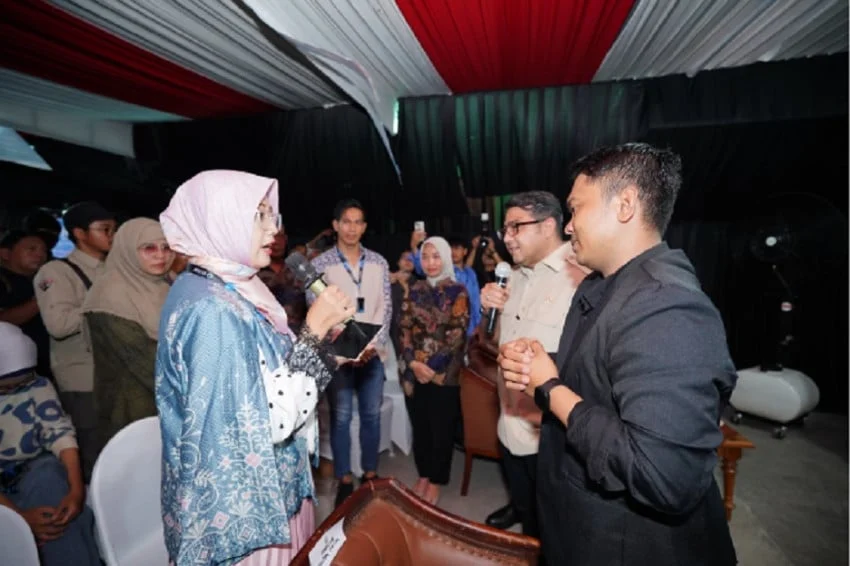
The landscape of Indonesia’s creative economy is undergoing a profound structural shift, transitioning from traditional urban hubs to regional, community-driven ecosystems. This evolution was prominently on display at the Taman Reptil Adiluhur in Kebumen, Central Java, where the Minister of Creative Economy, Teuku Riefky Harsya, conducted a working visit to observe a grassroots digital content creation workshop. The event underscored the critical intersection between digital literacy, local commerce, and the democratization of economic opportunity in Indonesia’s smaller municipalities.
Amidst the bustling atmosphere of the workshop, Minister Riefky was greeted by Rytha Sariedova, a primary school teacher who has transitioned into a prominent local digital creator and community advocate. Holding a microphone and demonstrating the poise of a seasoned digital communicator, Rytha welcomed the Minister and immediately bridged the gap between national policy and local reality. Her initiative, alongside the experiences of fellow workshop participants, served as a living case study of how digital platforms can be harnessed to stimulate regional economic growth, transform micro-entrepreneurship, and provide alternative revenue streams for educators and local residents alike.
The Ground Reality: From Classroom to Content Creation
Rytha’s journey into the digital sphere reflects a broader socioeconomic phenomenon taking place across Indonesia’s tier-two and tier-three regions. By day, she educates young minds in a Kebumen primary school; outside of standard working hours, she operates as a digital champion for the district’s micro, small, and medium-sized enterprises (MSMEs). Operating under the TikTok handle @kebumsky, Rytha recognized a glaring gap in the local market: numerous traditional food stalls, street vendors, local coffee shops, and home-based artisans possessed exceptional products but lacked the digital visibility required to capture a broader consumer base.
What began as a philanthropic endeavor quickly evolved into a sustainable model of community empowerment. Initially, Rytha produced and published promotional content without financial compensation, driven purely by civic duty and a desire to see local businesses thrive. She meticulously documented culinary offerings, mapped exact vending locations, and highlighted the unique stories behind each small business. The immediate impact—witnessing struggling food stalls experience surges in foot traffic and new customer acquisition following a single viral video—provided a profound sense of fulfillment.
As her platform grew, so did the commercial viability of her digital footprint. During her dialogue with Minister Riefky, Rytha candidly discussed the financial realities of content creation in the current economic climate. "In the beginning, I did it completely unpaid, purely to promote MSMEs," Rytha explained to the Minister. "Now, it is quite substantial; in this economy, it is extremely helpful." Her testimony encapsulates the dual nature of the modern creator economy: it serves simultaneously as an altruistic tool for community development and a viable personal economic buffer in a fluctuating macroeconomic environment.
The Broader Context: Decentralizing Indonesia’s Creative Economy
The Ministry of Creative Economy’s strategic focus on regions like Kebumen is neither accidental nor isolated. For decades, Indonesia’s creative industries—encompassing film, music, fashion, digital applications, and content creation—were heavily concentrated in major metropolitan areas such as Jakarta, Bandung, and Surabaya. However, the rapid expansion of digital infrastructure, increased smartphone penetration, and affordable mobile data have leveled the playing field, enabling regional creators to bypass traditional geographic barriers.
Under the leadership of Teuku Riefky Harsya, the Ministry has prioritized grassroots engagement, aiming to integrate rural and semi-urban economies into the national digital framework. Workshops such as the one held at Taman Reptil Adiluhur are designed to demystify the mechanics of digital platforms. They provide participants with actionable skills in algorithmic optimization, video production, personal branding, and monetization strategies.
During his inspection of the workshop, Minister Riefky actively engaged with the attendees, delving into the granular details of their creative processes. He inquired about the initial catalysts that inspired them to start, the technical challenges they encountered while scaling their content, and the methodologies they employed to identify and capitalize on commercial opportunities within digital ecosystems. This hands-on approach reflects a growing policy recognition that sustainable economic growth must be built from the ground up, empowering individuals who possess deep local knowledge to become economic catalysts within their own communities.
Economic Implications and the Rise of the Creator Economy
The convergence of regional MSMEs and digital content creators represents a transformative shift in retail marketing and local tourism promotion. Traditional advertising channels—such as television, radio, and print media—are often financially prohibitive for small-scale vendors. Conversely, hyper-local content creators act as accessible, trusted intermediaries who utilize short-form video platforms to build authentic connections between businesses and consumers.
From an economic perspective, this dynamic generates several compounding benefits:
- Zero-Cost Initial Marketing for MSMEs: Small businesses that previously relied exclusively on organic, walk-in traffic gain access to regional and national audiences without incurring marketing expenses.
- Diversification of Household Incomes: Educators, homemakers, and local youths can supplement their primary earnings by monetizing their digital presence through brand partnerships, affiliate marketing, and platform-specific creator funds.
- Stimulation of Local Tourism and Culinary Sectors: Digital storytelling highlights regional hidden gems, drawing visitors from neighboring districts and provinces to explore local culinary traditions and artisanal goods.
- Data-Driven Regional Insights: The proliferation of digital content provides quantifiable metrics on consumer preferences in specific geographic areas, allowing regional governments to tailor their economic development policies more effectively.
Macroeconomic data underscores the timeliness of these regional initiatives. The contribution of the creative economy to Indonesia’s Gross Domestic Product (GDP) has steadily expanded, with the digital sub-sector emerging as one of the most resilient growth engines. By integrating regions like Kebumen into this national narrative, the Ministry aims to ensure that the economic dividends of digitalization are distributed equitably across the archipelago, rather than remaining siloed within major urban centers.
Strategic Alignment with National and International Initiatives
Minister Riefky’s visit to Kebumen is part of a broader, sustained touring schedule aimed at auditing regional creative potential and preparing Indonesia for prominent international platforms. Just prior to his engagement in Kebumen, the Minister participated in high-profile cultural and creative exchanges across Central Java, including collaborative sessions in Wonosobo where traditional folk instruments like the Bundengan were highlighted as unique assets of intangible cultural heritage.
Furthermore, these grassroots efforts feed directly into larger national campaigns, such as the preparations for the World Conference on Creative Economy (WCCE) 2026. The upcoming global summit aims to spotlight uniquely Indonesian cultural phenomena—ranging from traditional events like the Pacu Jalur boat races to regional culinary and digital innovations—onto the global stage. By anchoring global initiatives in local realities, the Ministry seeks to demonstrate that Indonesia’s creative economy derives its strength from the authentic cultural expressions and entrepreneurial spirit of everyday citizens like Rytha Sariedova.
Analytical Outlook and Future Challenges
While the success stories emerging from Kebumen are encouraging, policy analysts and industry stakeholders emphasize that scaling these initiatives requires addressing foundational structural challenges. Sustainable digital empowerment in regional Indonesia depends heavily on continuous improvements in digital infrastructure, particularly reliable high-speed internet access in outlying villages, and ongoing educational initiatives to combat digital illiteracy.
Moreover, as the creator economy matures, regulatory frameworks must adapt to protect micro-creators and ensure fair compensation practices, transparent brand partnerships, and adequate consumer protection for transactions initiated via social commerce platforms. The Ministry of Creative Economy faces the complex task of formalizing these emerging sectors without stifling the organic creativity and flexibility that made them successful in the first place.
The engagement between Minister Teuku Riefky Harsya and the digital creators of Kebumen signals a promising collaborative trajectory between the state and grassroots innovators. By actively listening to the frontline participants of the digital revolution, policymakers can craft targeted, responsive interventions that turn local passion into sustained economic resilience. As digital platforms continue to redefine the boundaries of commerce and communication, the experiences of educators-turned-creators in Central Java offer a compelling blueprint for inclusive economic development in modern Indonesia.
