
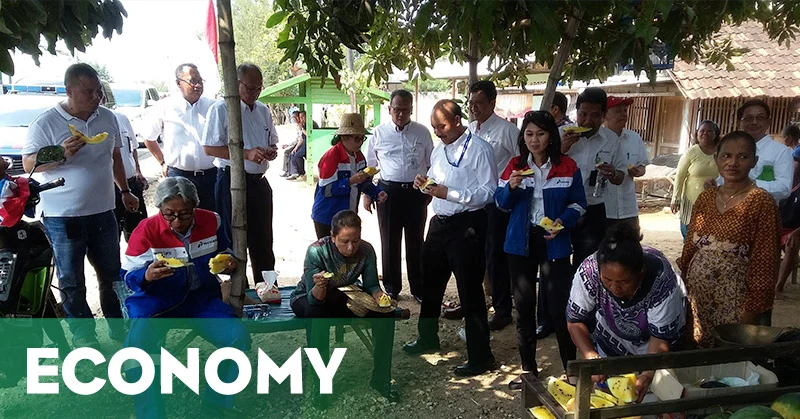
The official visit of President Joko Widodo to the PT Trans Pacific Petrochemical Indotama (TPPI) refinery complex in Tuban, East Java, was marked by a moment of unexpected local engagement. High-ranking state officials and corporate executives momentarily paused their tight security schedule to interact with residents and sample agricultural produce grown in the shadow of the long-dormant petrochemical facility. The inspection, which took place on a Wednesday in November 2015, underscored the strategic significance of restoring operations at the vital energy installation, even as it highlighted the human element of high-level state visits to industrial regions.
President Joko Widodo, commonly known as Jokowi, led the delegation to the facility, which had spent years grappling with financial and operational paralysis. Accompanying the President were several key figures charged with steering Indonesia’s economic and energy sectors: Minister of State-Owned Enterprises (BUMN) Rini Soemarno, Pertamina President Director Dwi Soetijpto, Pertamina Vice President of Communication Wianda Pusponegoro, and Director General of Oil and Gas at the Ministry of Energy and Mineral Resources IGN Wiratmaja Puja.
Rather than maintaining a strictly formal motorcade transit, members of the entourage engaged directly with the surrounding community. As the delegation walked near the refinery perimeter, local residents gathered to catch a glimpse of the national leaders, with many seizing the opportunity to take photographs with the government ministers and corporate executives. The spontaneous interaction set a warm tone for an otherwise high-stakes technical inspection of national infrastructure.
A Refreshing Interlude at a Local Fruit Stand
Amidst the walk, the entourage paused at a modest roadside home belonging to a local resident who operated a small fruit stall. The stall featured fresh watermelons harvested from nearby agricultural plots situated just a short distance from the TPPI refinery complex. Recognizing a prime opportunity to support local enterprise and experience regional agriculture firsthand, the officials stopped to partake in the harvest.
Minister Rini Soemarno enthusiastically invited her colleagues and the accompanying media members to sample the fruit. "Come on, try the watermelon first. This watermelon is delicious," Rini remarked to the group gathered around the stall.
Pertamina executives, including Dwi Soetijpto, joined in the impromptu tasting, enjoying slices of the sweet fruit harvested from the sandy soils of Tuban. After partaking in the local hospitality and settling accounts with the vendor, the delegation resumed its journey on foot toward the main gates of the TPPI processing plant.
Strategic Background of the TPPI Refinery
The lighthearted moment at the fruit stand contrasted sharply with the gravity of the mission at hand. The PT Trans Pacific Petrochemical Indotama refinery in Tuban was, at the time, one of the most critical and troubled energy assets in Indonesia. For years, the facility had stood as a symbol of unrealized industrial potential, plagued by mounting debts, legal entanglements, and management disputes that kept it from contributing meaningfully to the domestic fuel supply chain.
Established to process condensate into valuable petrochemical products and refined fuels, the facility boasts a massive processing capacity capable of significantly altering Indonesia’s reliance on fuel imports. However, prior to the intervention of the administration in 2015, the refinery had experienced prolonged periods of shutdown. The financial hemorrhage associated with its idleness drained resources and created persistent vulnerabilities in the nation’s energy security framework.
Recognizing the strategic necessity of domestic refining capacity, the government orchestrated a rescue plan. State-owned energy giant PT Pertamina (Persero) was tasked with taking operational control of the facility through a cooperation agreement, utilizing its subsidiaries and financial muscle to reactivate the plant. The November 2015 visit by President Jokowi and his economic team served as a crucial progress check to ensure that rehabilitation efforts were moving forward according to schedule.

The Chronology of the Reactivation Effort
The path toward reviving the Tuban facility required intricate coordination between government ministries, state enterprises, and creditors. The chronology of the reactivation effort highlighted the urgency with which the administration viewed the energy sector:
Early 2015: Discussions intensified between the Ministry of BUMN and Pertamina regarding the legal and financial frameworks required to absorb TPPI’s massive liabilities and restructure its operations.
Mid-2015: Formal agreements were reached, paving the way for Pertamina to assume operational control and begin supplying condensate feedstock to the plant.
August–September 2015: Technical teams initiated preparatory commissioning activities, conducting safety audits and testing pipeline integrity after years of dormancy.
November 2015: President Joko Widodo conducted an on-site inspection of the facility, accompanied by Minister Rini Soemarno and Pertamina Director Dwi Soetijpto, to evaluate the readiness of the plant ahead of its commercial restart.
Late 2015 and Beyond: The refinery successfully resumed commercial production, gradually scaling up output to supply a substantial portion of Indonesia’s national fuel requirements, particularly gasoline and diesel.
Economic Implications and Energy Security
The revitalization of the TPPI refinery held profound implications for Indonesia’s macroeconomic stability. At the time of the inspection, Indonesia imported a vast portion of its refined petroleum products, exposing the state budget and the national currency to severe volatility in global oil prices and exchange rate fluctuations.
By bringing the Tuban facility back online, the government aimed to drastically reduce dependence on foreign fuel traders. According to data from the Ministry of Energy and Mineral Resources and Pertamina, the reactivation of the plant was projected to save the country significant amounts in foreign exchange expenditures on fuel imports each month. Furthermore, the stable supply of petrochemical feedstocks bolstered domestic manufacturing industries, creating a more integrated downstream industrial ecosystem in East Java.
The presence of high-level officials like Minister Rini Soemarno and Pertamina Chief Dwi Soetijpto underscored the direct accountability expected from state-owned enterprises in managing strategic national assets. Their willingness to engage with local communities—even during high-pressure infrastructure assessments—reflected an effort to bridge the gap between grand macroeconomic policies and the localized impact of industrial development.
Broader Impacts on the Tuban Region
Beyond national energy metrics, the operational revival of the TPPI refinery brought tangible socioeconomic changes to the Tuban Regency. The influx of technical workers, contractors, and administrative personnel revitalized the local economy, boosting demand for housing, transportation, and small businesses—such as the very fruit vendor whose watermelons were sampled by the presidential delegation.
Local authorities anticipated that a functioning industrial hub would generate sustainable employment opportunities for regional vocational graduates and stimulate municipal revenues through ancillary services. However, the reactivation also brought increased scrutiny regarding environmental safety, traffic management, and corporate social responsibility. Ensuring that industrial growth aligned with sustainable community development remained a priority for regional stakeholders.
Conclusion
The visit to the TPPI refinery in Tuban remains a memorable episode in the broader narrative of Indonesia’s infrastructure push during the mid-2010s. While the serious business of the day centered on securing national energy independence and correcting years of industrial stagnation, the brief pause to enjoy local watermelons provided a humanizing touch to the proceedings. Ultimately, the successful resurrection of the Tuban facility transformed a long-standing economic liability into a cornerstone of national energy resilience, proving that meticulous state planning, when paired with grassroots engagement, can yield dividends far beyond the balance sheet.
