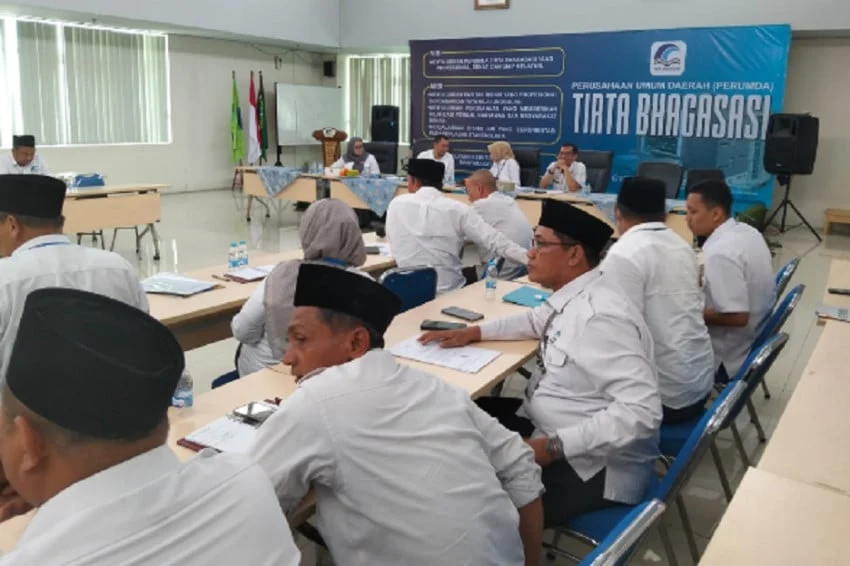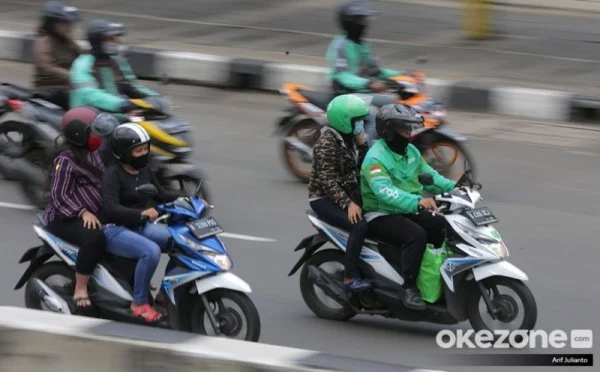
The Indonesian House of Representatives (DPR), specifically Commission IX, has officially initiated a series of Public Hearing Meetings (RDPU) to gather input from stakeholders regarding the draft Law on Labor Protection. Held at the Nusantara I Building in the Senayan Parliamentary Complex on Monday, September 21, 2026, the session focused heavily on the evolving landscape of the gig economy, particularly the status of online motorcycle taxi drivers, or "ojol," whose working conditions currently exist in a gray area between independent contractors and traditional employees.
Led by Deputy Chairman of Commission IX, Yahya Zaini, the session served as a critical platform for labor advocates and gig worker representatives to voice concerns that could fundamentally reshape the digital platform economy in Indonesia. The inclusion of groups such as Industriall Indonesia Council, the Indonesian Transport Drivers Union (SPTI), URC Bergerak, and various Ojol Indonesia communities highlights the legislative urgency to modernize labor laws that were originally drafted for the industrial era, not the digital age.
The Legislative Context and Meaningful Participation
The ongoing deliberations for the RUU on Labor Protection are part of a broader national initiative to update Indonesia’s regulatory framework to match the realities of 21st-century employment. Legislators are under pressure to ensure that the legislative process adheres to the principle of "meaningful participation," a requirement mandated by the Constitutional Court for significant legislative changes.
Yahya Zaini emphasized that the legislature is not working in a vacuum. By inviting diverse stakeholders, the DPR aims to prevent the "one-size-fits-all" trap that often plagues omnibus-style legislation. "We are opening our doors to receive substantive input, ensuring that the final draft reflects the diverse needs of the modern workforce," Zaini stated during the hearing. The primary challenge remains the definition of "worker" in an era where algorithmic management dictates shifts, earnings, and performance standards without providing traditional benefits such as health insurance, retirement funds, or job security.
Chronology of the Gig Economy Regulatory Debate
The struggle to define the legal status of ojol drivers has been a protracted issue in Indonesia for over a decade. Since the rise of major ride-hailing applications around 2014-2015, the relationship between platform companies and drivers has been consistently categorized as a "partnership" (kemitraan).
- 2015-2017: Initial rapid expansion of ride-hailing services. Drivers operate with minimal regulation, leading to frequent protests regarding tariffs and safety standards.
- 2019: The Ministry of Transportation issued Regulation No. 12/2019, which provided a framework for protection, safety, and tariff structures for motorcycle taxis. However, this remained a ministerial regulation, not a foundational labor law.
- 2023-2024: Increased calls for the state to classify drivers as employees to ensure access to social security (BPJS Ketenagakerjaan).
- 2026 (September): The formal integration of these discussions into the RUU on Labor Protection, marking the first time the legislature has sought to codify the status of gig workers into a primary law.
The Conflict of Interests: Flexibility vs. Protection
The most significant friction point during the September 21 session was the tension between "flexibility" and "legal certainty." William Rawung, representing URC Bergerak, presented a cautious perspective that reflects the fears of many drivers. He questioned whether forcing a traditional employment model onto the platform economy would inadvertently destroy the very flexibility that draws many workers to the industry.
"If the law mandates strict hours, fixed shifts, and an employer-employee hierarchy, does that strip us of the autonomy we currently possess?" Rawung asked. For many, the ability to switch apps, work at odd hours, or balance driving with other income streams is the primary benefit of the gig economy. The fear is that formalizing the relationship as a standard employment contract could lead to lower take-home pay, as companies might seek to offset the costs of mandatory benefits by imposing stricter, less lucrative performance quotas.

Data and Economic Implications
The gig economy in Indonesia is not a fringe sector; it is a vital pillar of the national economy. Estimates suggest that millions of Indonesians rely on ride-hailing and delivery apps as their primary or secondary source of income.
- Employment Impact: Platform-based work accounts for a significant portion of the informal sector’s transition to digital integration.
- Economic Contribution: Studies have shown that gig platforms contribute billions of dollars annually to Indonesia’s GDP, providing a buffer during economic downturns by absorbing labor that cannot be accommodated by the formal manufacturing or service sectors.
- The Protection Gap: Currently, less than 30% of gig workers have consistent access to social security, and fewer still possess unemployment insurance. The RUU aims to bridge this gap without causing mass deactivation of drivers by platforms facing higher labor costs.
Analytical Perspectives on Future Regulation
Legal experts observing the proceedings note that Indonesia is at a crossroads. Countries like the United Kingdom and Spain have recently faced landmark court rulings that reclassified gig workers as employees. Conversely, other nations have opted for a "third category" of worker status—somewhere between independent contractor and employee—to preserve flexibility while mandating basic protections.
The DPR’s approach in the RUU on Labor Protection appears to be leaning toward a hybrid model. By including the sector in the RUU, the state is signaling that the era of total deregulation is coming to an end. However, the legislative process must account for the platform companies’ business models, which rely on low overhead costs to remain competitive.
If the legislation imposes too heavy a burden, platforms may respond by reducing the number of active drivers or increasing consumer prices, potentially triggering a backlash from both the public and the drivers themselves. If the legislation is too lenient, it risks perpetuating the current cycle of precarious work, where drivers bear all the risks of the job (vehicle maintenance, fuel, insurance) without any of the protections associated with formal labor.
The Path Forward: Challenges for the DPR
The RDPU is merely the first step in a long legislative process. Following the intake of aspirations from groups like Industriall and URC Bergerak, the Commission IX must synthesize these often-conflicting demands into a cohesive legal text.
The primary challenge for the remainder of 2026 will be to draft clauses that:
- Mandate Social Protection: Ensure that drivers have access to health and accident insurance, regardless of their status as "partners" or "employees."
- Ensure Algorithmic Transparency: Provide mechanisms for drivers to contest account suspensions or unfair rating penalties, which currently act as a form of "hidden" dismissal.
- Preserve Flexibility: Protect the right of the driver to choose their working hours without being penalized by the system.
As the RUU moves toward the next phase of deliberation, the eyes of the public remain fixed on the Senayan complex. The outcome of this legislation will set a precedent for the digital economy in Southeast Asia, influencing how the region balances the drive for innovation with the fundamental right to decent work. The testimony provided by the Ojol representatives serves as a sobering reminder that behind every digital transaction is a human being navigating the risks of a modern, yet largely unprotected, labor market. The DPR now faces the monumental task of crafting a law that is not only protective but also sustainable in a rapidly changing digital landscape.