
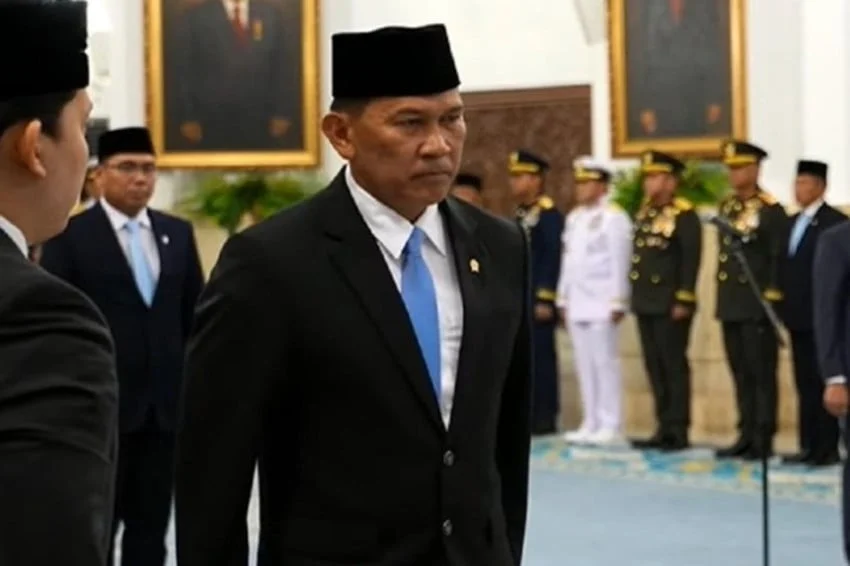
The Head of the Indonesian National Board for Disaster Management (BNPB), Lieutenant General Kristomei Sianturi, has officially announced a comprehensive internal restructuring initiative following a recent corruption sting operation conducted by the Corruption Eradication Commission (KPK). The high-profile enforcement action, which resulted in the apprehension of several key figures within the disaster relief agency—including Principal Secretary (Sestama) Rustian—has sent shockwaves through Indonesia’s disaster management sector. In response to this institutional crisis, BNPB leadership has committed to a rigorous cleanup campaign, targeting everything from procurement governance and fund allocation to accountability audits and standard operating procedures.
The sweeping institutional overhaul aims to restore public trust, which has been severely tested by allegations of illicit financial practices within an agency tasked with saving lives and managing national crises. As disaster management requires immense resource mobilization and rapid financial deployment during emergencies, the revelation of corruption at the upper echelons of BNPB has underscored vulnerabilities in state expenditure monitoring. Consequently, Lieutenant General Kristomei has outlined an aggressive roadmap designed to overhaul internal mechanics, enhance transparency, and eliminate structural loopholes that could facilitate white-collar crime.
Chronology of the KPK Sting Operation and Immediate Aftermath
The crisis unfolded when KPK investigators executed a targeted operation apprehending high-ranking officials within BNPB. Among those caught in the sweep was Principal Secretary Rustian, who subsequently caught public attention when he departed the KPK Red and White Building shrouded in silence, avoiding questions from reporters regarding the allegations leveled against him. The arrest marked a critical juncture in the ongoing efforts by anti-corruption watchdogs to scrutinize procurement processes across civil service institutions, particularly those handling substantial state budgets earmarked for public welfare and crisis response.
The timing of the KPK operation placed immense pressure on BNPB leadership to demonstrate accountability. Immediately following the raid, Lieutenant General Kristomei stepped forward to address the fallout, signaling a sharp departure from traditional institutional defensiveness. Instead of denying systemic vulnerabilities, the agency’s leadership acknowledged the gravity of the situation and initiated an immediate institutional review. By laying the groundwork for cooperative transparency with anti-corruption authorities, BNPB aims to isolate the alleged wrongdoing of individuals from the broader mission of the agency.
A Three-Pronged 100-Day Consolidation Strategy
As part of the systemic remediation plan, BNPB has launched a targeted 100-day internal consolidation program. This initiative focuses on three core pillars designed to recalibrate the agency’s operational ethos: "Bersih" (Clean), "Siaga" (Prepared), and "Terhubung" (Connected).
The "Bersih" pillar centers on absolute financial integrity and administrative transparency. It mandates an exhaustive audit of all ongoing procurement contracts, discretionary spending, and legacy projects. By scrutinizing past financial portfolios, BNPB hopes to identify irregularities, recover potentially misappropriated state funds, and establish clear baselines for future budgetary execution.
The "Siaga" pillar reinforces operational readiness. While administrative investigations are underway, the agency must maintain its primary mandate: responding to natural disasters across the Indonesian archipelago. Ensuring that internal restructuring does not paralyze emergency response capabilities remains a top priority for military and civilian leadership within the board.
The "Terhubung" pillar focuses on stakeholder communication, inter-agency coordination, and digital integration. By modernizing reporting channels and administrative databases, BNPB intends to minimize human discretion in procurement workflows, relying instead on automated, trackable digital systems that leave an immutable audit trail.

Strengthening Internal Oversight and Compliance Mechanisms
A cornerstone of the newly announced reforms is the elevation of the role played by the BNPB Main Inspectorate (Inspektorat Utama). Moving forward, the internal oversight division will operate with expanded authority and heightened autonomy to monitor financial flows and operational decisions continuously. Rather than serving as a reactive body, the Inspectorate Utama is being retooled as a proactive compliance gatekeeper, tasked with conducting regular risk assessments across all directorates.
Furthermore, BNPB is working in close coordination with external oversight bodies, including the KPK and the Supreme Audit Agency (BPK), to ensure that internal reviews meet rigorous legal and administrative standards. Whistleblower protection mechanisms are also being reinforced to encourage staff members to report suspicious financial activities or procedural deviations without fear of professional retaliation.
Broader Implications for Disaster Management Governance in Indonesia
The corruption scandal and subsequent cleanup at BNPB carry profound implications for public administration in Indonesia. As an archipelago frequently struck by earthquakes, volcanic eruptions, tsunamis, and extreme weather events, Indonesia allocates trillions of rupiah annually to disaster mitigation, emergency logistics, and post-disaster reconstruction. The integrity of these funds is paramount; any diversion of resources directly impacts the welfare of vulnerable communities and victims of natural calamities.
Experts in public sector governance note that disaster management agencies globally are uniquely vulnerable to corruption due to the urgency of their operations. During acute crises, standard bureaucratic checks and competitive bidding processes are frequently bypassed in favor of expedited emergency procurement. While legally permissible under specific disaster emergency statuses, these fast-track mechanisms have historically provided cover for inflated pricing, preferential vendor selection, and kickbacks.
The reforms initiated by Lieutenant General Kristomei represent a critical step toward closing these emergency loopholes without compromising response velocity. By implementing strict post-hoc auditing protocols and transparent digital procurement platforms, BNPB seeks to demonstrate that speed and accountability are not mutually exclusive.
Looking Ahead: Restoring Public and Institutional Trust
The success of BNPB’s 100-day consolidation program and broader institutional overhaul will ultimately be measured by tangible outcomes: the successful prosecution of culpable individuals, the recovery of state assets, and the systemic prevention of future financial misconduct. For the leadership under Lieutenant General Kristomei, the path forward requires unwavering resolve, institutional courage, and a willingness to subject sacred cows within the bureaucracy to unsparing external and internal scrutiny.
As Indonesia continues to navigate a high-risk natural disaster landscape, the nation’s primary relief agency must stand as a paragon of public service integrity. The ongoing transformation at BNPB serves as both a cautionary tale regarding the perils of administrative complacency and a hopeful blueprint for systemic renewal in the face of institutional crisis.
