
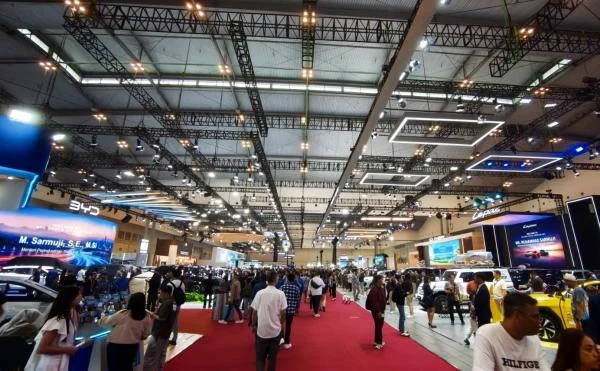
The Indonesian government has issued a strategic directive to Chinese automotive manufacturers currently operating within the country, mandating a transition from simple assembly operations to full-scale manufacturing and the deepening of local component integration. This policy push, spearheaded by the Ministry of Industry, aims to transform Indonesia from a mere consumption market into a robust regional production hub, thereby strengthening the national automotive value chain and generating sustainable employment opportunities.
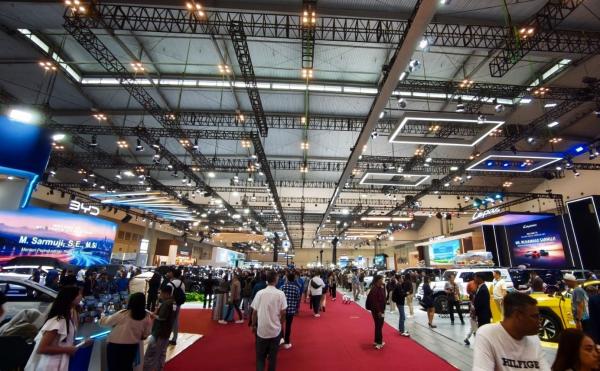
The directive was articulated by Setia Diarta, the Director General of the Metal, Machinery, Transportation Equipment, and Electronics (ILMATE) division at the Ministry of Industry. Speaking on the sidelines of the Gaikindo Auto Week (GAW) on November 20, 2026, Diarta emphasized that the Indonesian government is no longer content with "Completely Knocked Down" (CKD) assembly activities. Instead, the government is incentivizing foreign firms to integrate deeper into the local ecosystem, specifically by increasing the utilization of locally sourced raw materials and components.
The Strategic Imperative for Industrial Maturity
For decades, the Indonesian automotive sector has been dominated by Japanese manufacturers, which established a mature and deeply entrenched supply chain. As Chinese automotive brands—such as Wuling, Chery, BYD, and others—have entered the Indonesian market in recent years, their initial business models focused heavily on market penetration through competitive pricing and the introduction of advanced Electric Vehicle (EV) technology. While this has invigorated competition, the government now seeks to ensure that these entrants contribute substantively to the domestic economy beyond sales figures.
The Ministry of Industry’s strategy is rooted in the "Local Content Requirement" (TKDN) policy. By mandating higher percentages of local parts, the government intends to compel global manufacturers to relocate not just their assembly lines, but their Tier-2 and Tier-3 component suppliers to Indonesia. This shift is essential to mitigate reliance on imported components, which currently leaves the domestic industry vulnerable to global supply chain disruptions and currency fluctuations.
Historical Context and Market Evolution
The automotive landscape in Indonesia has undergone a seismic shift between 2020 and 2026. Prior to the entry of Chinese manufacturers, the market was largely stagnant in terms of technological variety. The aggressive entry of Chinese firms, particularly in the EV segment, catalyzed a shift in consumer behavior and forced legacy manufacturers to accelerate their own electrification roadmaps.
However, the rapid growth of these new entrants has not yet been matched by a proportional increase in the depth of local manufacturing. Most Chinese firms have established factories that function primarily as assembly hubs. The government’s current position is a natural progression of the "Industrialization 4.0" roadmap, which aims to increase the manufacturing sector’s contribution to Indonesia’s Gross Domestic Product (GDP).
Economic Realities and Market Dynamics
Despite the ambitious nature of the government’s directive, officials remain pragmatic. During the Gaikindo Auto Week, Setia Diarta acknowledged that the pace of industrial expansion is inherently tied to market demand. "We are pushing for investment that goes beyond assembly," Diarta noted. "But we must be realistic and observe how the market absorbs these vehicles. All investment decisions are ultimately driven by demand. As that demand grows, the manufacturers will be compelled to scale up their production capacities."
This recognition of market forces is crucial. For a manufacturer to justify the high capital expenditure (CAPEX) required for a full-scale engine or battery manufacturing facility, they require a stable and predictable sales volume. With the Indonesian automotive market showing signs of resilience and a growing middle class, the government believes the time is ripe to move from the "assembly phase" to the "manufacturing phase."
Implications for the Local Component Industry
The push for deeper local manufacturing has significant implications for Indonesia’s small and medium-sized enterprises (SMEs). Currently, the automotive supply chain in Indonesia is heavily centralized. If Chinese manufacturers are successfully encouraged to source locally, it would provide a massive influx of orders for local Tier-3 and Tier-4 suppliers.

Analysts suggest that this policy could lead to a "technology transfer" effect. By partnering with local vendors to meet the strict quality standards required by international automotive brands, local suppliers will naturally upgrade their technical capabilities, workforce training, and management systems. This, in turn, makes the entire Indonesian automotive sector more competitive on a global scale.
Challenges to Full Localization
While the government’s vision is clear, several hurdles remain. The first is the cost of logistics. Even if a factory is located in West Java, the cost of transporting raw materials from across the archipelago can be prohibitive compared to importing finished parts from China. Furthermore, the specialized nature of EV components—such as lithium-ion battery cells—remains a bottleneck.
Indonesia has already taken significant steps to address the battery supply chain, leveraging its status as the world’s largest nickel producer. By creating a vertically integrated supply chain—from nickel mining to battery precursor production and finally to EV assembly—the government is attempting to create a "locked-in" advantage for manufacturers. However, the technical complexity of these processes means that full integration will likely take several more years to achieve.
Reactions from the Industry
Industry stakeholders have largely responded with cautious optimism. Representatives from the Association of Indonesia Automotive Industries (Gaikindo) have consistently advocated for policies that provide long-term certainty. While some manufacturers express concerns that strict localization mandates could increase the cost of vehicles, others see the benefit of being "deeply embedded" in the market, which provides a hedge against future trade barriers or changes in import regulations.
"The key is balance," says an industry analyst familiar with the Indonesian automotive sector. "The government is signaling that the ‘honeymoon period’ for foreign entrants—where they could simply assemble and sell—is ending. Now, the government wants to see the tangible economic footprint of these companies in terms of local factories and localized supply chains."

Looking Ahead: The 2027 Outlook
As Indonesia looks toward 2027, the focus of the Ministry of Industry will likely remain on enforcing existing TKDN targets while providing incentives for companies that exceed them. The government is expected to continue offering fiscal incentives, such as tax holidays and import duty exemptions on capital goods, for companies that commit to long-term manufacturing investments in Indonesia.
The success of this initiative will be measured not just by the number of cars sold, but by the number of local jobs created in the manufacturing sector and the percentage of parts in those vehicles that bear the "Made in Indonesia" label. For the Chinese manufacturers, the challenge is to prove that they are not merely short-term opportunists but long-term partners in Indonesia’s industrial development.
In conclusion, the directive issued by the Indonesian government marks a critical juncture in the country’s industrial policy. By leveraging the entry of Chinese manufacturers to foster a more profound and self-reliant automotive sector, Indonesia is positioning itself to become a key node in the global automotive production network. While the transition from assembly to full-scale manufacturing is a complex and capital-intensive process, the alignment of government policy, resource availability, and a growing consumer market suggests that the conditions for this evolution are stronger than ever. The coming years will reveal whether the manufacturers can rise to the challenge and transform the Indonesian automotive sector into a regional powerhouse.
