
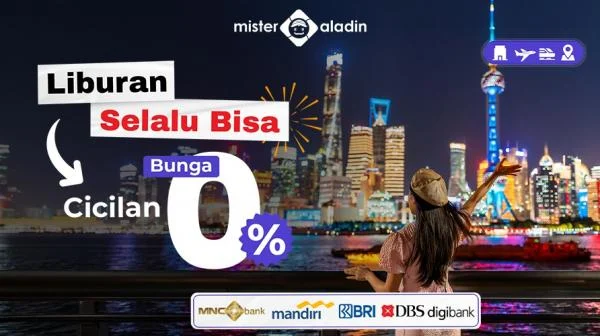
The art of travel planning has evolved significantly in the digital age, shifting from a process fraught with logistical hurdles to a streamlined experience defined by efficiency and financial flexibility. For the modern traveler, the foundation of a stress-free vacation lies in the meticulous coordination of accommodation, transportation, and curated activities. Central to this preparation is the ability to manage travel expenditures without compromising the quality of the journey. Recognizing this need for financial ease, Mister Aladin, a prominent Online Travel Agent (OTA) in Indonesia, has launched a strategic partnership with several major financial institutions—MNC Bank, Bank Mandiri, BRI, and digibank—to provide travelers with zero percent installment plans for their holiday bookings.
This initiative is designed to address the common financial friction associated with large-scale travel investments. By allowing consumers to defer full payments through credit card installments, the program enables families and individual travelers to secure high-quality travel packages, flights, and premium hotel stays without the immediate burden of a lump-sum payment.
Strategic Financial Collaboration in the Travel Sector
The collaboration between Mister Aladin and these four major banks is a calculated move to capture a growing segment of the market that prioritizes liquidity. In the current economic climate, travelers are increasingly seeking ways to maintain their lifestyle—including international and domestic tourism—while managing cash flow effectively.
The core of the promotion is a zero percent interest rate on credit card installments for all transactions conducted through the Mister Aladin platform. This encompasses a broad spectrum of travel-related services, including international and domestic flight bookings, hotel reservations, train tickets, and comprehensive tour packages. By removing interest charges, the financial institutions and the OTA are effectively lowering the barrier to entry for luxury and mid-range travel experiences.
According to industry analysts, such partnerships are indicative of a broader trend where travel platforms act as fintech conduits, integrating banking services directly into the consumer journey. This symbiosis not only benefits the traveler but also provides the banks with increased credit card utilization and provides the OTA with higher transaction volumes.
Timeline and Scope of the Promotion
The promotional window for these installment plans is exceptionally long, reflecting a long-term commitment to consumer support. The program is valid until December 31, 2026. This multi-year duration provides travelers with the stability to plan not just for upcoming seasonal holidays, but for long-term travel goals spanning several years.
The longevity of this campaign suggests a strategic effort to cultivate customer loyalty. By providing a recurring benefit that spans multiple fiscal cycles, Mister Aladin aims to position itself as the primary choice for recurring travelers who value financial predictability. Interested users can view the detailed terms and conditions, including participating bank-specific requirements, at the official portal: https://www.misteraladin.com/promotions/cicilanbank026.
The Role of Online Travel Agents in the Modern Economy
To understand the significance of this promotion, one must consider the shifting landscape of the Indonesian tourism industry. Online Travel Agents have fundamentally changed how people interact with travel services. No longer reliant on brick-and-mortar agencies, the modern traveler expects a self-service model that is available 24/7.
Mister Aladin has carved a niche in this space by offering a comprehensive ecosystem. Beyond simple ticketing, the platform provides:
- Inventory Diversity: Access to a vast range of hotels and transportation providers, allowing for price comparison in real-time.
- Technological Integration: A robust mobile application available on both the Google Play Store and the Apple App Store, which serves as a one-stop-shop for itinerary management.
- Customer Support Infrastructure: As digital platforms grow, the importance of responsive customer support becomes paramount. Mister Aladin has invested in customer service channels to resolve the common anxieties associated with online booking, such as flight delays or accommodation disputes.
Data indicates that the reliance on OTAs in Southeast Asia is projected to grow at a compound annual growth rate (CAGR) of over 10% through 2028. This growth is driven by the increasing digitization of the population and the rising middle class in Indonesia, both of which are increasingly comfortable with digital payments and e-commerce.
Economic Implications for the Traveler
The psychological and financial impact of zero percent installment plans should not be underestimated. When a traveler is presented with a large expense—for instance, a family vacation package—the immediate cost can often act as a deterrent to booking. By breaking this cost into manageable monthly payments, the traveler is able to allocate their disposable income over a longer period, which can theoretically improve their ability to afford a higher "class" of travel or a longer duration of stay.
Furthermore, this financial model encourages better planning. When a traveler locks in their accommodation and transport early using an installment plan, they are protected against the price volatility that often occurs closer to the departure date. In the travel industry, booking windows are a key metric; early bookings generally yield lower prices. By providing the financial mechanism to book early, Mister Aladin is enabling consumers to achieve better value for their money.
Market Reaction and Consumer Behavior
Financial analysts observe that installment programs are highly effective in increasing the Average Order Value (AOV). When customers are given the option to "buy now, pay later," they are statistically more likely to upgrade their hotel rooms, add travel insurance, or book additional excursions.
For the partner banks—MNC Bank, Bank Mandiri, BRI, and digibank—this collaboration is a low-risk strategy to increase credit card engagement. It allows the banks to tap into the high-frequency travel demographic. Furthermore, it provides the banks with data-driven insights into consumer travel patterns, which can be used to tailor future financial products.
Navigating the Digital Travel Ecosystem
For the end-user, the convenience of the mobile app is the final piece of the puzzle. The integration of payment gateways that support these installment plans directly within the app removes the need for external redirects, which often cause "cart abandonment" in e-commerce.
The process is designed to be intuitive:
- Selection: The user browses the platform for their desired travel service.
- Payment: At checkout, the user selects their credit card as the payment method.
- Installment Conversion: The system identifies eligible cards and provides the option to convert the transaction into a zero percent installment plan for a specified tenor.
This seamless experience is the hallmark of modern digital travel platforms. As competition intensifies, the winner in the OTA space will likely be the company that offers the most robust financial integration alongside the best user interface.
The Broader Impact on Tourism
The partnership also serves the broader interests of the Indonesian tourism sector. By making travel more affordable and accessible, these initiatives help sustain demand throughout the year, rather than just during peak holiday seasons. This consistency is vital for the hospitality industry, which relies on steady occupancy rates to maintain operational efficiency.
Moreover, as global travel recovers from the disruptions of the early 2020s, the ability to offer flexible payment solutions is a competitive advantage. It signals to the consumer that the platform is not merely a vendor, but a partner in the travel planning process.
Conclusion: A Strategic Approach to Future Travel
As we look toward the future of travel, the intersection of finance and technology will continue to be a primary driver of industry growth. The collaboration between Mister Aladin and its banking partners serves as a prime example of how digital ecosystems can be leveraged to benefit the consumer.
By providing zero percent installments through 2026, the parties involved are fostering an environment where travel is treated as an essential, manageable component of life rather than a sporadic luxury. For the traveler, this translates to more frequent trips, better-planned itineraries, and a more secure financial footing. As digital adoption continues to rise, it is highly probable that we will see further innovations in how travel is financed, booked, and experienced, with platforms like Mister Aladin remaining at the forefront of this evolution. Travelers are encouraged to utilize these tools, stay informed through official updates, and leverage the available technology to make their future journeys both memorable and economically efficient.
