
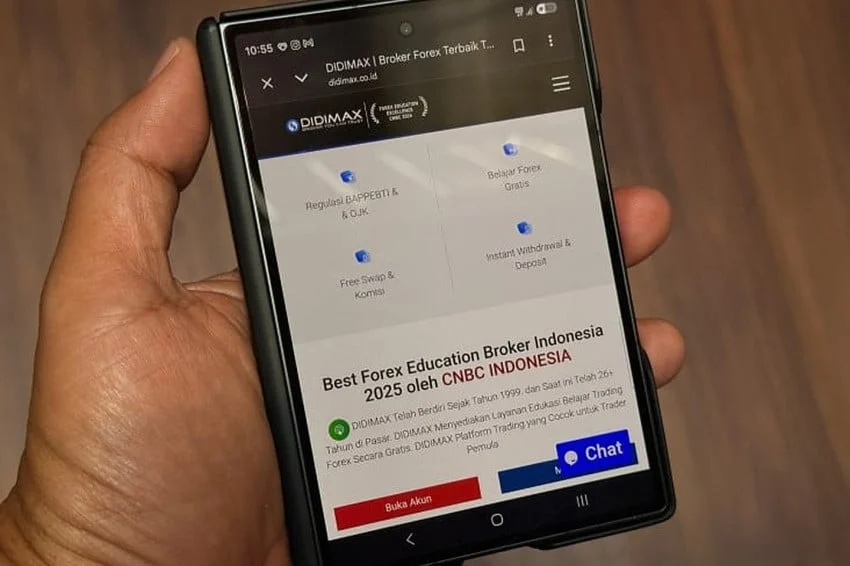
The landscape of retail trading in Indonesia has undergone a seismic shift, with the number of active participants in the commodity futures trading sector surging to 125,000 as of July 2025. This growth, representing a 13.3 percent increase from the 110,300 active clients recorded in June 2025, reflects both the democratization of financial markets through mobile technology and the growing appetite for high-yield investment vehicles among the Indonesian public. However, this expansion brings to the fore critical questions regarding financial literacy, the inherent risks of leveraged trading, and the regulatory challenges facing the Commodity Futures Trading Regulatory Agency (Bappebti).
The Global Context of Retail Trading Risks
To understand the current environment in Indonesia, it is essential to look at global benchmarks, particularly those established by the European Securities and Markets Authority (ESMA). Since August 2018, ESMA has mandated that brokers disclose the percentage of retail clients who suffer financial losses when engaging in contracts for difference (CFD) and foreign exchange (forex) trading. Data from these disclosures has consistently painted a sobering picture, revealing that between 74 and 89 percent of retail traders in Europe experience losses.
While these figures are specific to the European market, they serve as a cautionary tale for the burgeoning Indonesian retail sector. The primary driver of these losses is the mechanism of high leverage—a tool that allows traders to control large positions with a relatively small amount of capital. ESMA has taken aggressive steps to mitigate these risks by capping leverage for major currency pairs at 30:1. In the Indonesian context, where the market is expanding rapidly, the contrast between the lure of quick profits and the reality of high-risk exposure remains a central point of contention for regulators and market educators.
Explosive Growth in the Indonesian Futures Market
The data provided by Bappebti illustrates an industry in the midst of a massive upward trajectory. Throughout 2025, the total nominal transaction value for commodity futures reached an staggering Rp48,867 trillion, marking a year-on-year increase of 49.8 percent. Furthermore, the volume of these transactions hit 14.56 million lots, a 12 percent rise compared to the previous year.
This growth is not merely numerical; it represents a fundamental change in the behavior of the Indonesian investor. Historically, domestic retail investors were largely conservative, favoring fixed-income instruments, bank deposits, or physical gold. The transition toward high-frequency digital trading signifies a shift toward a more speculative and globally integrated investment culture. Bappebti head Tirta Karma Senjaya has emphasized that this surge is supported by the digitalization of brokerage services, which allows users to manage portfolios directly from their smartphones, effectively removing the traditional barriers to market entry.
The Regulatory Balancing Act
The rapid influx of new traders has prompted the Indonesian Ministry of Trade to re-evaluate its supervisory framework. Minister of Trade Budi Santoso has consistently underscored that while the growth of the sector is a positive indicator of economic participation, it must be balanced by rigorous investor education. The Ministry’s concern is centered on the demographic profile of the new entrants: a significant portion of the growth is driven by younger generations and university students who may possess technical proficiency but often lack the necessary experience to manage the volatility of global markets.
The regulatory focus is currently twofold: ensuring the transparency of licensed brokers and promoting financial literacy. Bappebti has intensified its efforts to crack down on illegal investment platforms while simultaneously collaborating with industry leaders to certify brokerages that maintain high standards of education and ethics. The recognition of firms like DIDIMAX, which received the "Best Trading Education" award at the 2026 CNBC Indonesia Awards, highlights the industry’s attempt to self-regulate and foster a more professional trading environment.
The Mechanics of Sustainable Trading
Industry analysts and successful trading mentors argue that the secret to becoming a proficient trader lies in moving away from the "gambler’s mindset" and toward a disciplined, data-driven approach. For beginners, the learning curve is often steep, and the "quick profit" narrative often peddled on social media is the leading cause of account depletion.

Professional traders typically emphasize three pillars of success:
- Risk Management: The most crucial element, which involves setting strict stop-loss orders and never risking more than 1–2 percent of total capital on a single trade.
- Technical Proficiency: Understanding market structures, liquidity zones, and economic indicators that drive currency and commodity prices.
- Psychological Resilience: The ability to execute a pre-planned strategy without succumbing to fear or greed, especially during periods of extreme market volatility.
In Indonesia, the evolution of the market is increasingly defined by the integration of these principles into educational curriculums provided by authorized brokers. As the market matures, the transition from speculative gambling to calculated risk-taking is viewed as the only sustainable path for the 125,000 active participants currently engaged in the sector.
The Socio-Economic Implications
The rise in trading activity has broader implications for Indonesia’s financial ecosystem. As more capital is directed toward commodity futures, the liquidity of these markets increases, potentially enhancing price discovery mechanisms. However, the concentration of risk among retail investors poses a potential threat to household financial stability.
Economic experts suggest that if the growth in trading volume continues at the current pace, the government may need to consider stricter capital requirements for retail accounts or mandatory educational certifications for individuals wishing to trade high-leverage products. This is similar to the "suitability tests" implemented in more advanced financial markets, which prevent inexperienced individuals from entering products that exceed their risk tolerance.
Furthermore, the integration of technology—specifically Artificial Intelligence and automated trading bots—is expected to further disrupt the local market. While these tools can automate risk management, they also increase the speed of trade execution, which can lead to "flash crashes" or rapid loss of capital for those who do not understand the underlying algorithms.
Chronology of Market Development (2025-2026)
- January 2025: Bappebti announces new incentives for digital brokers to integrate with national trading platforms.
- June 2025: Active trading accounts stand at 110,300, showing steady growth despite global economic uncertainty.
- July 2025: A record-breaking month sees the total number of active clients reach 125,000, driven by the popularity of mobile trading applications.
- Late 2025: Total transaction volume for the year hits Rp48,867 trillion, cementing the sector’s role as a major component of the financial services industry.
- October 2026: Recognition of industry leaders and high-level policy discussions regarding the protection of retail investors gain prominence in national media.
Future Outlook and Conclusion
The Indonesian retail trading sector is at a critical juncture. The surge to 125,000 participants is a testament to the country’s growing middle class and its interest in diversifying income streams. Yet, the high failure rates observed in global markets serve as a persistent warning. The path forward for Indonesia requires a collaborative effort between the government, regulatory bodies, and licensed brokers to elevate the standard of financial literacy.
The "secret" to success for a beginner is not a hidden indicator or a magical strategy, but the boring, repetitive process of risk management and continuous learning. As the industry moves toward 2027, the focus must remain on transforming the market from a playground for speculators into a platform for informed investors. The sustainability of the 13.3 percent growth rate depends entirely on the ability of the system to prevent retail losses and provide the necessary support for traders to survive their initial learning phases.
Ultimately, while technology has made trading more accessible, the fundamental principles of finance remain unchanged. Success in the futures market requires a long-term view, a rigorous commitment to discipline, and a clear understanding that in a world of high leverage, the preservation of capital is just as important as the pursuit of profit. As Indonesia continues to integrate into the global financial landscape, the maturation of its retail trading sector will serve as a key metric of its overall economic sophistication.
