
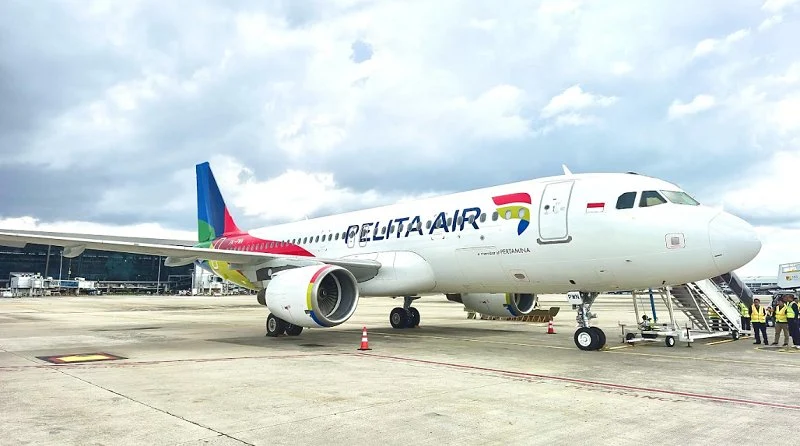
JAKARTA – PT Pelita Air Service has officially announced a strategic expansion of its maintenance, repair, and overhaul (MRO) capabilities, marking a pivotal shift in the carrier’s operational strategy. In a move aimed at bolstering the technical reliability of its fleet, the airline has entered into long-term partnerships with two global industry leaders: MTU Maintenance and KarbonMRO. This initiative focuses on the comprehensive maintenance of the airline’s 16 Airbus A320 aircraft, a fleet that serves as the backbone of its domestic commercial operations. By aligning with international MRO entities, Pelita Air aims to ensure consistent operational availability, mitigate technical disruptions, and reinforce its commitment to passenger safety and punctuality in an increasingly competitive Indonesian aviation market.
The decision comes at a time when the domestic aviation sector is witnessing a post-pandemic surge in passenger demand, placing significant pressure on airlines to maintain high fleet utilization rates. The collaboration is not merely limited to mechanical servicing; it encompasses a broader framework of human capital development, knowledge transfer, and technical support that is expected to elevate the internal maintenance standards of Pelita Air.
Strategic Rationale and Technical Scope
The core objective of the partnership with MTU Maintenance and KarbonMRO is to optimize the "engine health" of the A320 fleet. MTU Maintenance, a global leader in the maintenance of aero engines, brings decades of expertise to the table, particularly concerning the V2500 engine series that powers many A320s. KarbonMRO, known for its agile and technologically advanced repair solutions, complements this by providing specialized technical support and component-level maintenance.
Faik Fahmi, President Director of PT Pelita Air Service, emphasized that the collaboration is a calculated step toward operational excellence. "Pelita Air is integrating engine maintenance support with comprehensive human resource development, knowledge exchange, and technical assistance to ensure our fleet remains at peak performance," Faik stated on Friday, October 30, 2026. According to the airline, the partnership provides Pelita Air with direct access to global facilities and standardized processes that are vital for maintaining an Airbus fleet in accordance with the manufacturer’s strict safety protocols.
The Role of MRO in Airline Sustainability
For an airline, the MRO segment is the single largest operational cost driver after fuel. Efficient maintenance practices do not just prevent costly Grounded Aircraft (AOG) situations; they also contribute to the long-term fuel efficiency of the engines. Modern engines like those on the A320 require highly specialized facilities for disassembly, inspection, and component repair. By outsourcing specific complex tasks to MTU and KarbonMRO, Pelita Air is effectively leveraging the economies of scale offered by these global giants.
Furthermore, the "knowledge transfer" component of this partnership is significant. As Indonesian aviation authorities, such as the Directorate General of Civil Aviation (DGCA), continue to push for higher safety standards, the ability of local carriers to internalize international best practices is a critical metric for long-term viability. This partnership allows Pelita Air’s internal engineering teams to work alongside international experts, thereby upskilling the local workforce and fostering a culture of safety-first maintenance.
Contextualizing the Fleet Expansion
Pelita Air, a subsidiary of the state-owned energy giant Pertamina, has transitioned significantly over the past few years from its origins as an oil and gas support operator to a robust commercial airline. The current fleet of 16 Airbus A320s represents a substantial capital investment. Each of these aircraft requires rigorous maintenance schedules, including A-checks (performed every 400–600 flight hours) and more intensive C-checks (performed every 20–24 months).
The timing of this partnership is strategic. With the aviation industry in Indonesia experiencing a recovery, the pressure on the national infrastructure is high. By securing long-term service agreements with Tier-1 MRO providers, Pelita Air is effectively insulating itself against supply chain volatility—a common issue in the aviation sector where parts shortages can often ground fleets for weeks.

Industry Implications and Market Impact
The aviation industry in Southeast Asia is currently characterized by a shortage of qualified MRO facilities capable of handling the high volume of narrow-body jets, such as the A320 and Boeing 737 families. The partnership between Pelita Air and these international entities highlights a broader trend: airlines are moving away from fragmented maintenance contracts toward integrated service packages.
Analysts suggest that this move will likely have three immediate impacts:
- Enhanced Punctuality: By reducing unscheduled maintenance events, the airline will see a decrease in technical flight delays, which is a major factor in customer satisfaction and brand loyalty.
- Operational Efficiency: Standardized maintenance leads to predictable maintenance cycles, allowing the airline to plan its flight schedules with greater certainty.
- Safety Perception: In an industry where safety is the primary product, demonstrating that the fleet is serviced by world-class partners provides a competitive advantage, particularly for a relatively new commercial carrier like Pelita Air.
Chronology of the Operational Upgrade
While the announcement was made official in late October 2026, the groundwork for this collaboration began several months prior. Following the steady growth of its passenger traffic throughout 2025 and 2026, Pelita Air initiated an audit of its maintenance protocols. The airline identified a need for more specialized support for its engine modules and airframe components.
Following a competitive bidding process involving several regional and international MRO providers, MTU Maintenance and KarbonMRO were selected based on their technical capability, historical performance metrics, and ability to meet the stringent requirements of the Airbus platform. The agreement was finalized in Q4 2026, with the integration of new maintenance workflows scheduled to commence immediately.
Official Stance and Future Outlook
When asked about the potential for further expansion, management at Pelita Air hinted that the current partnership is just the beginning. The goal is to build a sustainable ecosystem where the maintenance requirements of the fleet are met with maximum efficiency. Faik Fahmi reiterated that the "complementary competencies" of the partners—MTU’s deep engine expertise and KarbonMRO’s specialized repair agility—create a robust shield against technical failures.
The airline’s commitment to its fleet is part of a larger mandate to provide reliable, safe, and efficient air travel for the Indonesian public. As the airline continues to expand its route network, the reliability of the A320 fleet remains the most critical factor in its operational strategy.
Broader Economic Significance
The aviation industry is a major contributor to Indonesia’s GDP, facilitating tourism, trade, and business connectivity. Pelita Air’s decision to prioritize high-level maintenance standards is a positive signal for the industry. It reflects a shift toward professionalization and long-term sustainability rather than short-term cost-cutting.
Furthermore, the inclusion of human resource development in the partnership agreement is a strategic investment in the Indonesian aviation talent pool. By exposing local technicians to international workflows, Pelita Air is contributing to the professionalization of the domestic aviation industry, which has long faced challenges in recruiting and retaining highly skilled technical staff.
Conclusion
The partnership between Pelita Air, MTU Maintenance, and KarbonMRO is a testament to the airline’s forward-thinking approach to fleet management. By securing technical reliability through global collaboration, Pelita Air is not only protecting its assets but also enhancing the quality of service for its passengers. In an era where the aviation industry is defined by its ability to adapt and maintain rigorous safety standards, this move positions Pelita Air as a stable and reliable player in the Indonesian sky. As the airline moves forward, the success of this maintenance strategy will likely serve as a benchmark for other regional carriers looking to optimize their operations in an increasingly demanding market. With 16 aircraft now under the care of global experts, Pelita Air has set a clear path for sustained growth and operational excellence through 2027 and beyond.
