
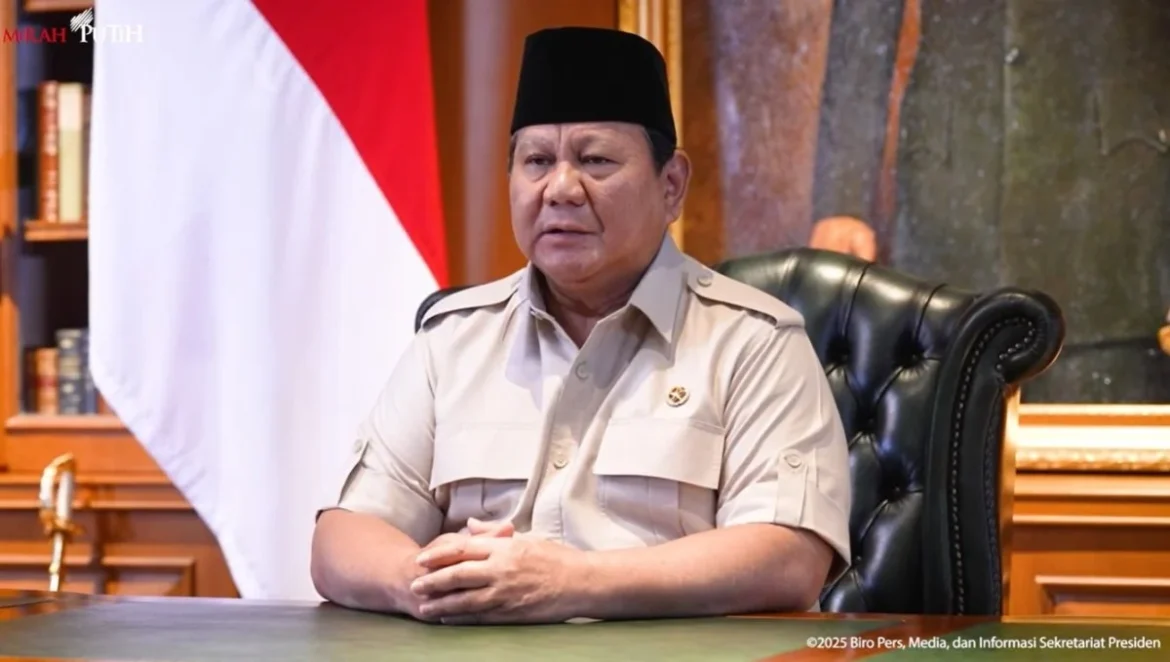
JAKARTA – President Prabowo Subianto has unveiled a sweeping transformation of Indonesia’s state-owned enterprises (BUMNs), showcasing significant milestones achieved through the establishment of Daya Anagata Nusantara, or Danantara. This landmark initiative, aimed at consolidating vast state assets, has been hailed as a historic breakthrough, poised to become a vital future energy reserve for the nation. The President highlighted that this aggressive streamlining, which has already seen 250 BUMN entities consolidated or closed within the first 18 months, is projected to yield substantial budget savings, estimated to reach IDR 50 trillion.
Speaking at a Plenary Cabinet Meeting held at the State Palace in Jakarta on Monday, July 20, 2026, President Prabowo elaborated on the critical role of Danantara. He explained that the entity functions as a sovereign wealth fund, meticulously consolidating and professionally managing state assets that were previously fragmented, dispersed, and challenging to monitor. This strategic consolidation has elevated the total value of these state-managed assets to an impressive figure exceeding USD 1,000 billion, signaling a new era of transparency and efficiency in state asset management. "Danantara is a sovereign fund where the nation’s savings, wealth, and assets are unified, consolidated, and professionally managed. This will serve as a reserve, an energy source for Indonesia’s future, for our children, grandchildren, and great-grandchildren," President Prabowo stated, emphasizing the long-term vision behind the ambitious program.
The Rationale for BUMN Transformation: A Historical Context
Indonesia’s state-owned enterprises have historically played a dual role: serving as instruments for public service delivery and driving economic development, while also frequently being sources of inefficiency, opaque governance, and financial drain on the state budget. For decades, BUMNs have been a cornerstone of the Indonesian economy, spanning critical sectors such as energy, mining, banking, telecommunications, infrastructure, and agriculture. However, their sheer number, often complicated by layers of subsidiaries and sub-subsidiaries (often referred to colloquially as ‘anak, cucu, cicit perusahaan’ – children, grandchildren, and great-grandchildren companies), led to overlapping functions, bureaucratic hurdles, and a lack of accountability.
Previous administrations have attempted various reforms, recognizing the need to enhance BUMN performance. Efforts included privatization programs in the late 1990s and early 2000s, and more recent initiatives under President Joko Widodo’s tenure, which focused on improving corporate governance, reducing debt, and fostering synergy among state-owned entities. However, the scale of the problem, particularly the proliferation of subsidiaries and the lack of a centralized, cohesive management framework for national assets, remained a persistent challenge. The creation of Danantara under President Prabowo’s leadership marks a significant departure, establishing a dedicated, high-level mechanism to tackle these systemic issues with unprecedented vigor.
The Genesis and Mandate of Danantara
The conception of Danantara arose from a critical assessment of Indonesia’s vast but often underutilized state assets. President Prabowo revealed that upon assuming office, he was struck by the sheer number of BUMNs, which, including all layers of subsidiaries, amounted to an astounding 1,077 entities. This complex web made effective oversight, strategic planning, and performance evaluation exceedingly difficult, leading to suboptimal resource allocation and missed opportunities for value creation.
Danantara was thus established with a clear and ambitious mandate: to consolidate, rationalize, and professionally manage the nation’s strategic assets. Functioning as a sovereign wealth fund, its primary objectives include enhancing the value of state assets, ensuring their sustainable growth, and strategically deploying capital for national development priorities. By centralizing management, Danantara aims to eliminate redundancies, foster greater operational efficiency, and unlock the inherent value trapped within the dispersed portfolio of state-owned entities. The fund’s impressive asset base, now exceeding USD 1,000 billion, encompasses a diverse array of holdings, from stakes in major state banks and energy giants to infrastructure projects and strategic industrial assets, positioning it as a powerful engine for future economic growth and stability.
An Aggressive Consolidation: Trimming 250 Entities in 18 Months
The core of Danantara’s initial success lies in its aggressive and systematic approach to streamlining the BUMN landscape. President Prabowo specifically lauded the leadership and dedication of the Danantara team for their bold actions within the first 18 months of the program. "I extend my gratitude and pride to the leadership of Danantara; in the first year, the first 18 months, they have successfully reduced that number. From 1,077, by the end of this month, July 31, they have closed, consolidated, and merged, so that 250 BUMNs have been reduced from the original 1,077," President Prabowo explained.
This reduction of 250 entities, bringing the total down to 827, is not merely a numerical exercise. It involves a multi-pronged strategy encompassing:
- Mergers: Combining smaller, overlapping entities into larger, more efficient units.
- Consolidations: Bringing related businesses under a unified management structure to achieve economies of scale and scope.
- Closures/Divestments: Shutting down or selling off non-performing or non-strategic subsidiaries that were draining resources.
The projected IDR 50 trillion in budget savings, as indicated by the initial estimations linked to this efficiency drive, stems from several key areas. By eliminating redundant administrative functions, reducing operational overlaps, optimizing procurement processes, and divesting non-essential assets, the state can significantly cut down on expenditure that previously supported a sprawling and often inefficient network of entities. These savings are anticipated to free up substantial fiscal space, allowing the government to reallocate funds towards critical social programs, infrastructure development, or debt reduction, thereby strengthening the nation’s overall financial health.
Broader Implications: Economic Resilience and Good Governance
The transformation spearheaded by Danantara carries profound implications for Indonesia’s economic resilience, governance standards, and long-term development trajectory.
-
Enhanced Economic Efficiency and Competitiveness: By streamlining BUMNs, the government aims to create leaner, more agile, and competitive state-owned enterprises. This will allow them to operate more effectively in domestic and international markets, driving productivity gains and contributing more robustly to national GDP. The focus on professional management under Danantara is expected to instill a performance-driven culture, moving away from past criticisms of inefficiency and political interference.
-
Improved Fiscal Health and Investment Climate: The projected IDR 50 trillion in budget savings represents a significant boon for state finances. This enhanced fiscal discipline, coupled with greater transparency in asset management, sends a strong signal to domestic and international investors. A more streamlined and accountable BUMN sector is likely to attract further investment, as it reduces perceived risks and enhances confidence in Indonesia’s economic management. International credit rating agencies and multilateral organizations are expected to view these reforms positively, potentially leading to improved sovereign ratings.
-
Strengthening National Strategic Assets: By consolidating state assets under Danantara, Indonesia is building a powerful strategic reserve. This fund can be strategically deployed to counter economic shocks, fund ambitious national projects, or invest in future-oriented industries like renewable energy, digital infrastructure, or advanced manufacturing. It ensures that national wealth is preserved and grown for future generations, rather than being dissipated through fragmented management.
-
Transparency and Anti-Corruption Efforts: The consolidation and professional management framework are critical for improving transparency and curbing corruption within the BUMN ecosystem. With assets brought under a single, accountable entity, monitoring becomes more effective, and the opportunities for illicit practices are significantly reduced. This aligns with President Prabowo’s broader commitment to good governance and clean administration.
Reactions from Stakeholders and Expert Analysis
The announcement has garnered significant attention from various stakeholders and economic observers. While no official reactions from other parties were provided in the original text, logical inferences suggest the following:
Minister of State-Owned Enterprises (if different from President Prabowo): Would likely reiterate the government’s commitment to continued reform, emphasizing the diligent work of the Danantara team and outlining the next phases of the transformation. A statement might highlight the complexity of the task and the unwavering political will required to achieve such significant changes.
Economic Analysts: Many analysts are expected to welcome the move, viewing it as a necessary step towards optimizing Indonesia’s economic potential. Dr. Indah Lestari, a prominent economist from the University of Indonesia, could hypothetically comment, "The consolidation of BUMNs under Danantara is a crucial structural reform. The reported reduction of 250 entities and the projected IDR 50 trillion in savings are not just about numbers; they signify a serious commitment to efficiency and good governance. This move can unlock substantial value, reduce the state’s contingent liabilities, and improve the overall investment climate." However, some analysts might also caution about potential challenges, such as managing the social impact of job reductions in consolidated entities or ensuring sustained political support for long-term reforms.
Parliamentary Commission VI (Overseeing BUMNs): Members of the legislative body would likely express support for the initiative, while also emphasizing their role in providing oversight. A hypothetical statement from a commission member might be, "We commend the government’s decisive action in reforming the BUMN sector. Our committee will continue to monitor Danantara’s progress closely, ensuring transparency and accountability in asset management and the utilization of projected savings for the benefit of the people."
Business Associations: Private sector entities would likely view the reforms positively, as a more efficient BUMN sector could lead to fairer competition and a more predictable business environment. A representative from the Indonesian Chamber of Commerce and Industry (KADIN) might state, "A lean and efficient BUMN sector is vital for a healthy national economy. Danantara’s efforts to streamline these state enterprises will reduce market distortions and create a more level playing field for private businesses, ultimately fostering greater economic growth."
Challenges and the Path Forward
While the initial achievements of Danantara are impressive, the road ahead is not without its challenges. Sustaining the momentum of reform, managing potential resistance from entrenched interests, ensuring fair and transparent processes for mergers and divestments, and mitigating the social impact of job reallocations or reductions will require continuous vigilance and strong leadership. The professional management of such a vast asset portfolio also demands top-tier talent and robust governance frameworks to prevent future inefficiencies or misuse.
President Prabowo’s vision for Danantara extends beyond mere consolidation; it is about establishing a resilient economic foundation for future generations. The next phase of this transformation will likely involve optimizing the performance of the remaining 827 BUMNs, exploring strategic partnerships, and leveraging Danantara’s capital to drive innovation and investment in key sectors that align with Indonesia’s long-term development goals. The success of Danantara will ultimately be measured not just by the number of entities consolidated or the immediate savings generated, but by its enduring contribution to Indonesia’s economic strength, prosperity, and equitable development for decades to come. The July 31st deadline for completing the initial phase of the 250 entity reduction marks a significant turning point, cementing a new chapter in Indonesia’s economic history.
