
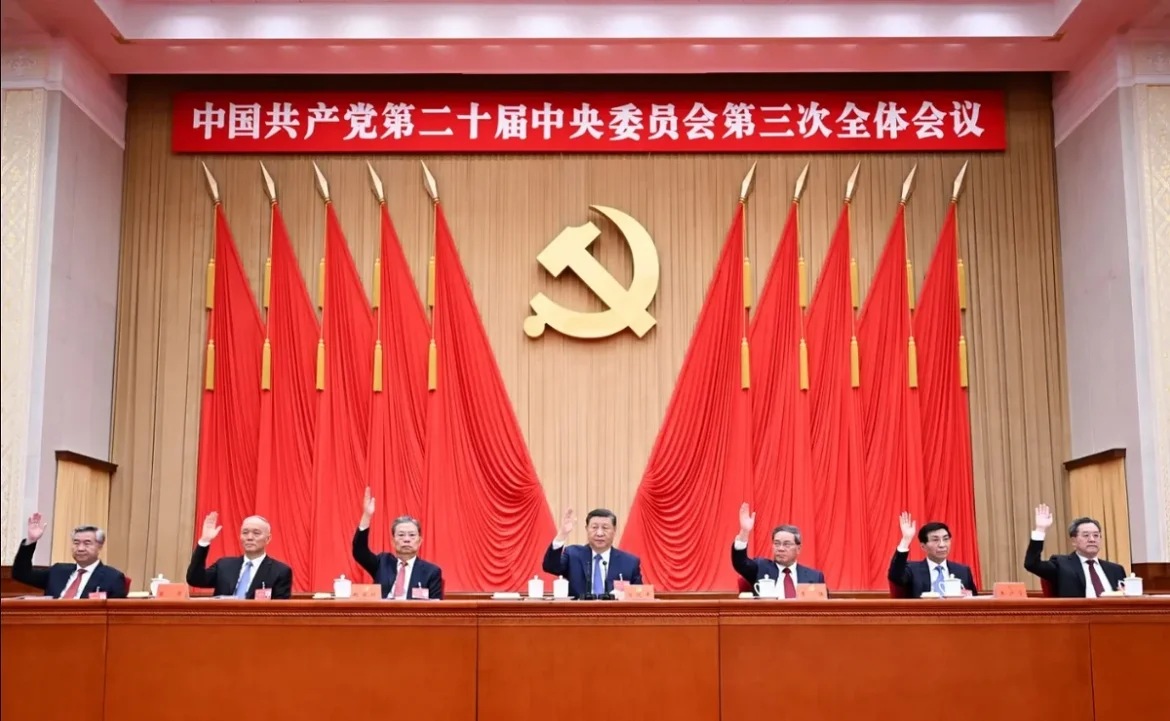
The Chinese authorities have officially confirmed the dismissal of 33 high-ranking government officials and military leaders following the conclusion of the Central Committee plenary session this week. This sweeping move, described by senior party leadership as a necessary operation to eliminate "serious hidden dangers," marks a significant intensification of President Xi Jinping’s ongoing campaign to consolidate control over the Chinese Communist Party (CCP), the state apparatus, and the People’s Liberation Army (PLA).
The announcement came on the heels of a four-day plenary session that concluded on Thursday, October 29, 2026, in Beijing. Among the most notable casualties of this political purge is Zhang Youxia, a former member of the Politburo and one of the most senior generals in the Chinese military hierarchy. His removal serves as a stark signal that no individual, regardless of their rank or historical contribution, is immune to the president’s "comprehensive and strict governance" agenda.
The Scope of the Purge
The removal of 33 individuals from their posts is one of the most substantial single-instance shake-ups within the Chinese political establishment in recent memory. While the specific charges against each individual vary, the overarching theme provided by the Central Committee is the enforcement of discipline and the eradication of corruption.
The Central Commission for Discipline Inspection (CCDI), the party’s powerful internal watchdog, has been the primary architect of these investigations. Zhang Fuhai, a deputy secretary of the CCDI, stated on Friday, October 30, 2026, that the party, with President Xi Jinping at its core, has successfully removed systemic threats that were undermining the integrity of the nation’s security and administrative functions.
This purge is not an isolated event but rather the latest installment in a decadelong effort that has transformed the political landscape of China. Since assuming power in 2012, Xi has utilized anti-corruption as both a moral imperative and a political instrument. Over the past decade, thousands of low-to-mid-level officials have been processed, alongside dozens of high-ranking "tigers"—influential members of the Central Committee and military leadership—who have been brought down by the CCDI’s relentless investigations.
Chronology of the Anti-Corruption Campaign
The anti-corruption drive, often referred to as "Tiger and Fly" hunting, has followed a consistent trajectory since its inception.
- 2012–2014: The Initial Phase: Xi Jinping launched his campaign immediately upon taking office, targeting high-profile figures such as Zhou Yongkang, a former member of the Politburo Standing Committee. This signaled that no one was untouchable.
- 2015–2018: Institutional Consolidation: The campaign moved beyond individual corruption to address systemic issues, leading to the creation of the National Supervisory Commission, which expanded the reach of the CCDI to include all public servants.
- 2019–2023: Military and Financial Focus: As the campaign matured, the focus shifted toward the financial sector and the military. The objective was to ensure absolute loyalty to the party within the armed forces, which had previously operated with a degree of autonomy.
- 2024–2026: The Current Intensification: Following the 20th Party Congress, the current wave of dismissals suggests a shift toward preemptive "purification" of the party ranks to ensure ideological alignment and administrative efficiency in the face of domestic and international pressures.
The Military Dimension: A Strategic Shift
The inclusion of high-ranking military officials like Zhang Youxia in this recent wave of dismissals is particularly significant. The PLA has historically maintained a complex power structure, and under Xi, the push for "absolute loyalty" has become the primary metric of military leadership.
The removal of top-tier military personnel often stems from concerns over procurement irregularities, lack of alignment with the party’s strategic vision, or perceived challenges to the centralized command structure. By removing these figures, the CCP ensures that the military remains an instrument of party policy rather than a factional interest group. The state media, Xinhua, reported that the plenary session adopted new guidelines aimed at "strengthening the comprehensive and strict governance of the party," which explicitly includes provisions for closer monitoring of the military’s leadership committees.
Data and Trends in CCP Discipline
Since the inception of the anti-corruption drive, the CCDI has published periodic statistics that highlight the sheer scale of the operation. According to official reports, more than 1.5 million officials have been punished since 2012.
The primary categories of misconduct cited in these reports include:
- Violation of Political Discipline: This is often the most serious charge, referring to acts that undermine the unity of the party or dissent against the central leadership.
- Bribery and Financial Irregularities: The misuse of public funds for personal gain or the acceptance of illicit payments.
- Formalism and Bureaucratism: A charge increasingly used to target officials who are seen as inefficient or failing to implement central government policies with sufficient vigor.
The current trend shows a pivot toward "political reliability" as the foremost qualification for office. The 2026 plenary session reinforces this trend, with the party demanding that all members adhere strictly to the "centralized and unified leadership" of the party center.
Official Responses and Internal Party Dynamics
The rhetoric emerging from Beijing emphasizes stability and the "long-term governance" of the party. Zhang Fuhai’s comments underline the narrative that these purges are essential to prevent the "hidden dangers" that could lead to the decay of the party.
From an analytical perspective, this suggests that the leadership perceives internal factionalism as the greatest threat to its continued rule. By removing 33 officials in one stroke, the party is effectively resetting the administrative hierarchy. This serves as a deterrent to other officials who might be harboring ambitions independent of the current leadership.
Furthermore, the language used during the session indicates that the party is preparing for a period of heightened internal vigilance. The emphasis on "strict governance" suggests that the CCDI will be granted even greater powers of oversight, with the expectation that subordinate departments must proactively report and resolve internal issues before they reach the level of a national scandal.
Broader Implications for Governance and Society
The impact of such a massive purge extends beyond the individuals involved. For the Chinese state, these actions are intended to restore public confidence in the party’s ability to govern effectively. The narrative of "cleaning the house" is often popular among the general public, who view corruption as a significant impediment to social equality and economic development.
However, international observers have raised concerns about the implications for administrative continuity. The rapid turnover of senior personnel can lead to a "fear of action" among lower-level bureaucrats, who may become hesitant to make decisions for fear that they might be misinterpreted as corrupt or disloyal. This "paralysis" of the bureaucracy could potentially hinder the implementation of critical economic and social policies, particularly as China navigates a slowing economy and a complex global geopolitical landscape.
Furthermore, the removal of high-profile figures like Zhang Youxia suggests that the party is willing to sacrifice experienced administrators and military planners in exchange for total ideological cohesion. While this strengthens the president’s immediate grip on power, it raises questions about the long-term sustainability of such a system, where meritocratic competition is secondary to political loyalty.
Conclusion: The Future of the Anti-Corruption Drive
As China looks toward the end of 2026 and into the following year, the anti-corruption campaign shows no sign of slowing down. The Central Committee’s recent decisions indicate that the party intends to maintain its aggressive stance on internal discipline.
The purge of 33 officials and military leaders is a clear demonstration that the party’s current leadership is committed to the path of centralization. Whether this approach will lead to a more efficient and responsive government or create deeper fractures within the elite remains the subject of intense international debate. For now, the message from Beijing is unambiguous: the party’s priority is the absolute maintenance of control, and the "purification" of its ranks will continue to be the primary mechanism for achieving that goal. As the political landscape of China continues to evolve, the impact of these dismissals will likely be felt across every level of the state apparatus, reinforcing a new era of disciplined, party-centric governance.
