The Indonesian government’s ongoing evaluation and potential restructuring of energy subsidies have long stood at the forefront of national economic policy debates. In late 2015, plans to overhaul or remove electricity subsidies for the 450 VA and 900 VA power tiers sparked intense discussions among economists, policymakers, and public institutions. While fiscal consolidation drove the state’s push to redirect funds toward more productive sectors, experts emphasized that any adjustment to utility tariffs must be paired with a robust national commitment to infrastructure expansion. Among the voices weighing in on the matter was the Indonesian Institute of Sciences (LIPI), which underscored that the removal of broad-based electricity subsidies must directly translate into guaranteed, equitable energy access for underserved and remote communities across the archipelago.
Background Context of Indonesia Energy Subsidies
For decades, Indonesia’s state budget bore a heavy financial burden due to widespread energy subsidies covering fuel, liquefied petroleum gas (LPG), and electricity. Designed initially to protect low-income households from global commodity price volatility, these broad subsidies frequently suffered from mistargeting. Substantial portions of state-allocated funds ultimately benefited middle- and upper-class consumers who utilized 450 VA and 900 VA connections, rather than exclusively supporting vulnerable populations.
By the mid-2010s, macroeconomic pressures, fluctuating state revenues, and the imperative to increase capital expenditure for infrastructure development forced the administration of President Joko Widodo to scrutinize energy subsidies. The goal shifted from sustaining artificial price controls to optimizing fiscal space. By reallocating funds from consumption subsidies toward infrastructure, healthcare, and education, the government hoped to foster long-term, sustainable economic growth. However, this shift raised critical equity concerns, particularly regarding millions of citizens who remained completely disconnected from the national electrical grid.
LIPI Perspective on Tariff Adjustments and Subsidy Realocation
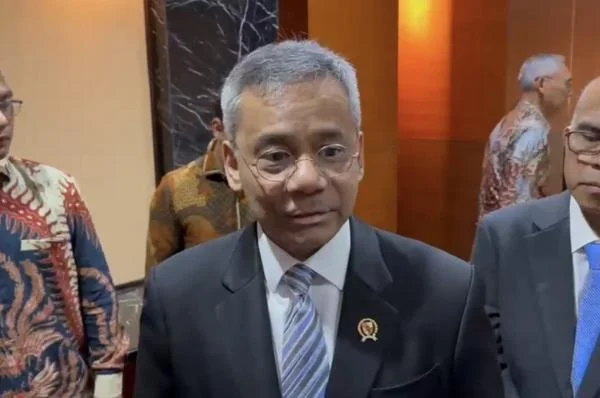
Maxensius Tri Sambodo, a senior researcher at the Economic Research Center of the Indonesian Institute of Sciences (LIPI), addressed the policy shift during discussions in Jakarta. While acknowledging the economic rationale behind removing generalized energy subsidies, Sambodo highlighted the inherent structural inequalities in the national energy landscape.
"I think it is a positive step, and indeed the consequence is that prices will rise," Sambodo remarked during an interview at the LIPI Building in Jakarta. "However, what we expect is that once the subsidies are removed, the funds should be redirected to assist communities that have not yet gained access to electricity."
According to LIPI’s assessments, the core principle of national energy policy must center on fairness and equity. Sambodo argued that maintaining a system where connected households received state-supported low tariffs while millions of others remained entirely in the dark created a profound socio-economic imbalance. True energy justice, he maintained, could only be achieved when every citizen possessed reliable access to power.
The Scale of the Energy Access Gap in 2015
At the time of the policy discourse, official and institutional estimates indicated that approximately 60 million people across Indonesia lacked access to electricity. This disparity was particularly stark in Indonesia’s outermost, remote, and underdeveloped regions, commonly referred to in national development plans as the 3T regions (Tertinggal, Terdepan, dan Terluar).
The persistent electrification gap was primarily driven by high logistical costs, difficult geographical terrains, and infrastructural deficits. While state electricity enterprise PT PLN (Persero) continued to expand its generation capacity, the transmission and distribution networks required massive capital investments to reach remote villages and islands.
Furthermore, direct financial barriers prevented many low-income rural households from plugging into existing grids. Sambodo pointed out that connection fees alone posed a prohibitive obstacle for marginalized families.

"In remote areas, there are still many who do not have electricity simply because they lack the money for the connection," Sambodo explained. "It takes IDR 2 million to IDR 3 million just to connect to PLN. Moreover, even when a generation plant is present, the transmission lines are often absent, and that requires a very substantial amount of funding."
Chronology of Subsidy Reform and Policy Evolution
The debate over the 450 VA and 900 VA electricity subsidies unfolded through a carefully phased administrative and legislative timeline:
- Early 2015: Following the aggressive restructuring of fuel subsidies in late 2014, the Ministry of Energy and Mineral Resources (ESDM) alongside PT PLN initiated data verification processes to identify electricity customers capable of paying market rates.
- Mid-2015: Comprehensive reviews by state auditors and research bodies like LIPI evaluated the socio-economic impact of transitioning non-poor households out of the subsidized electricity brackets.
- November 2015: Academic and institutional stakeholders, including LIPI researchers, publicly urged the government to legally bind the savings generated from subsidy cuts to rural electrification programs.
- Late 2015 and Beyond: Implementation of targeted subsidy mechanisms began, focusing data collection efforts on the Integrated Data Base (BDT) managed by the central government to ensure future aid reached only the genuinely impoverished.
Official Responses and Institutional Counterparts
The policy proposal drew varied reactions from lawmakers, industry observers, and state utility representatives. PT PLN faced the dual mandate of executing government tariff adjustments while accelerating infrastructure rollout under national electrification ratio targets.
Energy policy analysts pointed out that phasing out subsidies for higher-tier consumers would ease operational deficits at PLN, freeing up corporate and state funds for capital-intensive projects in eastern Indonesia, such as Nusa Tenggara, Maluku, and Papua. Meanwhile, the House of Representatives (DPR) consistently urged the Ministry of Energy and Mineral Resources to exercise transparency during customer verification, ensuring that low-income households legally entitled to the 450 VA and 900 VA tiers were not accidentally stripped of their safety nets due to administrative errors.
Fact-Based Analysis of Economic and Social Implications
The redirection of energy subsidies toward infrastructure development carries far-reaching implications for Indonesia’s macroeconomic stability and regional development.
From a fiscal perspective, reducing broad subsidies diminishes the vulnerability of the state budget to global crude oil price swings and currency depreciation. This fiscal cushion allows the government to maintain healthy debt-to-GDP ratios while investing in productive assets.
Socially, however, the policy demands meticulous execution. Economists note that while urban and semi-urban households can generally absorb marginal tariff increases, rural communities face compounding disadvantages if electrification does not accompany price reforms. Electricity serves as a vital catalyst for local economies, enabling small-scale manufacturing, cold storage for fisheries, improved educational facilities, and digital connectivity. Without guaranteed grid expansion, rural areas risk falling further behind urban centers that reap the indirect benefits of national fiscal savings.
Conclusion
The discourse surrounding the potential removal of the 450 VA and 900 VA electricity subsidies highlights a pivotal balancing act in Indonesian governance: reconciling fiscal prudence with social equity. As articulated by research institutions like LIPI, saving state funds through subsidy rationalization is only half the mandate. The ultimate test of the policy’s success lies in the government’s ability to channel those liberated resources directly into infrastructural development, bridging the electrification gap for the tens of millions of Indonesians still waiting for the light.