
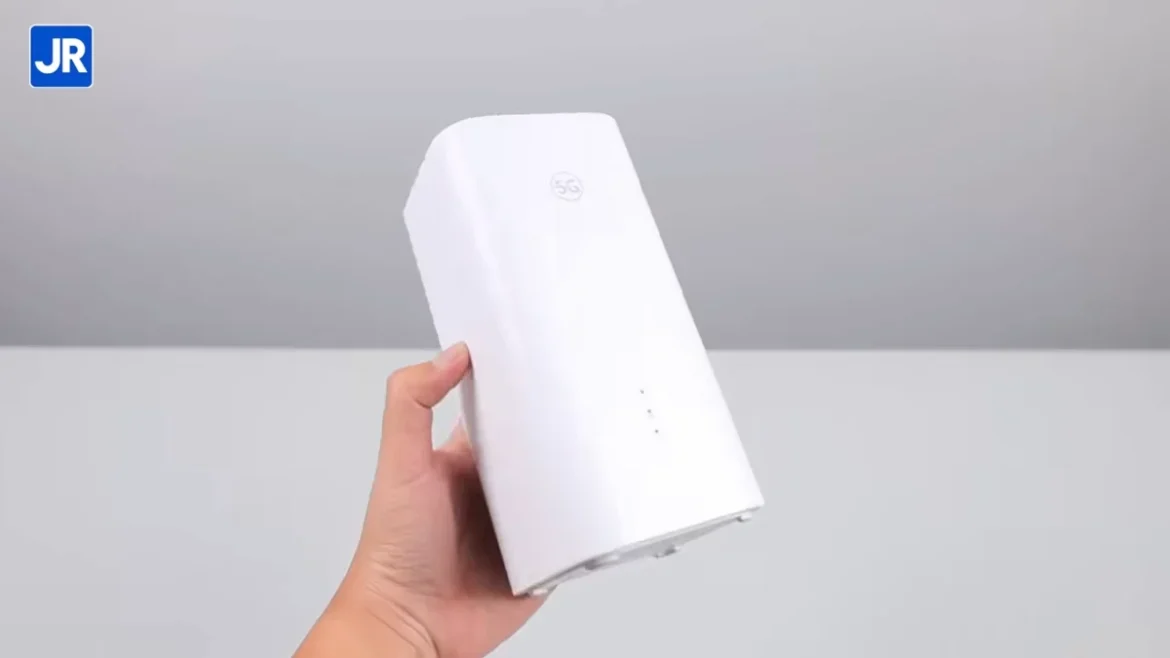
The evolution of telecommunications technology has consistently driven the demand for faster, more reliable, and more flexible internet connectivity. As fifth-generation (5G) cellular networks continue to expand globally, telecommunications infrastructure has evolved beyond mere smartphone connectivity to encompass enterprise and residential broadband solutions. Central to this transition is a specialized piece of hardware known as the 5G Customer Premises Equipment (CPE). Often intrinsically linked to modern Fixed Wireless Access (FWA) deployments, 5G CPE has emerged as a transformative technology for bridging the digital divide, offering high-speed broadband without the traditional constraints of physical fiber-optic cable installations.

To understand the operational scope of 5G CPE, one must first examine its foundational definition and structural role within a modern network architecture. Customer Premises Equipment refers to any telecommunications terminal and associated equipment located at a subscriber’s premises and connected with a carrier’s telecommunication channel at the demarcation point. Specifically, a 5G CPE is an advanced wireless modem and router hybrid engineered to intercept, decode, and broadcast cellular 5G signals transmitted by local Base Transceiver Stations (BTS). Once the CPE receives these high-frequency cellular signals, it translates them into a localized Wi-Fi network or a wired Ethernet connection. This allows end-users to seamlessly link an array of smart devices—ranging from smartphones, laptops, and tablets to modern smart televisions and IoT appliances—to the internet without relying on wired landline infrastructure such as DSL or fiber cables.
The historical trajectory of Customer Premises Equipment dates back to the era of analog telephony and early dial-up modems, evolving through ADSL routers, 4G LTE hotspots, and finally into the high-throughput 5G gateways seen today. The commercial deployment of 5G CPE units accelerated significantly between 2019 and 2021, coinciding with the global commercial rollout of 5G standalone (SA) and non-standalone (NSA) networks by major carriers in North America, Europe, East Asia, and subsequently Southeast Asia. Telecommunications equipment manufacturers, notably firms like Huawei, Nokia, Ericsson, and ZTE, invested heavily in developing specialized indoor and outdoor CPE units capable of handling massive bandwidth demands, ultra-low latency, and complex beamforming radio frequencies. Industry analysis from telecommunications research groups indicates that the global 5G FWA and CPE market has experienced exponential compound annual growth rates (CAGR), driven primarily by urban fiber congestion, suburban expansion, and the remote work boom that necessitated robust residential internet solutions.

Operationally, the mechanics of a 5G CPE unit are designed for user-friendly execution while housing complex radio frequency (RF) engineering. The device operates by scanning and locking onto available 5G New Radio (NR) frequency bands—encompassing both sub-6 GHz frequencies for broad coverage and millimeter-wave (mmWave) frequencies for ultra-high-speed data transmission—emitted by telecom tower sites. Advanced internal antennas within the CPE optimize signal acquisition through spatial diversity and multi-input multi-output (MIMO) technology. Once the cellular data stream is secured, the internal router chipset processes the packet data and redistributes it locally via Wi-Fi 6 or Wi-Fi 7 protocols, or physically through Gigabit Ethernet ports. Despite its technical sophistication, the end-user experience remains remarkably straightforward: positioning the device near a window or an area with optimal cellular reception is often all that is required to establish a high-performance home network.
Market categorization of 5G CPE units generally splits the hardware into two primary physical classifications: indoor CPE and outdoor CPE. Indoor CPE units are typically compact, aesthetic desktop appliances resembling traditional Wi-Fi routers. They are engineered for plug-and-play convenience, making them ideal for urban apartments or suburban houses where cellular signals can easily penetrate exterior walls. Conversely, outdoor CPE units are engineered to withstand rigorous environmental conditions, featuring weatherproof casings and robust high-gain directional antennas meant to be mounted on exterior walls, balconies, or rooftops. Outdoor variants are deployed strategically in rural fringes or architectural environments where building materials severely attenuate cellular signals, ensuring that subscribers can capture a stable, high-quality line-of-sight connection to distant cellular towers.

A common point of confusion among consumers is distinguishing between a standard Wi-Fi router and a 5G CPE. While both devices ultimately broadcast a wireless local area network (WLAN) for connected devices, their fundamental data sources differ entirely. A conventional Wi-Fi router relies on an upstream connection from a wired modem—such as an optical network terminal (ONT) for fiber internet or a cable modem for coaxial networks—to receive its internet feed. In contrast, a 5G CPE integrates a cellular modem directly into its chassis, negating the need for any external wired modem. By inserting a valid SIM card with a designated data plan, the CPE directly interfaces with the cellular carrier’s core network, transforming cellular data waves into a localized broadband environment.
The relationship between 5G CPE and Fixed Wireless Access (FWA) warrants precise technical clarification. While 5G FWA represents the overarching service model—delivering high-speed fixed broadband via cellular radio frequencies instead of copper or glass cables—5G CPE functions as the mandatory physical endpoint hardware installed at the customer’s location to make that service accessible. Telecommunications operators frequently bundle 5G CPE hardware directly into their FWA subscription packages to streamline customer onboarding. However, industry standards dictate that 5G CPE is not strictly bound to proprietary FWA service bundles. Provided an indoor or outdoor CPE is carrier-unlocked and supports the specific frequency bands and band combinations utilized by a mobile network operator, consumers can theoretically utilize standard cellular data plans and SIM cards to power their home or office networks. Nonetheless, consumers must navigate potential device lock policies and firmware configurations established by specific network operators.
Evaluating the broader implications and market impact of 5G CPE reveals a profound shift in how broadband infrastructure is conceptualized and deployed. From an economic perspective, 5G CPE and FWA technologies drastically lower the capital expenditure (CapEx) for telecommunications providers. Laying physical fiber-optic cables across rugged terrain, dense urban cores, or sprawling rural regions involves exorbitant trenching costs, municipal permitting hurdles, and lengthy deployment timelines. By leveraging existing cellular tower grids to beam internet directly to 5G CPE units, operators can rapidly scale broadband offerings, capture previously unprofitable market segments, and introduce healthy price competition against legacy cable and fiber monopolies.
Furthermore, enterprise and small-to-medium-sized enterprise (SME) sectors have increasingly adopted 5G CPE as an agile primary or secondary internet connection. Businesses value the rapid deployment capabilities of CPE units, allowing newly established offices to bypass months-long waiting periods for dedicated business fiber installations. Additionally, 5G CPE serves as an enterprise-grade failover solution; if a primary fiber-optic line experiences an outage, advanced dual-WAN routers connected to 5G CPE gateways can automatically pivot traffic to the cellular network, ensuring uninterrupted business continuity.
Despite their numerous advantages, the widespread deployment of 5G CPE is not without technical limitations and challenges. The performance of a 5G CPE-based network is inherently susceptible to environmental variables that do not affect traditional closed-loop fiber lines. Signal propagation can be severely degraded by physical obstructions such as dense foliage, concrete walls, double-glazed glass, and distant topography. Moreover, network congestion on local cellular base stations—driven by high smartphone traffic density in crowded urban zones—can result in fluctuating latency and variable download/upload speeds during peak hours. Telecommunications regulatory bodies and operators continuously monitor these parameters, utilizing advanced network slicing and Quality of Service (QoS) protocols to prioritize FWA and CPE traffic, thereby maintaining consistent broadband benchmarks for residential and commercial subscribers.
Industry analysts and telecommunications executives project that the relevance of 5G CPE will continue to amplify as global 5G standalone networks mature and pave the path toward future 6G architectures. As semiconductor manufacturing advances, next-generation CPE units are expected to feature enhanced artificial intelligence algorithms for automated signal tracking, greater thermal efficiency, and tighter integration with smart home ecosystems. Ultimately, 5G CPE has transcended its initial classification as a niche alternative technology, establishing itself as a vital pillar of modern digital infrastructure capable of delivering robust, flexible, and high-speed internet access to communities worldwide.
