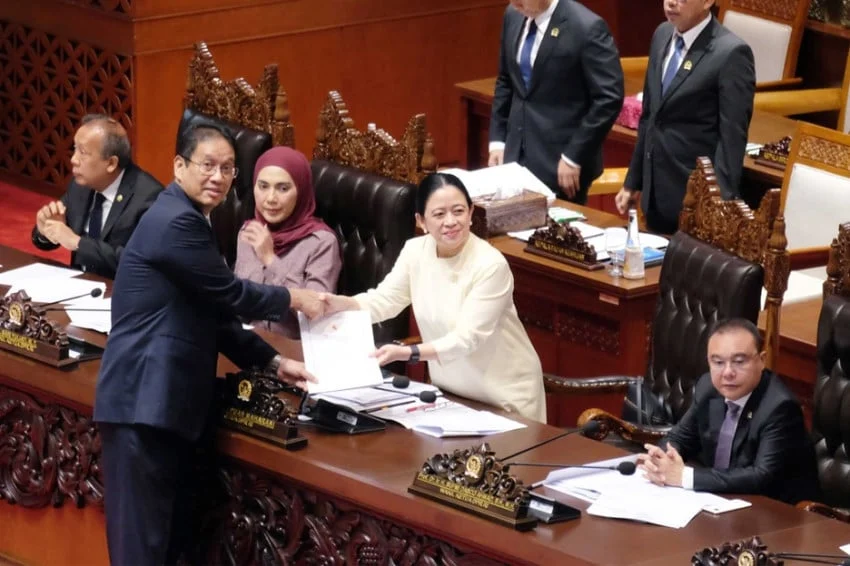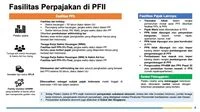
Jakarta is poised to launch the Indonesia International Financial Center (PFII), a strategic initiative designed to significantly deepen the nation’s financial markets, diversify funding sources, and attract substantial foreign investment. A cornerstone of this ambitious project is the provision of highly attractive tax facilities for investors. However, these incentives will be meticulously structured to align with the principles of the Global Minimum Tax (GMT), a landmark international agreement aimed at curbing corporate tax avoidance. This dual approach underscores Indonesia’s commitment to both fostering economic growth and upholding global fiscal integrity.
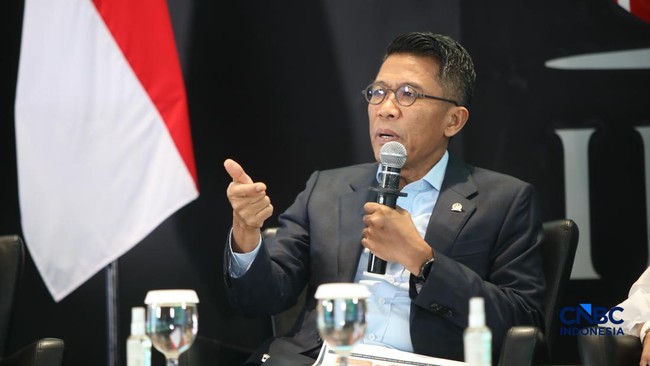
Mukhamad Misbakhun, Chairman of Commission XI of the House of Representatives (DPR), recently reaffirmed this nuanced policy approach. Speaking on the integration of PFII’s tax regime with international standards, Misbakhun highlighted the evolving global tax landscape. "While the existing law allows for tax exemptions for investors for up to 50 years, we are fully cognizant of and following the changes in international tax norms," he stated, referring to the widespread adoption of the Global Minimum Tax. He further clarified that a clear mechanism is in place to determine whether companies investing in the PFII fall within the scope of the global minimum tax. Those that do not meet the specified thresholds for GMT applicability will continue to enjoy the full 50-year tax holiday, ensuring a competitive edge for a broad spectrum of investors.
The Genesis of the Indonesia International Financial Center (PFII)
The establishment of the PFII is not merely an isolated policy but a crucial component of Indonesia’s broader economic vision, aiming to elevate its position within the global financial ecosystem. It is rooted in Article 248A of Law Number 4 of 2026, an amendment to Law Number 4 of 2023 concerning the Development and Strengthening of the Financial Sector (P2SK). This legislative framework mandates the creation of a dedicated legal instrument for the PFII, signifying the government’s long-term commitment to this strategic endeavor.
The P2SK Law itself represents a comprehensive overhaul of Indonesia’s financial sector regulations, designed to make the country more resilient, competitive, and attractive to both domestic and international capital. The PFII, as an outcome of this law, is envisioned as a catalyst for several key objectives:
- Financial Market Deepening: To expand the range and sophistication of financial products and services available, moving beyond traditional banking to encompass more complex capital market instruments, derivatives, and innovative financing solutions.
- Diversification of Funding Sources: To reduce reliance on conventional funding channels by attracting new forms of capital, including private equity, venture capital, and green financing, from a global investor base.
- Increased Investment: To serve as a magnet for both foreign direct investment (FDI) and portfolio investment, channeling capital into productive sectors of the Indonesian economy.
- Strengthening Global Position: To enhance Indonesia’s standing as a significant player in the global financial architecture, potentially rivaling established regional hubs like Singapore and Hong Kong.
Indonesia, with its burgeoning economy, large domestic market, and rich natural resources, has long harbored ambitions of becoming a regional financial powerhouse. Previous attempts to establish international financial centers faced challenges, primarily due to inconsistent regulatory frameworks and intense regional competition. The PFII, backed by robust legal reforms and a clear strategy for global integration, seeks to overcome these hurdles by offering a compelling proposition that combines attractive incentives with adherence to international best practices.
Understanding the Global Minimum Tax (GMT) Framework
The Global Minimum Tax, a cornerstone of the OECD/G20 Inclusive Framework on Base Erosion and Profit Shifting (BEPS) 2.0, represents a monumental shift in international corporate taxation. Officially known as Pillar Two, it seeks to ensure that large multinational enterprises (MNEs) pay a minimum effective tax rate of 15% on their profits, regardless of where they operate or how they structure their affairs. This initiative was born out of a global consensus to combat tax avoidance strategies that allowed MNEs to shift profits to low-tax jurisdictions, often resulting in effective tax rates far below statutory levels.
Indonesia, alongside more than 60 other countries, including key regional competitors like Singapore, Malaysia, Hong Kong, and the United Arab Emirates, has committed to implementing the GMT. For Indonesia, this landmark policy became effective on January 1, 2025. The core principle of GMT is to impose a "top-up tax" when an MNE’s effective tax rate in a particular jurisdiction falls below 15%.
The GMT framework operates through several interconnected rules:
- Qualified Domestic Minimum Top-up Tax (QDMTT): This rule allows a country where an MNE has operations (the ‘subsidiary jurisdiction’) to levy a top-up tax on the MNE’s local profits if their effective tax rate in that country is below 15%. This ensures that the tax revenue remains within the jurisdiction where the economic activity takes place.
- Income Inclusion Rule (IIR): If the subsidiary jurisdiction does not apply a QDMTT, or if the MNE’s effective tax rate remains below 15%, the parent company’s jurisdiction (the ‘parent jurisdiction’) can apply the IIR to collect the top-up tax on the profits of its low-taxed foreign subsidiaries.
- Undertaxed Payment Rule (UTPR): As a backstop, if neither the QDMTT nor the IIR fully addresses the low taxation, the UTPR allows other countries where the MNE group operates to deny deductions or make adjustments to ensure the top-up tax is collected.
The GMT primarily targets large Multinational Enterprises (MNEs) with an annual global consolidated revenue of €750 million or more. This threshold is designed to focus the impact on the largest corporations, while exempting smaller businesses and individuals from its complex compliance requirements. The implementation of GMT necessitates significant adjustments for countries that have historically relied on ultra-low corporate tax rates or extensive tax holidays to attract investment.
PFII’s Tax Incentives Under GMT Integration: A Balanced Approach
The PFII’s proposed tax facilities represent a sophisticated balancing act: offering generous incentives to attract capital while ensuring compliance with the new global tax order. The original mandate in Indonesian law allowed for an attractive 50-year tax exemption for investors. Misbakhun’s clarification highlights how this long-standing incentive will interact with the GMT:
- Targeted Application of GMT: The Global Minimum Tax will apply specifically to Multinational Enterprises (MNEs) operating within the PFII that meet the global turnover threshold of €750 million. For these large entities, any effective tax rate below 15% will trigger a top-up tax, consistent with the GMT framework. This means that while they may still benefit from other aspects of the PFII’s attractive environment, their tax burden will ultimately align with the global minimum.
- Continued Benefits for Non-GMT Entities: Crucially, for individual investors, small and medium-sized enterprises (SMEs), and MNEs with global revenues below the €750 million threshold, the 50-year tax exemption will remain fully applicable. This ensures that the PFII remains highly attractive to a diverse range of investors, not just the largest global corporations. This segment of investors can "enjoy free tax for 50 years," as Misbakhun articulated, providing a significant competitive advantage.
- Effective Tax Rate Consideration: The policy further specifies that no additional top-up tax will be imposed if the effective tax rate of a business operating in the PFII, when combined with its other subsidiaries in Indonesia (even those outside the PFII), already exceeds 15%. This prevents over-taxation and acknowledges the overall tax contribution of an MNE within the Indonesian jurisdiction.
Beyond the corporate income tax incentives, the PFII is designed to offer a comprehensive suite of fiscal benefits to enhance its appeal:
- Income Tax Exemption for Non-Resident Taxpayers (SPLN): This facility is crucial for attracting international talent and financial professionals to work within the PFII, making Indonesia a more competitive destination for global expertise.
- Various Facilities for Value Added Tax (VAT) and Luxury Goods Sales Tax (PPnBM): These exemptions and facilitations will reduce the operational costs for businesses within the PFII, making it more cost-effective to conduct financial activities and attract high-net-worth individuals and their related services.
This multi-faceted approach aims to create an environment where businesses can thrive, benefiting from reduced fiscal burdens where appropriate, while also ensuring Indonesia’s adherence to international norms and preventing its use as a conduit for tax avoidance.
Strategic Rationale: Balancing Competitiveness and Compliance
The decision to integrate the PFII’s tax incentives with the GMT reflects a sophisticated understanding of the current global economic and fiscal landscape. For decades, many emerging economies, including some in Southeast Asia, engaged in tax competition, offering progressively lower corporate tax rates and generous tax holidays to attract foreign direct investment. While this strategy could be effective in the short term, it often led to a "race to the bottom," eroding national tax bases and creating an uneven playing field.
The GMT fundamentally alters this dynamic. By establishing a global floor for corporate taxation, it reduces the effectiveness of simply offering ultra-low tax rates. Countries are now compelled to compete on other factors: regulatory certainty, ease of doing business, infrastructure quality, availability of skilled talent, market access, and overall political stability.
Indonesia’s strategy with the PFII is to leverage this new paradigm. By complying with GMT, Indonesia signals its commitment to responsible global citizenship and stability, which can be reassuring to high-quality institutional investors. Simultaneously, by strategically applying the 50-year tax holiday to entities not subject to GMT, and by offering other non-GMT-related tax and non-tax incentives, Indonesia maintains a strong competitive edge.
The PFII, therefore, aims to:
- Attract Quality Investment: Target MNEs and financial institutions that value regulatory stability and a compliant environment, alongside strong market fundamentals.
- Enhance Reputation: Position Indonesia as a reliable and responsible player in the global financial system, rather than a tax haven.
- Foster a Holistic Ecosystem: Focus not just on tax, but on developing a comprehensive financial ecosystem that includes a robust legal framework, efficient regulatory oversight (from entities like the Financial Services Authority, OJK), access to skilled human capital, and world-class infrastructure. This approach moves beyond mere fiscal incentives to create a truly attractive business environment.
Statements from Key Stakeholders and Broader Implications
While specific new reactions from all stakeholders were not provided in the original text, based on the nature of such initiatives, we can logically infer their perspectives and potential implications:
Ministry of Finance (MoF): The MoF would likely emphasize the dual objectives of the PFII: attracting high-quality investment to spur economic growth and job creation, while simultaneously ensuring Indonesia’s compliance with international tax standards. They would stress the importance of fiscal sustainability and the prevention of profit shifting, reiterating that the GMT framework ensures a fair contribution from large MNEs. The MoF would also highlight the long-term revenue potential from a thriving financial center, even with targeted tax incentives.
Financial Services Authority (OJK): As the primary regulator of Indonesia’s financial sector, OJK would focus on creating a robust, transparent, and stable regulatory environment within the PFII. Their statements would likely underscore their commitment to investor protection, market integrity, and preventing illicit financial flows. OJK would play a critical role in developing specific regulations for the PFII, ensuring alignment with international best practices for financial services, risk management, and capital adequacy.
Business Community and Potential Investors: The business community, particularly large MNEs and financial institutions, would likely greet the PFII with cautious optimism. While the tax incentives are appealing, their primary concerns would revolve around the clarity and consistency of implementing regulations, the efficiency of bureaucratic processes, the availability of a highly skilled workforce, and the overall legal certainty. Investors would seek assurances that the PFII offers a genuinely competitive environment compared to established hubs like Singapore, which boasts deep talent pools, advanced infrastructure, and a long track record of stability. For smaller investors and individuals, the 50-year tax holiday would be a significant draw, provided other operational aspects are smooth.
Broader Economic Implications:
The successful establishment and operation of the PFII, harmonized with the GMT, carries significant implications for Indonesia’s economy:
- Foreign Direct Investment (FDI) Growth: The PFII is expected to be a major driver of FDI, particularly in the financial services sector and related industries. By offering a competitive tax regime for non-GMT entities and a compliant one for large MNEs, it broadens Indonesia’s appeal.
- Enhanced Financial Sector Development: The PFII will catalyze the development of more sophisticated financial instruments, capital markets, and FinTech innovations. This will provide more diverse funding options for Indonesian businesses and infrastructure projects, reducing reliance on traditional bank lending.
- Job Creation and Human Capital Development: The influx of financial institutions and related businesses will create high-value jobs in finance, legal, accounting, and technology sectors. This will necessitate investment in education and training to build a skilled local workforce capable of supporting a world-class financial center.
- Increased Tax Revenue (Long-term): While some tax holidays are granted, the GMT ensures a baseline tax contribution from large MNEs. More importantly, a thriving PFII will generate indirect tax revenues (e.g., from increased economic activity, consumption, and employment) and attract a broader tax base over time.
- Regional Competitiveness: The PFII aims to position Jakarta as a viable alternative or complementary financial hub to existing regional players. Its success will depend on its unique value proposition, potentially focusing on specific niches such as Islamic finance, green finance, or serving the vast Indonesian domestic market.
- Regulatory and Governance Challenges: Implementing such a complex initiative will require robust governance, transparent regulations, and efficient dispute resolution mechanisms. Consistency in policy application will be paramount to building investor confidence.
The Road Ahead: Implementation and Oversight
The legal framework for the PFII is in place through Law No. 4 of 2026. The next critical phase involves the development of detailed implementing regulations (Peraturan Pemerintah and Peraturan Menteri) that will flesh out the operational aspects of the center, including the precise application of tax facilities, regulatory oversight, and the establishment of administrative bodies.
Continuous monitoring and adaptation will be essential. The global financial landscape is dynamic, with ongoing technological advancements, new financial products, and evolving international tax norms. The PFII must remain agile, capable of adjusting its policies and offerings to stay competitive and relevant.
In essence, the Indonesia International Financial Center, with its carefully crafted tax incentive structure operating within the Global Minimum Tax framework, represents a bold and strategic step for Indonesia. It embodies the nation’s aspiration to become a significant global financial player, balancing the imperative to attract investment with the responsibility of upholding international fiscal standards, thereby laying a robust foundation for sustainable economic growth.