The Indonesian Ministry of Social Affairs has taken a significant step toward long-term peace and reconciliation in Central Sulawesi by distributing financial assistance to former terrorism convicts. A total of 21 former prisoners, commonly referred to locally as eks napiter, received Rp5 million each to support and expand small-scale economic enterprises tailored to their individual skills, interests, and market demands.
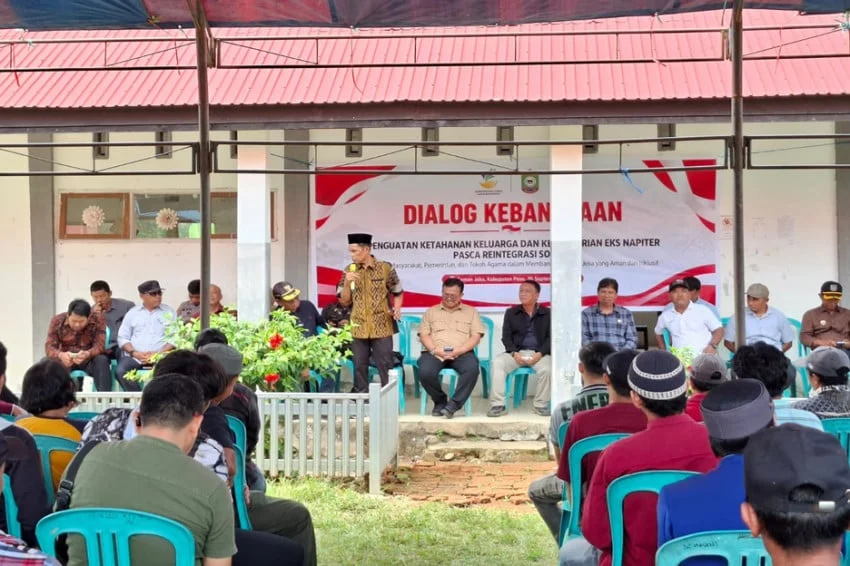
The distribution of this financial aid was formally announced during a high-profile public forum known as the National Dialogue, held under the overarching theme "Strengthening Family Resilience and Independence of Former Terrorist Prisoners Post-Social Reintegration." Organized by the Directorate of Social Rehabilitation for Social Deviants and Victims of Trafficking (RSKPO) under the Ministry of Social Affairs, the event took place in Tamanjeka Hamlet, Masami Village, Poso Pesisir Sub-district, Poso Regency, Central Sulawesi.
This initiative is part of a broader, multidimensional strategy implemented by the Indonesian government to ensure that individuals returning to society after serving prison sentences for terrorism-related offenses can achieve genuine economic independence. By bolstering household income and stabilizing family finances, the Ministry aims to minimize the risk of recidivism, mitigate economic vulnerability, and foster a peaceful environment where social reintegration can succeed permanently.
A Symbolic Setting: Rebuilding Tamanjeka’s Social Fabric
Choosing Tamanjeka Hamlet as the venue for the National Dialogue carried profound symbolic and practical weight. Located in Poso Regency, Tamanjeka bears a heavy historical legacy, having been a focal point of past sectarian conflicts and extremist activities that deeply affected the local population. For decades, Poso struggled with communal violence and radical networks that left deep social scars, fractured community trust, and isolated the region economically.
By hosting the event in the heart of Tamanjeka, the Ministry of Social Affairs sought to facilitate direct engagement between former combatants, local community members, religious leaders, and government representatives. This inclusive approach is designed to mend historical fractures, break down social barriers, and promote mutual understanding. Rebuilding a community damaged by extremism requires more than just security measures; it demands active social healing, grassroots dialogue, and deliberate efforts to restore trust among neighbors.
During the dialogue, officials emphasized that sustainable peace cannot be achieved without addressing the root causes of radicalization, which often include social alienation, marginalization, and economic desperation. The presence of both former prisoners and local residents in a collaborative public forum underscored a shared commitment to turning the page on the region’s troubled past and building a resilient, cohesive community.
The Mandate of the Directorate of RSKPO: Healing Social Fractures
The Directorate of RSKPO plays a critical frontline role within the Ministry of Social Affairs. Its primary mandate involves social rehabilitation and psychological recovery for individuals and communities affected by severe social disruptions, including human trafficking, civil unrest, and violent extremism.
When extremist networks take root, they often tear apart the social fabric, severing community bonds and eroding foundational moral values. In response, the Ministry of Social Affairs acts as an agent of social recovery, deploying programs designed to restore social harmony and strengthen societal resilience against radical ideologies.
Addressing the gathering, RSKPO Director Rachmat Koesnadi highlighted the vital interplay between local wisdom and social resilience in navigating the rapid changes of the modern world. He noted that contemporary society faces massive socio-cultural transformations that continually shift worldviews, lifestyles, and interpersonal dynamics.
"Rapid social and cultural changes significantly impact people’s perspectives and ways of living, which not infrequently generates differences that can lead to friction and hostility," Koesnadi stated during his address. He warned that if such societal shifts are left unmanaged, they can rupture social ties among citizens, erode moral standards, and destroy public trust.
Koesnadi further explained that the financial assistance provided to the 21 former terrorism convicts is not merely a charitable handout, but a strategic investment in social stability. Economic empowerment serves as a practical bridge, allowing former inmates to support their families honorably while integrating smoothly into the legitimate economic life of their communities.
Chronology of the Reintegration and Empowerment Process
The journey of a former terrorism convict from judicial sentencing to full social reintegration is a complex, multi-stage process that requires close coordination among law enforcement agencies, correctional facilities, social services, and civil society organizations.
- Correctional Detention and Deradicalization: While serving sentences in various correctional facilities across Indonesia, inmates undergo structured deradicalization programs overseen by the National Counterterrorism Agency (BNPT) in collaboration with the Directorate General of Corrections. These programs focus on civic education, psychological counseling, and theological reorientation to counter extremist narratives.
- Release and Initial Reintegration: Upon completing their sentences, former prisoners face the formidable challenge of returning to communities that may harbor lingering fear, suspicion, or resentment. Local authorities and social workers monitor their initial adjustment period to ensure personal safety and facilitate basic community acceptance.
- Assessment of Economic Potential: Recognizing that financial instability is a major driver of recidivism, the Ministry of Social Affairs—through directorates like the RSKPO—conducts assessments to identify the vocational skills, entrepreneurial interests, and market opportunities available to each individual.
- Targeted Financial Support and Training: The recent disbursement of Rp5 million per person represents a targeted intervention phase. Rather than providing generic aid, the funds are calibrated to support specific micro-enterprises chosen by the beneficiaries, ranging from agriculture and animal husbandry to small retail and trade.
- Post-Disbursement Monitoring and Mentorship: Financial grants are paired with ongoing mentorship from social workers and local community leaders. This ensures that the capital is utilized effectively and that beneficiaries receive guidance on business management, financial literacy, and community relations.
Socio-Economic Implications and the Fight Against Recidivism
Criminological research and counterterrorism studies consistently demonstrate that economic vulnerability and social exclusion are primary risk factors for individuals slipping back into extremist networks. When former prisoners are released without marketable skills, employment opportunities, or financial support, they often find themselves alienated from mainstream society. In such vulnerable states, they may become susceptible to re-recruitment by underground radical cells that offer financial assistance and a sense of belonging.
By directly addressing the economic needs of former prisoners and their families, the Indonesian government is implementing a proactive defense against recidivism. Providing Rp5 million in seed capital may appear modest, but in the context of local economies in regional Sulawesi, it provides a viable starting point for micro-enterprises such as purchasing farming equipment, acquiring livestock, or stocking small sundry shops.
Furthermore, economic self-sufficiency fosters personal dignity and transforms public perception. When former prisoners become productive, tax-paying, and contributing members of their local economies, community attitudes naturally shift from fear and skepticism to acceptance and cooperation. This normalization of daily interactions is essential for long-term social cohesion.
Broader Perspectives on Indonesia’s Deradicalization Strategy
Indonesia’s approach to counterterrorism has increasingly emphasized a holistic framework that combines firm law enforcement with compassionate, community-based rehabilitation. While agencies like Detachment 88 (Densus 88) handle security threats and arrests, civil ministries such as the Ministry of Social Affairs and religious bodies play an indispensable role in the post-conflict and post-conviction phases.
Experts in security studies and social policy have frequently praised Indonesia’s emphasis on human-centric reintegration programs. Unlike approaches that rely solely on prolonged incarceration or marginalization—which can inadvertently reinforce extremist grievances—integration initiatives validate the possibility of rehabilitation. They send a clear signal that society is willing to welcome back individuals who demonstrate a genuine commitment to peace, rule of law, and civic responsibility.
However, challenges remain. Reintegration is rarely linear, and the stigma associated with a terrorism conviction can take years to fully dissipate. Sustained efforts require continuous funding, active participation from local civil society organizations, and robust mental health support systems for both former offenders and the communities receiving them.
Moving Forward: Toward Lasting Peace in Poso
The National Dialogue in Tamanjeka and the distribution of economic empowerment funds mark an important milestone in Poso’s ongoing journey toward permanent stability. By bringing together government officials, religious figures, community elders, and former combatants in an open dialogue, the event reinforced the idea that peace is a collective responsibility.
As these 21 former terrorism convicts launch or expand their independent business ventures with the Ministry’s backing, the eyes of policymakers and social researchers will remain fixed on their progress. If successful, this model of localized economic empowerment paired with public reconciliation forums could serve as a blueprint for similar interventions across other regions of Indonesia that continue to grapple with the legacy of violent extremism.
Ultimately, the ultimate measure of success for these programs will not be found in statistical reports alone, but in the everyday realities of communities like Tamanjeka—where children can grow up in safety, neighbors can collaborate across past divides, and former adversaries can build a shared future rooted in economic stability, mutual respect, and enduring peace.