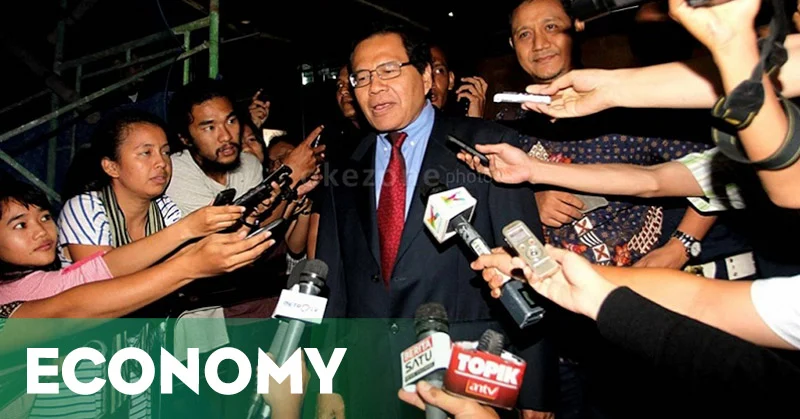
The formal dissolution of Pertamina Energy Trading Limited (Petral) marked a watershed moment in Indonesia’s state-owned enterprise governance and energy sector reform. Despite the monumental nature of the decision—which dismantled a trading subsidiary long criticized for opaque operations and susceptibility to third-party brokerage interference—then-Coordinating Minister for Maritime Affairs and Resources, Rizal Ramli, maintained a strict silence on the matter. Following a high-level meeting at his office in Jakarta on Monday, November 9, 2015, Ramli sidestepped persistent inquiries from journalists regarding the official closure of the Singapore-based trading arm, offering only a brief smile and a dismissive wave before departing for a state engagement at the Presidential Palace.
The reluctance of a senior coordinating minister to address the dismantling of an entity that fell under his broad ministerial purview sparked immediate speculation among political and economic observers. While the Ministry of Energy and Mineral Resources (ESDM), operating under the umbrella of his coordination, had officially confirmed the findings that led to Petral’s demise, Ramli’s uncharacteristic reticence highlighted the delicate political dynamics and complex institutional sensitivities surrounding the purge of vested interests within Indonesia’s oil and gas supply chain.
Background and Context of the Petral Controversy
To fully understand the significance of Petral’s dissolution and the charged atmosphere surrounding ministerial reactions in late 2015, it is necessary to examine the history of the company. Established as a trading subsidiary of Indonesia’s state-owned oil and gas giant, PT Pertamina (Persero), Petral was originally incorporated to facilitate the international procurement of crude oil and refined petroleum products. Over the decades, however, the organization transformed into a focal point of public ire, frequently cited by energy analysts, governance watchdogs, and political figures as a "rent-seeking mafia" that cost the Indonesian state billions of dollars annually.
Operating primarily through its subsidiary, Pertamina Energy Services Pte. Ltd. (PES) based in Singapore, Petral routinely bypassed direct government-to-government or producer-to-refiner contracts. Instead, the procurement process frequently involved a labyrinth of third-party brokers, intermediaries, and shell companies. These intermediaries added unnecessary markups to Indonesia’s energy import bill, which was substantial given the nation’s transition from a net oil exporter to a net importer due to declining domestic production and surging domestic consumption.
Public pressure to audit and reform Petral mounted for years. Critics argued that the lack of transparency in crude and fuel procurement not only drained state coffers but also artificially inflated domestic fuel prices, placing an undue burden on Indonesian taxpayers and consumers. Calls for its abolition grew louder with the inauguration of President Joko Widodo in 2014, as the new administration campaigned on a platform of clean governance, bureaucratic efficiency, and the eradication of systemic corruption in strategic economic sectors.
Chronology of the Dissolution Process
The path to Petral’s ultimate closure was marked by a series of rigorous audits, investigative reports, and strategic ministerial decrees that systematically dismantled the trading entity’s operational foundation.
In early 2015, the newly appointed leadership of PT Pertamina, backed by the Ministry of Energy and Mineral Resources, initiated a comprehensive governance audit of Petral and its Singaporean subsidiary, PES. Conducted by international auditing firm Klynveld Peat Marwick Goerdeler (KPMG), the forensic audit aimed to shed light on procurement practices, tender procedures, and the involvement of unauthorized third parties between 2012 and 2014.
By May 2015, the findings of the audit began to leak into the public domain, revealing systemic irregularities. The investigation confirmed that Petral’s procurement processes were heavily influenced by external brokers who dictated supply terms, manipulated pricing benchmarks, and sidelined direct negotiations with major national oil companies and reputable international trading houses.
Armed with these empirical findings, the Indonesian government accelerated its exit strategy. In August 2015, the Ministry of Energy and Mineral Resources officially announced that Petral would not be reformed or restructured, but completely liquidated. Operational authority for crude and fuel procurement was formally transferred back to Pertamina’s domestic headquarters in Jakarta, specifically under the newly established Integrated Supply Chain (ISC) division.
By November 2015, the winding-down process was largely complete, and PES contracts were systematically terminated or allowed to expire. It was precisely at this juncture—when the dust of dissolution was settling and the institutional accountability was being questioned—that Coordinating Minister Rizal Ramli was pressed for an official assessment by the press corps.
Official Reactions and the Presidential Schedule
The events of Monday, November 9, 2015, illustrated the high-pressure environment surrounding Indonesia’s economic officialdom. Preceding his exit from the ministry building, Rizal Ramli had chaired a strategic meeting focused on energy diversification and regional decentralization—initiatives designed to reduce Indonesia’s reliance on imported fossil fuels and decentralize power generation infrastructure.
As Ramli emerged from the conference room, journalists swarmed him, seeking his perspective on the final stages of Petral’s liquidation, particularly given that the ESDM ministry fell within his broader coordination mandate. Rather than engaging with the probing questions, Ramli raised both hands in a defensive gesture, offered a polite smile, and walked briskly toward his waiting vehicle.
Staff members accompanying the minister quickly intervened, explaining to the press corps that Ramli was operating under a strict timetable. He was required to make an immediate transit to the State Palace in Central Jakarta to participate in official state protocols. President Joko Widodo had scheduled a formal state welcoming ceremony for Italian President Sergio Mattarella, who was visiting Indonesia to strengthen bilateral diplomatic and economic ties. This high-priority diplomatic obligation provided an immediate logistical buffer, allowing the minister to bypass further questioning on the contentious domestic energy issue.
Implications and Broader Economic Impact
The dismantling of Petral and the subsequent restructuring of Indonesia’s energy procurement mechanisms carried profound implications for the national economy, state finances, and corporate governance within state-owned enterprises.
First and foremost, the elimination of the Singapore-based intermediary layer was projected to yield significant financial savings for the state. By purchasing crude oil and refined products directly from National Oil Companies (NOCs) and reputable global suppliers without the markup of brokers, Pertamina estimated savings in the range of hundreds of millions to billions of dollars annually. These savings directly improved Pertamina’s corporate balance sheet and reduced the fiscal burden on the state budget, which had previously subsidized fuel prices under various regulatory regimes.
Second, the move represented a major psychological and structural victory for transparency advocates. For decades, the phrase "Petral mafia" had been synonymous with impunity in state-owned commerce. The decisive action taken by the Ministry of Energy and Mineral Resources demonstrated that the government was willing to confront entrenched interests and dismantle profitable patronage networks, regardless of their historical resilience.
However, the transition was not without operational challenges. Bringing procurement in-house under Pertamina’s Integrated Supply Chain (ISC) required a massive scaling-up of analytical, risk-management, and negotiation capabilities within Jakarta. Ensuring that domestic procurement teams could secure competitive pricing and reliable supply volumes on the global spot and term markets without the historical crutch of Singaporean intermediaries required rigorous oversight, anti-corruption safeguards, and institutional capacity building.
Furthermore, the silence or guarded reactions from senior economic ministers like Rizal Ramli underscored the complex political balancing act required during major structural reforms. While the overarching policy was championed by the administration, the day-to-day fallout, bureaucratic friction, and potential legal ramifications of unwinding decades-old contracts meant that senior officials often preferred to let official institutional communiqués speak for themselves, avoiding unscripted remarks that could complicate ongoing diplomatic or domestic political negotiations.
Conclusion
The closure of Petral stands as a landmark case study in the reform of Indonesian state-owned enterprises. By severing ties with tainted trading subsidiaries and bringing international oil procurement under direct domestic oversight, the government sought to eliminate systemic inefficiencies and restore public trust in the management of natural resources. While high-ranking officials such as Coordinating Minister Rizal Ramli chose to deflect media inquiries on the day of the final transition due to pressing state duties, the enduring legacy of Petral’s dissolution remains a foundational pillar in Indonesia’s ongoing pursuit of economic transparency, fiscal prudence, and good corporate governance in the energy sector.