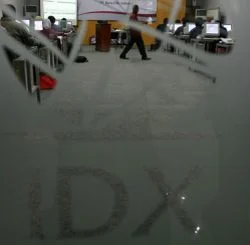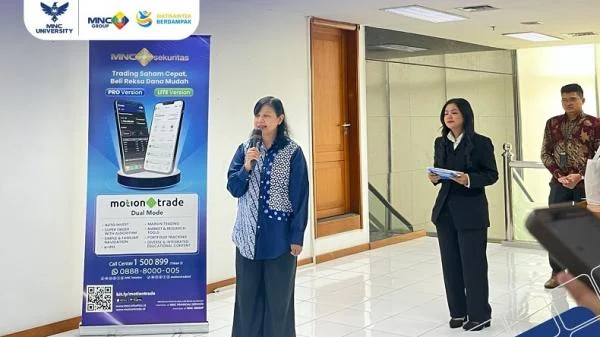
MNC University has formally reinforced its strategic commitment to advancing financial literacy and driving capital market inclusion among the younger demographic. On Thursday, September 17, 2026, the institution officially inaugurated the Indonesia Stock Exchange (IDX) Investment Gallery alongside a ceremonial milestone celebrating the opening of 1,000 securities accounts for its student body. This dual initiative bridges theoretical economic concepts and practical market engagement, aiming to cultivate a generation of financially astute graduates equipped for modern economic landscapes.
The high-profile inauguration event drew a distinguished delegation of regulatory figures, market operators, and academic leaders. Among the notable attendees were Andes Novytasary, Deputy Director of Business Behavior Supervision, Education, and Consumer Protection for the Financial Services Authority (OJK) in Jakarta and surrounding regions (Jabodebek); Nur Rachma Handayanie, Head of Regional Development 2 at the Indonesia Stock Exchange; Dendy Pratama, Rector of MNC University; and Andri Muharizal, Head of Education and Community Partnership at MNC Sekuritas. Their collective presence underscored the collaborative multi-stakeholder framework required to build a sustainable and resilient investor base in Indonesia.
Bridging Academia and Practical Finance
The establishment of the IDX Investment Gallery on the MNC University campus marks a transformative step in modern higher education curriculum integration. Designed to function as an experiential learning laboratory, the gallery provides students with direct access to real-time market data, analytical tools, and professional trading simulations. Rather than relying solely on textbook theories regarding portfolio management, equity valuation, and macroeconomic indicators, students can now observe market fluctuations firsthand and analyze corporate performance within a controlled educational environment.
University leaders emphasize that modern graduates across all disciplines—not merely those majoring in finance or economics—require a foundational understanding of wealth management. In an era defined by digital financial disruptions, complex investment instruments, and shifting global economic paradigms, financial literacy is increasingly viewed as an essential life skill. The newly launched gallery serves as a dynamic hub where students, faculty, and industry practitioners can converge for workshops, seminars, and hands-on trading clinics.
Fostering Responsible Financial Habits from Campus
During the formal proceedings, OJK representative Andes Novytasary delivered a keynote address urging students to transcend passing financial trends. Instead, she advocated for the cultivation of disciplined, long-term habits geared toward responsible financial planning and wealth accumulation. Novytasary stressed that understanding personal finance early in life lays the structural groundwork for future economic security.
“OJK, the IDX, MNC Sekuritas, and the academic institution will continually support students in deepening their understanding and practical experience within the capital market,” Novytasary stated during her address. She further encouraged students to comprehend broader economic cycles to proactively navigate future opportunities, emphasizing that the capital market should be viewed as a legitimate vehicle for long-term prosperity.
Addressing the milestone achievement of 1,000 newly opened securities accounts, Novytasary issued a pragmatic advisory to the student investors. She underscored that opening an account is merely the initial threshold rather than the destination. Students must proactively educate themselves regarding diverse asset classes, execute trades prudently, and maintain acute awareness of the inherent risks associated with capital market investments.

Strategic Collaboration and Institutional Roles
The success of the initiative hinges on the synchronized synergy between regulatory bodies, stock exchanges, brokerage firms, and academic institutions. The Indonesia Stock Exchange, through its regional development divisions, continues to aggressively expand the footprint of IDX Investment Galleries across universities nationwide. These galleries act as the primary frontline for capital market education, democratizing access to financial tools that were historically restricted to institutional professionals.
MNC Sekuritas plays an operational and educational catalyst role in this partnership. By facilitating the seamless onboarding of 1,000 student accounts, the brokerage firm ensures that regulatory compliance, account security, and user-friendly digital trading platforms are accessible to novice investors. Educational programs led by MNC Sekuritas are slated to run concurrently with the gallery’s daily operations, offering structured mentoring sessions, risk-management workshops, and analytical training to safeguard retail market participants.
Broader Implications for Indonesia’s Capital Market
The integration of capital market education into university ecosystems holds profound macroeconomic implications for Indonesia. Historically, domestic retail participation in the IDX lagged behind regional peers, leaving the local market vulnerable to sudden capital outflows from foreign institutional investors. However, over recent years, coordinated national campaigns spearheaded by the OJK and IDX have catalyzed a massive influx of domestic retail investors, particularly among Gen Z and millennial cohorts.

By embedding investment culture directly into higher education institutions like MNC University, stakeholders are accelerating the democratization of finance. A financially literate youth demographic not only strengthens individual household resilience against inflation and economic shocks but also deepens national capital market liquidity. When university students transition into the workforce equipped with practical investment experience, they contribute to a more stable, mature, and domestically driven financial ecosystem.
Looking Ahead: Sustainability and Continuous Education
Following the ribbon-cutting ceremony and the formal account-opening milestone, MNC University administration outlined a roadmap for the newly established IDX Investment Gallery. The facility will not remain a static exhibition space; rather, it will host structured credit-bearing modules, extracurricular investment clubs, and certified stock-trading competitions. Faculty members will collaborate with analysts from MNC Sekuritas to update course materials, ensuring that curriculum content remains aligned with contemporary market realities, such as sustainable investing (ESG criteria), digital asset integration, and evolving regulatory frameworks.
As the academic year progresses, the institutional partners plan to track the engagement metrics and portfolio performance trends of the participating student investors. This empirical feedback loop will allow educators and market regulators to refine educational modules, address knowledge gaps, and expand the program’s reach to an even broader segment of the student body. Ultimately, the inauguration at MNC University serves as a replicable blueprint for how higher education institutions can actively contribute to national financial inclusion objectives and shape a prosperous, financially resilient future generation.