
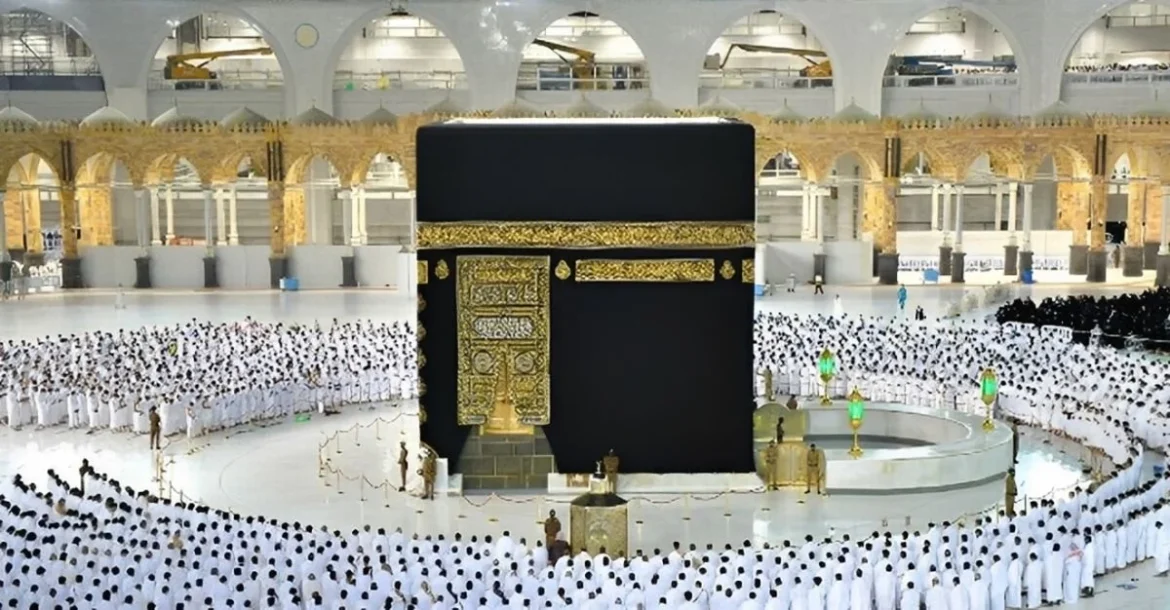
The date of October 31, 683 CE, corresponding to the 3rd of Rabi al-Awwal in the year 64 AH, marks one of the most somber chapters in the annals of Islamic history. It was on this day that the Kaaba, the holiest site in Islam, sustained severe structural damage due to a catastrophic fire during the siege of Makkah. This incident occurred at the height of the Second Fitna, a period of profound political instability, civil war, and power struggles that threatened the very foundations of the early Islamic Caliphate following the death of Muawiyah I.
The Political Crucible: The Second Fitna
To understand the tragic events of October 683, one must examine the volatility of the Umayyad era. The death of Muawiyah I in 680 CE triggered a succession crisis. His son, Yazid I, was appointed as his successor, but his legitimacy was immediately contested by prominent figures in the Hijaz, most notably Abdullah ibn al-Zubair and Husayn ibn Ali.
The refusal of these figures to pledge allegiance (bay’ah) to Yazid created a polarized atmosphere. While the tragedy at Karbala in 680 CE had already sent shockwaves through the Muslim world, the subsequent resistance centered in Makkah transformed the holy city into the primary theater of political dissent. Abdullah ibn al-Zubair, the grandson of Abu Bakr al-Siddiq, established himself as a powerful opposition leader in Makkah, effectively governing the city and attracting the support of those who viewed the Umayyad transition to hereditary monarchy as a violation of Islamic governance principles.
The Siege of Makkah: Chronology of a Conflict
The escalation toward the burning of the Kaaba was a result of a protracted military campaign initiated by the Umayyad forces under the command of Husayn ibn Numayr. After suppressing opposition in Madinah during the Battle of al-Harrah in late 683, the Umayyad army marched toward Makkah to eliminate the last bastion of resistance led by Ibn al-Zubair.
The chronology of the siege is characterized by the following phases:
- September 683: The Umayyad forces arrive at the outskirts of Makkah, establishing a siege perimeter around the city.
- October 683: Intense military skirmishes erupt. Ibn al-Zubair and his followers fortify their positions within the Sacred Mosque (Al-Masjid al-Haram).
- October 31, 683: The decisive moment occurs when the Umayyad forces utilize heavy siege machinery, including manjaniq (catapults), to bombard the defenders. During this bombardment, fire—likely ignited by flaming projectiles—spread to the coverings (kiswa) of the Kaaba, eventually engulfing the structure.
- November 683: The siege is abruptly halted following the news of the sudden death of Caliph Yazid I in Damascus.
Structural Impact and Historical Debates
Historical accounts of the fire vary, reflecting the complexities of early historiography. Primary sources, such as the works of Al-Tabari and Ibn Kathir, describe a scene of immense devastation. The intense heat of the fire weakened the structural integrity of the Kaaba, which was primarily constructed of stone. Furthermore, the Black Stone (al-Hajar al-Aswad) is reported to have been cracked or fractured during this period, an event that deeply disturbed the faithful.
There is a long-standing academic debate regarding the intent behind the fire. Some chroniclers suggest it was an accidental outcome of the siege tactics, while others argue it was a deliberate attempt by the Umayyad forces to force Ibn al-Zubair’s surrender by targeting his sanctuary. Regardless of intent, the incident served as a powerful propaganda tool against the Umayyad administration, painting them as indifferent to the sanctity of the Haram.
The Reconstruction Under Abdullah ibn al-Zubair
Following the withdrawal of the Umayyad army, Abdullah ibn al-Zubair seized the opportunity to consolidate his power and undertake the ambitious project of rebuilding the Kaaba. He aimed to restore the building to the dimensions he believed were intended by the Prophet Muhammad, based on traditions narrated by his aunt, Aisha bint Abu Bakr.

Ibn al-Zubair incorporated the Hijr Ismail—a semi-circular area adjacent to the Kaaba—into the main structure and added two doors, one for entry and one for exit, effectively aligning the building with the foundations established by the Prophet Ibrahim. This reconstruction was a significant assertion of his religious and political authority, positioning him as the defender of the faith and the restorer of the Sunnah. However, this structure was later demolished by the Umayyad general al-Hajjaj ibn Yusuf in 692 CE during a second, more successful siege, returning the Kaaba to the dimensions established during the pre-Islamic Quraish period.
Broader Impact and Historical Implications
The burning of the Kaaba in 683 CE had lasting implications for the Islamic world:
1. Erosion of Umayyad Legitimacy: The damage to the holiest site in Islam severely tarnished the reputation of the Umayyad dynasty. It became a recurring narrative in opposition literature, reinforcing the image of the Umayyads as worldly rulers who prioritized political control over religious sanctity.
2. The Sanctity of the Haram: The event sparked extensive theological debates regarding the sanctity of the Kaaba and the limits of warfare. Jurists of the era began to codify rules of engagement, emphasizing that even in times of civil strife, the inviolability of the Sacred Mosque must be maintained.
3. Evolution of Islamic Architecture: The subsequent reconstructions, particularly those by Ibn al-Zubair and later the Umayyads, highlighted the symbolic importance of the Kaaba’s physical form. The debates over its dimensions and structure underscored the tension between architectural tradition and political reform.
4. Documentation of the Event: The incident remains a focal point for historians studying the transition of power in early Islam. It serves as a reminder of how political instability can irrevocably alter the physical and cultural landscape of a civilization.
Analysis: Lessons from the Past
From a historical perspective, the fire of 683 CE represents the dangerous intersection of political legitimacy and religious symbolism. When secular power struggles cross into the domain of sacred geography, the consequences are often catastrophic and long-lasting. The resilience of the Kaaba throughout these periods of conflict—having been damaged and rebuilt multiple times—reflects its enduring role as the center of Islamic unity, regardless of the political turmoil surrounding it.
In contemporary historical analysis, the events of October 31, 683, are often cited as a cautionary tale. The destruction was not merely a loss of stone and mortar; it was a psychological blow to the nascent Muslim community. The subsequent efforts to rebuild the Kaaba served as a restorative act, symbolizing the community’s commitment to maintaining its spiritual focal point despite the shifting tides of political governance.
Today, the site remains the destination for millions of pilgrims annually. While the original structures have been renovated and expanded, the memory of the events of the late 7th century remains embedded in the historical consciousness of the Muslim world, providing a somber but necessary context for understanding the complexities of early Islamic history. By studying the events of 683 CE, scholars gain insight into how a fledgling empire navigated the precarious balance between state authority and religious obligation, a theme that continues to resonate in the discourse of the modern Middle East.
