Jakarta — The National Search and Rescue Agency (Basarnas) has officially announced a seven-day extension for the ongoing search and rescue operations dedicated to locating the remaining victims and managing the wreckage of the ill-fated vessel KM Virgo Transport 8. The decision to prolong the mission comes as maritime authorities and specialized salvage teams prepare for a complex, high-risk underwater recovery operation that requires comprehensive coordination and specialized technical expertise.
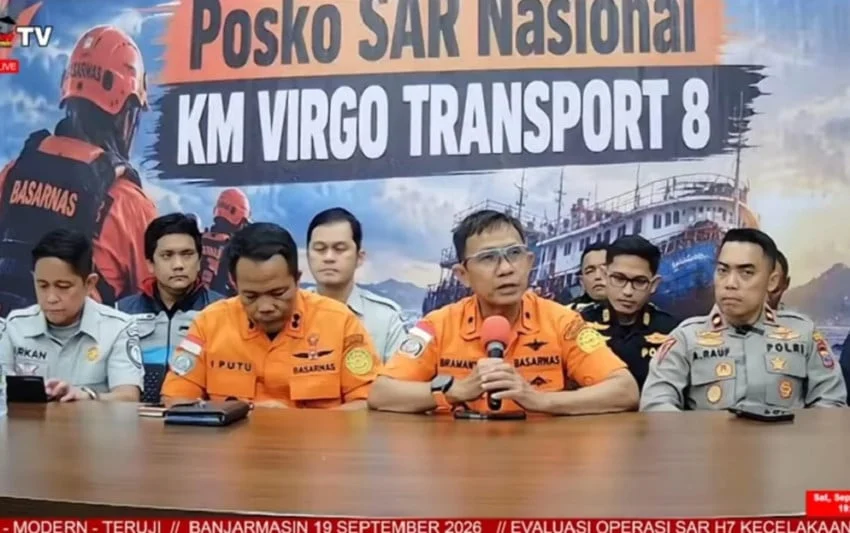
Speaking from the agency’s headquarters in Jakarta on Saturday, September 19, 2026, Basarnas Director of Operations, First Admiral Yudhi Bramantyo Nur Sasongko, confirmed that the emergency response phase has been adjusted to accommodate emerging operational needs on the ground.
"We formally declare that this search and rescue operation will be extended for another seven days moving forward," Admiral Bramantyo stated, emphasizing the agency’s steadfast commitment to ensuring that all potential avenues for locating missing individuals are thoroughly exhausted.
The Primary Catalyst for the Extension: The Arrival of the Salvage Team
A critical determining factor in Basarnas’ decision to grant a seven-week-day extension is the recent arrival of a specialized salvage team at the incident site. The maritime salvage unit has been mobilized to undertake the intricate process of raising and securing the sunken hull of KM Virgo Transport 8, which remains submerged under challenging hydrological conditions.
According to Admiral Bramantyo, the structural integrity of the vessel, combined with the depth at which it rests and the local marine topography, necessitates a cautious, methodical approach. The salvage operation itself is projected to be a protracted endeavor, dictated entirely by the technical complexities involved in safely lifting a commercial vessel of this magnitude.
"The salvage operation that is about to be executed will likely require a significant amount of time and extended effort. We cannot establish a definitive deadline at this exact moment, but what is clear is that the timeline is currently being meticulously evaluated and mapped out by a collective of engineering and maritime experts," Bramantyo explained.
The integration of search and rescue (SAR) protocols with heavy marine salvage operations is a delicate procedure. While surface searches, aerial sweeps, and shoreline monitoring conducted by joint personnel have yielded critical baseline data, the potential presence of trapped victims within the submerged compartments of KM Virgo Transport 8 makes the removal of the vessel a top priority for forensic and humanitarian reasons.
Broader Institutional Response and Humanitarian Aid
As the operational focus expands to include heavy maritime salvage and extended recovery sweeps, institutional support for the affected families and communities continues to run parallel to the physical search efforts. State-owned credit insurance and social security company PT Jasa Raharja has been actively involved in providing financial relief and administrative support to the families of those impacted by the maritime tragedy.
In preceding days, Jasa Raharja formally distributed financial compensation and insurance payouts to the heirs of deceased victims originating from West Java. This expedited delivery of statutory benefits highlights the coordinated multi-agency response to the disaster, ensuring that while Basarnas and its tactical partners focus on the maritime theater, social welfare networks provide immediate relief to grieving households.
Background Context: The Incident Involving KM Virgo Transport 8
Maritime incidents involving commercial cargo and transport vessels in Indonesian waters consistently draw intense scrutiny regarding navigational safety, weather compliance, and cargo management. KM Virgo Transport 8 had been operating within regional shipping lanes prior to encountering the catastrophic event that led to its sinking.

While preliminary investigations by the National Transportation Safety Committee (KNKT) and the Ministry of Transportation are ongoing to determine the definitive root cause of the disaster—ranging from sudden adverse weather phenomena and high sea states to potential stability issues or mechanical failures—the immediate aftermath has tested the rapid deployment capabilities of Indonesia’s national rescue framework.
Indonesia, as the world’s largest archipelagic nation, relies heavily on maritime connectivity. However, the vast geographic expanse presents persistent challenges for maritime safety enforcement and rapid emergency response. The deployment of Basarnas to incidents of this scale underscores the vital role played by specialized state apparatuses in safeguarding national waters and maintaining public trust in commercial maritime transportation.
Operational Chronology and Evolution of the Mission
The search and rescue operation for KM Virgo Transport 8 has evolved significantly since the initial distress call was registered by local authorities. The mission chronology can be structured into several distinct phases:
- Initial Distress and Emergency Response (Phase 1): Upon receiving notification that KM Virgo Transport 8 was in distress, Basarnas immediately mobilized available assets, dispatching vessel units, rigid-hull inflatable boats, and search teams to the last known coordinates. Initial efforts focused heavily on surface rescue, recovering survivors, and mapping the immediate debris field.
- Comprehensive Surface and Sub-Surface Mapping (Phase 2): As the initial 72-hour golden window for survivor rescue transitioned into a recovery operation, joint personnel deployed side-scan sonar and underwater drone technology to pinpoint the exact resting place of the vessel’s hull.
- Assessment and Transition to Salvage (Phase 3): Recognizing the physical limitations of divers operating at deep-sea levels without specialized stabilization of the wreck, Basarnas coordinated with commercial and state salvage contractors. This phase culminated in the recent arrival of the specialized salvage team, prompting the operational extension announced on September 19, 2026.
- Extended Recovery and Wreck Extraction (Phase 4): The newly enacted seven-day extension represents this current phase, characterized by the synchronization of SAR sweeps with heavy engineering preparations to lift the vessel and conduct a thorough sweep of its interior compartments.
Challenges on the Maritim Front: Environmental and Technical Hurdles
Conducting prolonged search, rescue, and salvage operations at sea involves confronting a myriad of unpredictable environmental variables. Meteorological conditions in the operational area—including sudden shifts in wind velocity, strong undercurrents, and fluctuating visibility levels—continue to test the endurance of joint personnel from Basarnas, the Indonesian Navy (TNI AL), the Water Police (Polairud), and civilian volunteers.
Furthermore, deep-water salvage operations demand absolute precision. The shifting of a sunken vessel’s weight during lifting procedures can introduce secondary hazards, necessitating continuous risk assessments by marine engineers. The decision by Basarnas leadership to refrain from setting a rigid deadline for the salvage phase reflects a safety-first philosophy, prioritizing the well-being of rescue personnel and the structural preservation of evidence needed for the official maritime accident investigation.
Implications for National Maritime Safety Standards
The ongoing incident involving KM Virgo Transport 8 carries broader implications for Indonesia’s national maritime transportation sector. Stakeholders across the industry are closely monitoring the outcomes of both the rescue mission and the subsequent safety inquiries.
Experts suggest that the lessons learned from the structural response, coordination efficiency between Basarnas and salvage contractors, and the execution of passenger and crew manifest verifications will serve as critical benchmarks for future regulatory updates. The Ministry of Transportation is expected to review compliance metrics regarding vessel maintenance schedules, load limits, and mandatory safety equipment carriage requirements once the definitive investigative reports are finalized.
Moreover, the humanitarian aspect of the operation remains paramount. For the families awaiting closure, the extension of the Basarnas operation provides a renewed sense of reassurance that exhaustive measures are being undertaken. The coordinated approach between search authorities, social agencies like Jasa Raharja, and regional governments demonstrates a comprehensive framework designed to mitigate the multifaceted impacts of maritime disasters.
Outlook for the Ensuing Week
As the extended seven-day search window gets underway, Basarnas has reiterated its call for the maritime community—including commercial vessels operating in the vicinity of the incident zone—to maintain heightened vigilance and cooperate fully with on-site rescue coordinators. Any sightings of floating debris or potential evidence related to KM Virgo Transport 8 are to be reported immediately to the command post.
The unified command center will continue to evaluate daily logs, meteorological forecasts, and salvage progress reports to maximize resource allocation. While the operation presents immense technical challenges, the resolute stance of Basarnas leadership ensures that all remaining objectives of the mission will be pursued with uncompromising diligence until the operational parameters of the extended phase are fulfilled.