
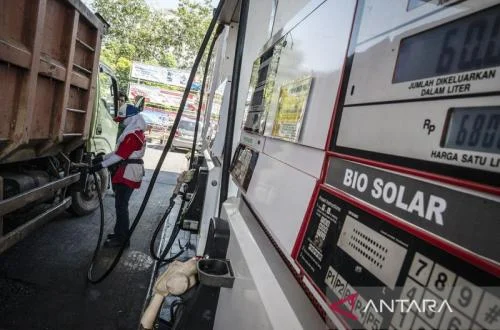
JAKARTA – The Ministry of Energy and Mineral Resources (ESDM) has officially declared that the implementation of Indonesia’s mandatory B50 biodiesel program will yield profoundly significant economic benefits for the nation. This policy is heralded as a strategic imperative, designed not only to bolster national energy resilience but also to reposition Indonesia as a global leader in sustainable energy practices driven by domestic resources. The initiative is poised to deliver substantial foreign exchange savings, create millions of new jobs, and significantly contribute to the country’s ambitious climate targets, marking a pivotal moment in Indonesia’s energy transition journey.
Dwi Anggia, Spokesperson for the Ministry of ESDM, emphasized that this transformation heralds a new era wherein national energy sovereignty is directly propelled by indigenous commodities, thereby diminishing reliance on volatile imported fossil fuels. Under the B50 mandate, a substantial 50 percent of every liter of diesel consumed across the archipelago will be derived from crops cultivated and harvested by Indonesian farmers. This direct linkage between agricultural output and energy consumption underscores a profound shift towards a self-sufficient energy ecosystem. Anggia projected that "the B50 program is expected to generate real economic benefits for the nation, potentially saving Indonesia approximately Rp170 trillion (equivalent to around USD 10.8 billion) in foreign exchange throughout 2026." This substantial saving is critical for the nation’s financial stability and developmental aspirations.
The Genesis of Indonesia’s Biodiesel Ambition: A Strategic Evolution
Indonesia, as one of the world’s largest archipelagic nations, has long grappled with the challenge of securing its energy supply amidst rising domestic demand and fluctuating global oil prices. Historically, the country has been a net importer of crude oil, rendering its economy vulnerable to external market volatilities and placing significant pressure on its trade balance and foreign exchange reserves. Recognizing this vulnerability, the Indonesian government embarked on a strategic mission to diversify its energy mix, reduce fossil fuel dependency, and leverage its abundant natural resources, particularly palm oil.
The journey towards higher biodiesel mandates began incrementally. The initial compulsory biodiesel program, B20 (20% palm oil-based biodiesel, 80% diesel fuel), was fully implemented in 2016 for both public service obligation (PSO) and non-PSO sectors. This move was primarily driven by the need to stabilize palm oil prices, which were experiencing downward pressure in global markets, and to reduce diesel imports. Building on the success and lessons learned from B20, the government escalated the mandate to B30 in January 2020. The B30 program represented a more ambitious leap, requiring all diesel fuel sold in the country to contain 30 percent palm oil-based biodiesel. This significantly deepened the impact on foreign exchange savings and absorbed a larger volume of domestic palm oil production.
The trajectory continued with the introduction of B35 in February 2023, increasing the blend to 35 percent. Each successive increase in the blend percentage has been preceded by rigorous technical trials, compatibility assessments with existing infrastructure and vehicle engines, and comprehensive impact analyses. The progression from B20 to B30, B35, and now the impending B50 demonstrates a clear, phased roadmap towards greater energy independence and the maximization of domestic value creation. The B50 mandate, therefore, is not an isolated policy but the culmination of years of strategic planning, investment, and commitment to an energy future rooted in local resources.
Economic Pillars: Foreign Exchange Savings and Domestic Value Creation
The projected foreign exchange savings of Rp170 trillion (USD 10.8 billion) by 2026 underscore the profound macroeconomic impact of the B50 program. This colossal saving is crucial for funding national development initiatives and shielding the economy from the inherent volatility of global oil markets. By substituting imported fossil diesel with domestically produced biodiesel, Indonesia effectively retains capital within its borders, strengthening the rupiah against major currencies and bolstering its balance of payments.
The mechanism behind these savings is straightforward: instead of spending foreign currency to import crude oil or refined diesel, Indonesia utilizes its abundant palm oil resources. As a leading global producer of palm oil, the country possesses a unique advantage in developing a robust domestic biodiesel industry. This "domestic commodity" approach not only conserves foreign exchange but also stimulates economic activity across multiple sectors. From the cultivation of palm oil by millions of smallholder farmers and large plantations to the processing of crude palm oil (CPO) into fatty acid methyl ester (FAME) – the primary component of biodiesel – and its subsequent blending and distribution, the entire value chain is invigorated.
The economic multiplier effect extends to various ancillary industries, including logistics, chemical production (for processing), and manufacturing of related equipment. This strategic shift transforms what was once a significant outflow of capital for energy imports into a powerful engine for internal economic growth and wealth creation. Furthermore, by creating a captive domestic market for palm oil, the B50 program provides a stable demand base, insulating the industry from some of the vagaries of international commodity markets and offering greater price stability for farmers. This is particularly vital for the millions of smallholder farmers whose livelihoods depend on palm oil cultivation, offering them more predictable incomes and contributing to rural economic stability.
Job Creation and Social Impact: Empowering Communities
Beyond the macroeconomic figures, the B50 program is anticipated to generate a significant social dividend through extensive job creation. Anggia stated that the program is expected to create up to 2.1 million new jobs across Indonesia. This figure illustrates the powerful positive ripple effect of agricultural-based industrial downstreaming on societal welfare.
These new employment opportunities are not confined to a single sector but are distributed across the entire biodiesel value chain. In the upstream segment, job creation will occur in palm oil plantations, involving tasks such as cultivation, harvesting, and plantation management. The expansion of demand for palm oil as a feedstock for biodiesel will necessitate increased planting, improved agricultural practices, and more labor-intensive operations.
In the midstream and downstream sectors, jobs will emerge in palm oil processing plants, FAME production facilities, blending terminals, and the intricate logistics network required to transport raw materials and finished biodiesel across the archipelago. This includes roles for engineers, technicians, plant operators, administrative staff, and transportation workers. The construction and maintenance of new facilities will also generate temporary and permanent employment.
The creation of 2.1 million jobs holds immense significance for a developing nation like Indonesia, which has a large, young workforce. It contributes to poverty alleviation, reduces unemployment rates, and improves the overall standard of living for countless families. The program particularly benefits rural communities where palm oil cultivation is a dominant economic activity, providing stable income sources and opportunities for skills development. This focus on job creation through domestic resource utilization aligns perfectly with the government’s broader agenda of inclusive economic growth and equitable development.
Environmental Stewardship: Towards a Greener Future
In addition to its substantial economic and social benefits, the B50 mandate is a cornerstone of Indonesia’s commitment to achieving its climate targets. The Ministry of ESDM projects that the transition to this higher biodiesel blend will reduce greenhouse gas (GHG) emissions by an impressive 44.46 million tons of CO2 equivalent throughout 2026. This significant reduction underscores Indonesia’s proactive stance in combating climate change and fulfilling its international obligations under agreements like the Paris Agreement.
Biodiesel, being a renewable fuel, offers a cleaner burning alternative to conventional fossil diesel. Its combustion typically results in lower emissions of particulate matter, sulfur oxides, and unburnt hydrocarbons, contributing to improved air quality, especially in densely populated urban areas. The life cycle emissions of palm oil-based biodiesel, when produced sustainably, are considerably lower than those of fossil fuels, as the carbon dioxide absorbed by palm trees during their growth offsets a portion of the emissions released during combustion.
This environmental contribution is critical for Indonesia, a nation particularly vulnerable to the impacts of climate change, including rising sea levels, extreme weather events, and threats to biodiversity. By actively reducing its carbon footprint through initiatives like B50, Indonesia demonstrates leadership in the global effort to mitigate climate change. The program also supports the country’s Nationally Determined Contribution (NDC) targets, which outline its commitments to reduce emissions. The consistent monitoring by ESDM ensures that the environmental benefits are maximized and that the program adheres to best practices in sustainability.
Technical Readiness and Industry Collaboration: A Unified Effort
Ensuring the optimal implementation of such a complex national program requires meticulous planning, technical readiness, and robust collaboration across various sectors. The Ministry of ESDM is continuously monitoring the technical and operational execution of the B50 program in the field. This includes ongoing assessments of fuel quality, infrastructure compatibility, and vehicle engine performance.
Indonesia’s experience with previous biodiesel mandates (B20, B30, B35) has provided invaluable insights and facilitated the necessary technical adjustments. Extensive trials have been conducted to ensure that existing diesel engines, particularly in the transportation and industrial sectors, can effectively operate with the higher B50 blend without significant modifications or performance degradation. Automotive manufacturers, both local and international, have been actively involved in these trials, providing feedback and ensuring that their vehicle lines are compatible with the new fuel standard. Their cooperation is crucial, as engine compatibility is a key determinant of a smooth transition.
Furthermore, intensive coordination is maintained with a diverse range of stakeholders, from palm oil producers and FAME manufacturers to the state-owned oil and gas company Pertamina, which plays a pivotal role in the blending, distribution, and retail of biodiesel. The palm oil industry has been challenged to ensure a consistent and high-quality supply of CPO and FAME, necessitating investments in refining and processing capabilities. Pertamina, on its part, has adapted its logistics and distribution networks to handle the increased volume of biodiesel, ensuring seamless supply across the vast Indonesian archipelago. This multi-stakeholder approach, involving government agencies, private industry, and research institutions, is fundamental to the successful scaling up of the B50 program.
Challenges and the Path Forward: Navigating Complexities
While the B50 program offers compelling benefits, its implementation is not without complexities and potential challenges. One primary concern revolves around feedstock availability and sustainability. The increased demand for palm oil for biodiesel raises questions about land use, deforestation, and the "food versus fuel" debate. Indonesia is acutely aware of these criticisms and has taken steps to promote sustainable palm oil production through initiatives like the Indonesian Sustainable Palm Oil (ISPO) certification system. Ensuring that palm oil expansion for energy does not come at the expense of natural forests or biodiversity remains a critical ongoing challenge.
Another challenge is the potential volatility of palm oil prices. While the program aims to stabilize domestic demand, global CPO prices can fluctuate significantly, impacting the economics of biodiesel production and requiring government intervention (e.g., through subsidies managed by the Palm Oil Fund Management Agency – BPDPKS) to maintain price stability for consumers. Logistical complexities, particularly in ensuring efficient distribution across thousands of islands, also pose operational hurdles.
The government’s long-term vision extends beyond B50. Research and development are ongoing into alternative biodiesel feedstocks (e.g., microalgae, used cooking oil) to further diversify the supply base and reduce reliance solely on palm oil. Efforts are also being made to improve the efficiency of palm oil cultivation and processing to maximize yield and minimize environmental impact. The B50 program is viewed as a significant stepping stone in Indonesia’s broader energy transition roadmap, which includes the development of other renewable energy sources such as geothermal, hydro, solar, and wind power.
Global Context and Regional Leadership: A Model for Sustainable Energy
Indonesia’s ambitious biodiesel program positions it as a significant player in the global renewable energy landscape. As the world grapples with climate change and the imperative to decarbonize energy systems, Indonesia offers a compelling model of how a developing nation can leverage its indigenous resources to achieve energy security and environmental sustainability. While other countries like Brazil (with its extensive ethanol program) and several European nations have robust biofuel mandates, Indonesia’s scale and reliance on palm oil make its program unique and globally impactful.
The B50 mandate reinforces Indonesia’s leadership in the palm oil industry, albeit with an added layer of responsibility regarding sustainable practices. By demonstrating that a major commodity producer can also be a leader in renewable energy, Indonesia can influence regional and international dialogues on sustainable development and energy transitions. The program also serves as a testament to the potential for South-South cooperation, offering lessons and experiences for other developing nations seeking to reduce their fossil fuel dependency and harness their own agricultural potential for energy.
Dwi Anggia reiterated that the transition to B50 is far more than a mere energy diversification effort. This meticulously phased and thoroughly tested roadmap represents a strategic national instrument designed with the paramount objective of maximizing public welfare and economic prosperity. By integrating its agricultural prowess with its energy needs, Indonesia is forging a path towards a more resilient, self-sufficient, and environmentally responsible future, showcasing a powerful synergy between economic development and climate action. The B50 program stands as a clear declaration of Indonesia’s unwavering commitment to building a stronger, greener nation for generations to come.
