
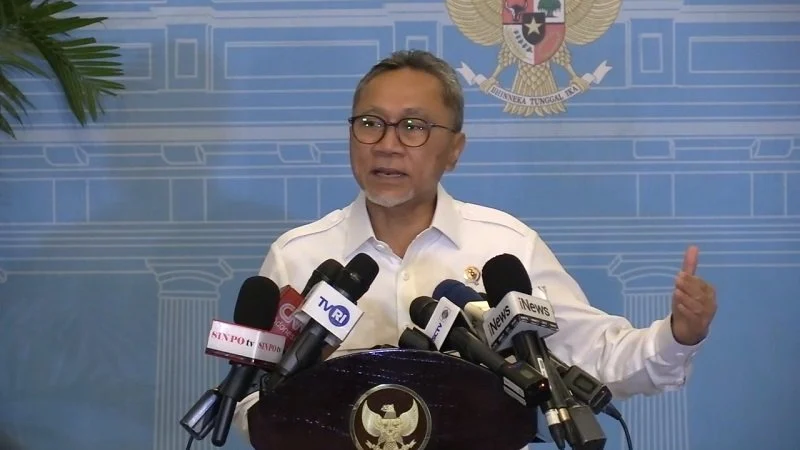
The Indonesian government has officially set an ambitious roadmap to achieve national energy independence by mandating the production of E20 fuel—a blend containing 20% ethanol and 80% gasoline—within the next two years. This strategic policy shift was confirmed by the Coordinating Minister for Food, Zulkifli Hasan, following a high-level limited cabinet meeting presided over by President Prabowo Subianto at the Presidential Palace in Jakarta on Tuesday, September 16, 2026. The move represents a critical component of the current administration’s broader agenda to reduce reliance on imported fossil fuels, mitigate environmental impacts, and stimulate domestic agricultural growth.
Strategic Mandate and Implementation Framework
During the session, President Prabowo Subianto emphasized that the transition to E20 is not merely an energy policy but a vital instrument for national food and energy security. The urgency behind the two-year timeline reflects a calculated effort to insulate the Indonesian economy from the volatility of global crude oil prices, which have historically strained the national budget and current account balances.
Coordinating Minister Zulkifli Hasan, commonly referred to as Menko Zulhas, articulated that the government has adopted a collaborative approach involving multiple ministries and state-affiliated agencies to ensure the feasibility of the project. The directive specifically tasks the Ministry of Agriculture with the foundational work: identifying and securing the necessary land bank to sustain large-scale sugar cane production, which has been identified as the most efficient and scalable feedstock for ethanol production in the Indonesian climate.
The Role of Agricultural Expansion
The cornerstone of the E20 initiative is the development of an unprecedented 2 million hectares of land dedicated specifically to sugar cane cultivation. This expansion is designed to be geographically diverse to ensure regional economic equity and supply chain resilience. According to the government’s preliminary assessment, the designated land will be distributed across major islands, including Java, Sumatra, Kalimantan, and Papua.
This massive land-use strategy requires a delicate balance between agricultural expansion and environmental conservation. Agricultural experts point out that while Indonesia possesses vast tracts of arable land, the integration of new sugar cane plantations must comply with strict sustainability standards to avoid deforestation and protect local ecosystems. The Ministry of Agriculture is currently drafting a comprehensive master plan that includes land mapping, soil fertility analysis, and the implementation of modern irrigation systems to maximize yields per hectare.
Danantara and Industrial Infrastructure
While the Ministry of Agriculture focuses on the biological feedstock, the newly established Badan Pengelola Investasi Daya Anagata Nusantara (Danantara) has been assigned the critical task of overseeing the industrial infrastructure. Danantara will be responsible for financing and managing the construction of large-scale ethanol processing plants. These facilities will serve as the bridge between raw sugar cane production and the final fuel product supplied to the market.
The involvement of Danantara signifies a shift toward a more centralized and streamlined investment mechanism. By consolidating the industrial requirements under this body, the government aims to attract both domestic and foreign direct investment (FDI) into the bio-energy sector, ensuring that the necessary refineries are operational within the 24-month target period.
Contextualizing Indonesia’s Biofuel Journey
Indonesia is no stranger to biofuel initiatives. The country has successfully implemented its B35 mandate (a blend of 35% palm oil-based biodiesel in diesel fuel), which has become a global benchmark for successful energy blending programs. However, transitioning to E20 presents unique technical and logistical challenges compared to biodiesel.

Unlike palm oil, which is a mature industry in Indonesia, the sugar cane industry for ethanol production requires a significant scale-up of both upstream farming and downstream processing technology. The decision to prioritize sugar cane over other potential feedstocks, such as cassava or corn, is based on extensive feasibility studies that indicate sugar cane offers a higher energy-return-on-investment (EROI) and creates significant economic value through secondary products like molasses and bagasse.
Economic and Environmental Implications
The shift to E20 carries profound implications for the Indonesian economy. Firstly, it is projected to significantly lower the import bill for gasoline, which remains a primary drain on foreign exchange reserves. By substituting a portion of fossil fuel consumption with domestically produced ethanol, Indonesia can effectively "produce" energy at home, thereby insulating consumers and the government from international price spikes.
From an environmental perspective, E20 is a cleaner-burning fuel. It helps reduce carbon monoxide and tailpipe emissions, contributing to the government’s long-term goal of achieving net-zero emissions. Furthermore, the development of 2 million hectares of sugar cane will create hundreds of thousands of jobs in rural areas, effectively decentralizing economic growth from urban centers to regions that have historically lacked significant industrial investment.
Challenges and Future Outlook
Despite the optimism, the path to 2028 is paved with significant hurdles. Critics and industry analysts have highlighted three primary areas of concern:
- Land Acquisition and Social Dynamics: Securing 2 million hectares is a massive logistical undertaking. Navigating land ownership rights, potential conflicts with local communities, and the complexities of land-use permits will be the primary test for the Ministry of Agriculture.
- Technological Integration: Retrofitting existing fuel distribution networks to handle ethanol—which has different storage and transportation requirements than pure gasoline—will require significant investment in infrastructure, including new storage tanks and specialized logistics systems to prevent water contamination.
- Feedstock Stability: Sustaining a consistent supply of sugar cane requires high-yield agricultural practices. Any failure in the harvest, whether due to climate change, pests, or logistical bottlenecks, could threaten the stability of the entire fuel program.
However, the government remains confident in its timeline. The directive from President Prabowo indicates that the project is a top priority, suggesting that bureaucratic barriers will be minimized to facilitate rapid progress. The focus on "cross-sectoral synergy" implies that the government is prepared to fast-track regulatory clearances and provide the necessary financial backing to ensure that the infrastructure is ready for mass production.
Industry Reaction and Market Expectations
The private sector, particularly energy conglomerates and agribusiness firms, has reacted positively to the news. Many companies are already exploring partnership models with Danantara, viewing the E20 mandate as a long-term revenue opportunity. The transition also aligns with global trends in the automotive industry, as many vehicle manufacturers are already producing engines capable of handling varying ethanol blends.
In the coming months, the public can expect a series of follow-up announcements detailing the specific provinces designated for the initial phases of the 2 million-hectare project. The government is also expected to launch public awareness campaigns to ensure that the adoption of E20 is met with consumer confidence.
Conclusion
The Indonesian government’s target to produce E20 within two years is a bold, transformative policy. By leveraging the country’s agricultural potential and establishing a robust industrial framework under Danantara, Indonesia is positioning itself to become a regional leader in bio-energy. While the technical and logistical challenges are substantial, the economic and environmental benefits—ranging from reduced import dependency to rural job creation—provide a compelling justification for this national endeavor. As the timeline progresses toward 2028, the success of this program will depend on the government’s ability to coordinate across ministries and maintain the momentum required to turn 2 million hectares of land into a sustainable engine for national energy independence.
