
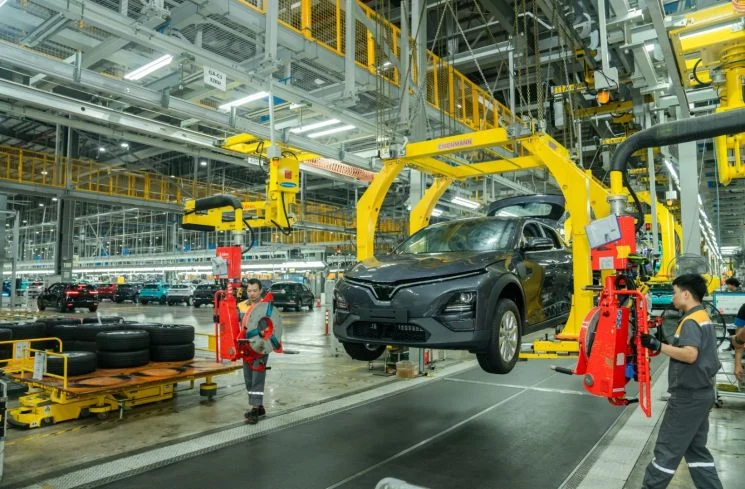
The global automotive landscape is currently embroiled in a fierce price war, as legacy manufacturers and EV-native companies battle for dominance in a slowing growth environment. Amidst this volatility, VinFast, the ambitious automotive arm of Vietnam’s largest conglomerate Vingroup, has charted a distinct course. Rather than engaging in the relentless cycle of discounting, which often erodes brand equity and long-term profitability, VinFast has opted for a structural innovation: decoupling the battery from the vehicle’s purchase price. This strategic pivot aims to redefine the barrier to entry for electric vehicles (EVs) by transforming the most expensive component of an EV from a capital expenditure into a manageable operational expense.
The Financial Architecture of the Battery Subscription Model
At the heart of VinFast’s strategy is the realization that the primary inhibitor for widespread EV adoption remains the prohibitive upfront cost, driven largely by lithium-ion battery packs. In the current market, batteries can account for up to 30% to 40% of the total vehicle manufacturing cost. By segregating the battery price, VinFast significantly lowers the point-of-sale threshold, making its fleet accessible to a broader demographic, particularly in emerging markets where financing is a primary driver of vehicle acquisition.
Under this model, consumers purchase the vehicle chassis while entering a monthly subscription agreement for the battery. In Indonesia, for instance, these subscription tiers range from approximately IDR 253,000 to IDR 1,000,000 per month, depending on the model and expected mileage. This shift effectively transfers the burden of battery depreciation and technological obsolescence from the consumer to the manufacturer. VinFast retains ownership of the battery, assuming responsibility for maintenance, repair, and eventual recycling, thereby insulating the buyer from the anxiety surrounding battery degradation.
Strategic Context and Industry Chronology
VinFast’s entry into the global market has been marked by rapid expansion and aggressive vertical integration. Founded in 2017, the company quickly transitioned from internal combustion engines to a pure-play EV manufacturer by 2022. This rapid evolution necessitated a business model that could overcome the "trust deficit" inherent in new technology.
The company’s trajectory can be summarized through several key milestones:
- 2017-2018: Establishment of the manufacturing facility in Hai Phong, Vietnam, with a focus on localized supply chains.
- 2021: Launch of the VF e34, the first EV produced by the company, serving as a pilot for the battery subscription model.
- 2023: Successful listing on the NASDAQ, signaling an intent to compete with global incumbents.
- 2024-2025: Expansion into the Southeast Asian market, specifically Indonesia and Thailand, where the subscription model serves as a primary differentiator against established Chinese and Japanese manufacturers.
The decision to implement the subscription model is not merely a promotional tactic; it is an analytical response to the specific economic conditions of the ASEAN region. In Indonesia, where the automotive sector is heavily reliant on installment-based credit, the reduction of the vehicle’s sticker price lowers the principal amount, thereby reducing the total interest paid over the life of a loan. This creates a tangible, quantifiable benefit for the middle-class consumer that goes beyond the environmental appeal of electric driving.
Building Trust Through Technical Guarantees
Beyond financial engineering, VinFast has recognized that technological longevity is a significant concern for early adopters. To combat "range anxiety" and "battery anxiety," the company has introduced a comprehensive lifecycle guarantee. If a battery’s health drops below 70% of its original capacity, VinFast provides a replacement at no additional cost. This policy effectively creates a safety net for the consumer, normalizing the ownership experience by ensuring that the vehicle’s primary energy storage remains within optimal performance parameters indefinitely.
Industry analysts have noted the brilliance of this approach. Michael Vousden, an automotive analyst at GlobalData, suggests that by separating the battery, VinFast is solving the "resale value" problem. One of the greatest uncertainties for used EV buyers is the state of the battery; by retaining ownership of the battery, VinFast ensures that the vehicle remains a standardized asset, regardless of how many times it changes hands.
Comparative Economic Impact
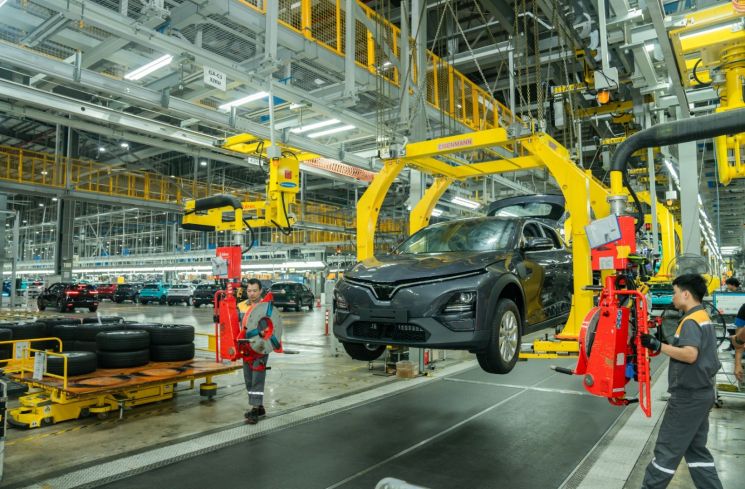
To understand the scale of this disruption, one must look at the price differentials. For the VinFast VF e34, the subscription-based model allows for a price reduction of up to IDR 112 million compared to the standard purchase model. This is a massive delta in the context of the Indonesian market, where such savings represent the difference between a vehicle being an aspirational luxury and an attainable utility.
When comparing this to traditional manufacturers, the distinction becomes clear. While legacy automakers offer discounts of 5% to 10% during clearance events, VinFast’s model changes the fundamental economics of the vehicle by 20% to 30%. This is a structural change, not a temporary marketing campaign. It allows the company to maintain its margins on the vehicle hardware while creating a recurring revenue stream through the battery subscription—a model that mimics the software-as-a-service (SaaS) success seen in the technology sector.
Implications for the Global EV Transition
The implications of VinFast’s strategy extend beyond individual sales. The industry is currently facing a "chasm" in the adoption curve—the gap between early adopters, who are willing to pay a premium for technology, and the mass market, which requires cost parity with internal combustion engines. VinFast is attempting to bridge this gap by removing the price of the battery, the single largest hurdle to mass-market penetration.
However, the strategy is not without its challenges. The logistics of managing thousands of battery packs—including monitoring, logistics, and end-of-life recycling—requires significant capital and operational expertise. For VinFast to succeed, it must maintain a seamless digital infrastructure to track battery health and ensure that the subscription experience is frictionless for the user. If the company fails to maintain these batteries efficiently, the "trust" it seeks to build could easily erode.
Furthermore, the environmental aspect of the strategy is notable. By maintaining ownership of the batteries, VinFast is better positioned to implement circular economy practices. When a battery is no longer suitable for vehicular use, the manufacturer is responsible for its second-life applications (such as grid storage) or its recycling, thereby ensuring that the environmental footprint of the vehicle is managed responsibly.
Looking Toward the Future
As the automotive industry moves toward 2030, the battle for the EV market will likely be won by those who can provide the most accessible and reliable ecosystem. VinFast’s focus on long-term sustainability, rather than immediate, short-term volume, suggests a company that is looking to establish a permanent foothold in the global market.
The success of this model will depend on several variables: the stability of the global lithium supply chain, the company’s ability to scale its charging infrastructure, and the continued acceptance of the subscription-based payment model by consumers. If the model proves successful in the diverse and price-sensitive markets of Southeast Asia, it could very well serve as a blueprint for the global industry, forcing larger, more traditional automakers to rethink their own pricing structures.
In summary, VinFast is not merely selling cars; it is selling a transition. By decoupling the cost of the technology from the cost of the mobility, they are inviting the average consumer to participate in the green energy transition without the associated financial trauma. Whether this leads to a new standard in the automotive industry remains to be seen, but the company has undoubtedly succeeded in making the conversation about EVs less about the cost of entry and more about the value of the experience. The path toward a sustainable future, as VinFast demonstrates, is not found in the race to the bottom of pricing, but in the innovation of the business model itself. As the market continues to evolve, VinFast’s experiment will serve as a critical case study in how to democratize high-tech mobility in a competitive and rapidly changing global economy.
