
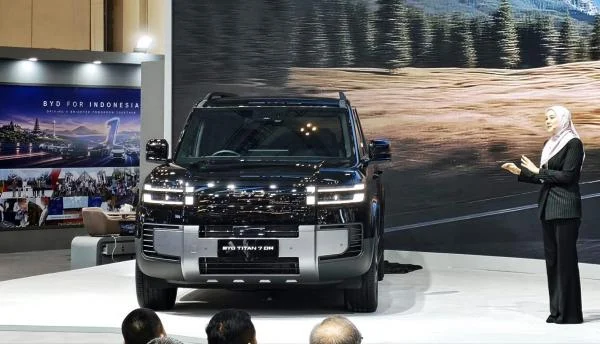
The automotive landscape in Southeast Asia witnessed a significant shift on Friday, November 20, 2026, as BYD, the global leader in new energy vehicles (NEVs), officially unveiled its latest seven-passenger plug-in hybrid electric vehicle (PHEV), the BYD Titan 7 DM, at the Gaikindo Auto Week (GAW) 2026 held at ICE BSD City, Tangerang. This strategic launch marks a pivotal moment for BYD’s expansion into the Indonesian multi-purpose vehicle (MPV/SUV) segment, combining the efficiency of its proprietary Dual Mode technology with the practical requirements of the large-family vehicle market. With a starting price of Rp639 million, the vehicle is positioned to bridge the gap between traditional combustion-engine SUVs and fully electric family carriers.
The Strategic Importance of GAW 2026
Gaikindo Auto Week 2026 has served as the primary stage for several manufacturers to accelerate their electrification roadmaps. For BYD, the choice to debut the Titan 7 DM at this specific exhibition underscores the company’s intent to cater to the unique demographic of the Indonesian consumer—a market that prioritizes seating capacity, fuel efficiency, and the ability to traverse both urban congestion and longer regional distances without the "range anxiety" often associated with pure battery electric vehicles (BEVs).
Industry analysts observing the launch noted that BYD’s strategy is two-fold: maintain its leadership in pure electric innovation while providing a transitional, high-performance hybrid option for consumers who may not yet be ready to commit to a 100 percent electric lifestyle due to charging infrastructure concerns.
Technical Specifications: Bridging Performance and Utility
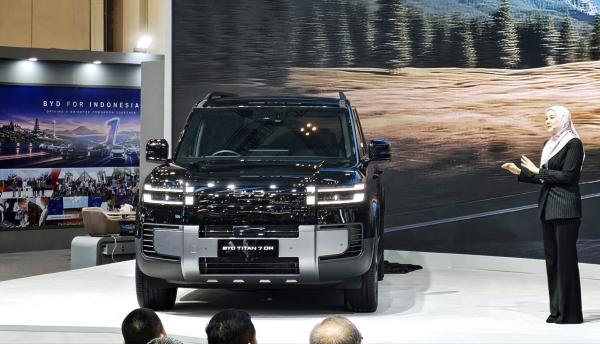
At the core of the BYD Titan 7 DM is a sophisticated 1,500 cc turbocharged gasoline engine integrated with BYD’s hallmark Dual Mode (DM) system. According to Bobby Bharata, Head of Product at PT BYD Motor Indonesia, the vehicle is being offered in two distinct configurations: the Premium variant and the Performance variant.
The Premium variant utilizes the DM-i system, which focuses heavily on fuel efficiency and urban usability. It is engineered with a front-wheel-drive (FWD) architecture, delivering a robust 315 Nm of torque. A highlight of this model is the inclusion of the proprietary Blade Battery, which boasts a capacity of 26.6 kWh. In an era where battery safety and longevity are primary concerns for buyers, the Blade Battery remains a competitive advantage for BYD. Under NEDC testing parameters, the Premium model achieves an impressive 110-kilometer range in pure electric mode, allowing most daily commuters to operate without consuming gasoline for the vast majority of their trips. Furthermore, the vehicle demonstrates respectable performance, clocking a 0 to 100 km/h acceleration time of approximately 8.4 seconds.
For consumers seeking a more dynamic driving experience, the Performance variant integrates the DM-p technology. This configuration upgrades the vehicle to an all-wheel-drive (AWD) system, utilizing a dual-motor setup that significantly boosts output to a combined torque of 630 Nm. This variant is designed to handle varied terrains and high-load conditions, ensuring that the seven-passenger capacity does not come at the cost of driving confidence or agility.
Contextualizing the Hybrid Market in Indonesia
The introduction of the Titan 7 DM arrives at a time when the Indonesian government is actively incentivizing the adoption of low-carbon emission vehicles. While the national push has been heavily skewed toward BEVs, the reality of Indonesia’s geographical and infrastructure challenges has allowed PHEVs to carve out a sustainable niche.

Data from the automotive industry suggests that while BEV sales have grown exponentially, the growth rate of hybrid vehicles has been more consistent due to the absence of a required change in refueling habits. By launching a seven-passenger vehicle, BYD is directly targeting the heart of the Indonesian market—the family segment. The ability to carry seven passengers comfortably, combined with the low operating cost of the electric mode, positions the Titan 7 DM as a formidable competitor against established Japanese brands that have long dominated the seven-seater SUV/MPV market in the archipelago.
Corporate Strategy and Future Outlook
BYD’s expansion in Indonesia has been rapid since its formal entry into the market. The company has invested heavily in establishing a dealer network and servicing infrastructure to support its growing portfolio. The launch of the Titan 7 DM is not an isolated event but rather a component of a broader multi-year roadmap.
During the press briefing at GAW 2026, BYD representatives emphasized that the Titan 7 DM represents a "best of both worlds" philosophy. The company aims to demystify PHEV technology for the average Indonesian driver by highlighting that the maintenance requirements of the DM system are lower than traditional internal combustion engines, while the dual-motor setups provide a driving experience that rivals high-end performance vehicles.
The pricing strategy, starting at Rp639 million, indicates that BYD is targeting the upper-middle class, positioning the Titan 7 DM as a premium value proposition. This is expected to disrupt the market share of premium internal combustion engine (ICE) SUVs, which currently occupy a similar price bracket but offer significantly higher fuel consumption and emissions.

Implications for the Competitive Landscape
The arrival of the Titan 7 DM poses a challenge to other manufacturers currently showcasing their own electrified lineups at GAW 2026. For instance, competitors like Kia, which recently showcased its Carens EV, are also focusing on the family-oriented segment. However, BYD’s unique integration of high-capacity batteries with efficient turbo-gasoline engines gives them a technological moat that is difficult to replicate in the short term.
Analysts from the automotive sector predict that if the Titan 7 DM meets sales expectations, it could force a rapid pivot among competitors to introduce more competitive hybrid and PHEV models to the Indonesian market. The "hybrid-first" approach for long-distance family vehicles may become the industry standard for the next three to five years as Indonesia continues to refine its charging network.
Conclusion: A New Chapter for BYD in Indonesia
As GAW 2026 continues, the BYD booth remains a center of interest for potential buyers and industry experts alike. The Titan 7 DM is more than just a new model; it is a signal of the maturation of the Indonesian electric vehicle market. By offering a product that addresses the practical needs of the Indonesian family—specifically the necessity for seven-seat configurations and high-performance hybrid capabilities—BYD is effectively positioning itself to capture a significant portion of the burgeoning electrified vehicle market.
Moving forward, the success of the Titan 7 DM will depend on the brand’s ability to scale its after-sales support and maintain the reliability of its DM technology in the diverse climate and road conditions of Indonesia. For now, however, the launch represents a clear victory for the company, further solidifying its presence as an indispensable player in the regional transition toward cleaner, more efficient transportation. With the order books now open and the public reception appearing positive, the Titan 7 DM is poised to become a staple on Indonesian roads, signaling a transformative period for the automotive sector at large.
