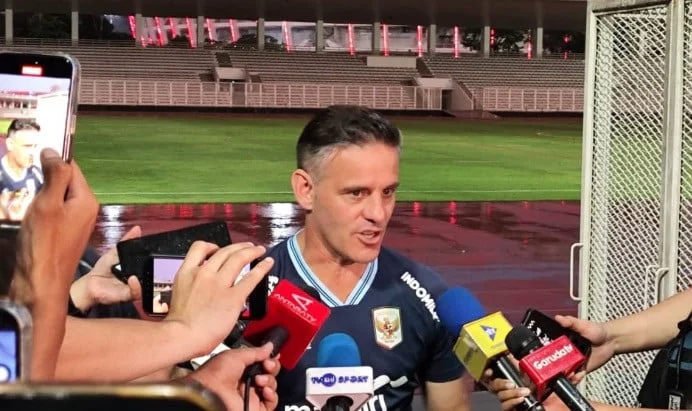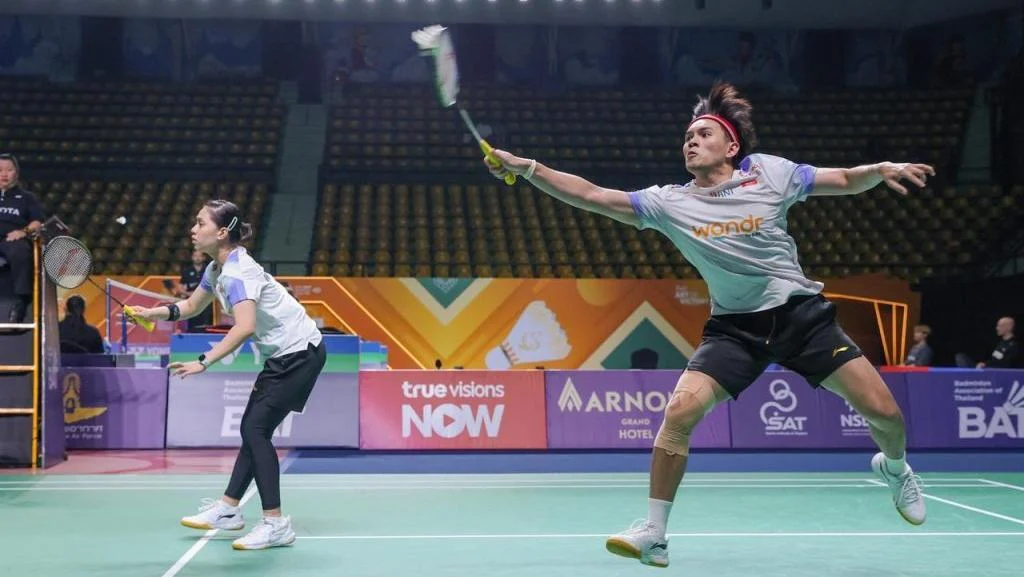
Jakarta – The Indonesian Badminton Association (PBSI) has yet to officially confirm or deny widespread social media rumors suggesting that promising mixed doubles player Adnan Maulana has withdrawn from the national training camp (Pelatnas). Ricky Soebagdja, the Secretary General of PP PBSI, stated that he requires further coordination with the PBSI’s Prestasi Development (Binpres) division before providing a definitive response.
"Oh, not yet. We will coordinate with the Development and Achievement Division (Binpres) first. It’s not confirmed yet," Ricky Soebagdja told reporters in South Jakarta on Friday, July 24, 2026. The uncertainty surrounding Adnan Maulana’s position has ignited significant discussion among badminton enthusiasts, particularly concerning potential reshuffling of partnerships within the national team.
Beyond the speculation about Adnan Maulana himself, his current mixed doubles partner, Indah Cahya Sari Jamil, is also reportedly being considered for a new pairing with Bagas Maulana. This potential change, if it materializes, would mark a significant shift in the PBSI’s strategic planning for the mixed doubles category, a discipline where Indonesia has historically strived for global dominance.
"That will be later, okay. Later," Ricky Soebagdja responded when pressed for details regarding these partnership rumors, indicating that official announcements, if any, would be made in due course. This cautious approach from PBSI leadership highlights the sensitive nature of player movements and the importance of thorough internal consultation before any public pronouncements.
Adnan Maulana’s Recent Performance and Tournament History
A review of Adnan Maulana’s recent tournament participation, as per the Badminton World Federation (BWF) official website, reveals no immediate entries in upcoming official tournaments under his established partnership with Indah Cahya Sari Jamil. Their last recorded appearance together was at the Indonesia Open in June of the current year. In that prestigious Super 1000 event, Adnan/Indah were eliminated in the round of 16, a respectable but not podium-finishing performance against top-tier international competition.
Despite this, the duo has demonstrated their capability on the BWF World Tour circuit. Earlier in 2026, they secured a notable victory, clinching the title at the BWF World Tour Super 300 Thailand Masters. This win underscored their potential and cemented their position as a promising pair within the Indonesian mixed doubles landscape. Their performance in Thailand Masters 2026, where they navigated through several challenging matches to emerge victorious, showcased their synergy and competitive spirit. The Thailand Masters, a Super 300 event, is a crucial tournament for players aiming to accumulate ranking points and gain experience against a strong field of international competitors. Adnan and Indah’s triumph there was a significant milestone in their career development.
Potential Partnership with Bagas Maulana and Recent Developments
The speculation linking Indah Cahya Sari Jamil with Bagas Maulana is particularly noteworthy. Bagas Maulana, a prominent men’s doubles player, has recently experienced a partnership adjustment himself. His former partner, Leo Rolly Carnando, has reunited with Daniel Marthin, forming a formidable men’s doubles duo. Following this, Bagas Maulana was paired with emerging young talent Muh. Putra Erwiansyah. Their most recent outing together, according to available records, was at the Macau Open in the same month as the Indonesia Open.
The potential pairing of Indah and Bagas, should it come to fruition, would represent a strategic redeployment of talent. Bagas Maulana, known for his aggressive play and strong net presence, could potentially complement Indah’s agility and tactical prowess in the mixed doubles arena. This move would also reflect PBSI’s ongoing efforts to optimize its athlete lineups and identify the most promising combinations to contend for major international titles, including the Olympics and World Championships. The dynamics of mixed doubles partnerships are complex, requiring a delicate balance of skills, understanding, and chemistry between male and female players, which can often be different from men’s or women’s doubles.
Background of National Training Camps in Indonesian Badminton
The Pelatnas PBSI serves as the bedrock of Indonesia’s elite badminton program. Athletes selected for the national training camp undergo rigorous training regimens under the guidance of experienced coaches. The primary objective of the Pelatnas is to cultivate world-class talent capable of representing Indonesia on the international stage and achieving success in major tournaments. Selection criteria are stringent, often based on performance in national and international competitions, ranking points, and potential for future development.
The Indonesian badminton community places immense importance on the national training system, recognizing its crucial role in sustaining the nation’s rich legacy in the sport. Periodic evaluations and adjustments to training programs and player pairings are standard practice, aimed at maximizing competitive advantage. This includes assessing player development, identifying areas for improvement, and strategically forming partnerships that offer the best prospects for medal contention. The constant evolution of the sport, with new talent emerging globally, necessitates a proactive and adaptable approach from national federations like PBSI.
Social Media’s Role and Public Reaction
The rapid dissemination of information and speculation on social media platforms has become an intrinsic part of modern sports news. In the case of Adnan Maulana and the potential partnership changes, social media has amplified discussions and debates among fans, analysts, and former players. While these platforms can foster engagement and provide immediate feedback, they also underscore the importance of official confirmations from governing bodies to ensure accuracy and prevent the spread of misinformation. The fervor surrounding potential player movements is a testament to the passion and dedication of Indonesian badminton fans who eagerly follow the progress of their national team.
Broader Implications for Indonesian Badminton
Any significant changes within the Pelatnas PBSI, particularly concerning established partnerships or promising individuals like Adnan Maulana, carry substantial implications for the future trajectory of Indonesian badminton. The mixed doubles category, while often overshadowed by men’s and women’s singles and doubles in terms of global attention, is a critical component of a nation’s overall badminton strength. Strong mixed doubles pairs are essential for accumulating team points in major events like the Sudirman Cup and for securing medals at the Olympics.
The strategic decisions made by PBSI in managing its talent pool and partnerships can significantly influence its standing in the BWF world rankings and its medal prospects at upcoming global championships. The current period, with major tournaments on the horizon, makes any potential reshuffling of partnerships a subject of intense scrutiny. The focus will be on whether these adjustments are geared towards immediate success or long-term development, or a combination of both. The success of these strategic moves will ultimately be judged by the performance of Indonesian athletes on the world stage in the coming years. The commitment to continuous improvement and adaptation is paramount in the highly competitive environment of international badminton.