
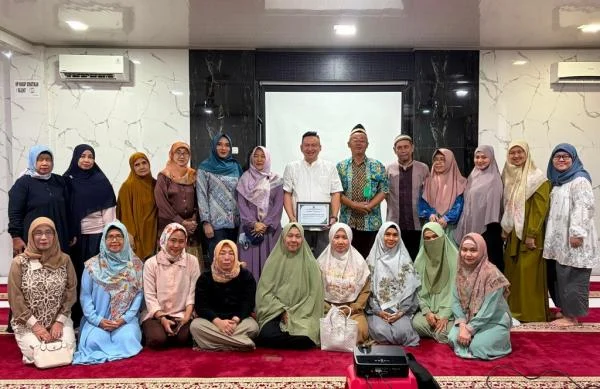
The landscape of retail investment in Indonesia has witnessed a significant transformation over the past decade, driven by digital accessibility, regulatory support, and a nationwide push for financial inclusion. Within this dynamic environment, expanding financial literacy beyond urban corporate offices and university campuses has become a critical priority for financial institutions and academic partners alike. In an ongoing effort to demystify financial markets and foster a culture of smart investing at the grassroots level, MNC Sekuritas—a leading Indonesian securities firm—has once again joined forces with the Sharia Investment Gallery of the Indonesia Stock Exchange (GI BEI) at Universitas Islam Syekh Yusuf (UNIS) Tangerang.
This collaborative initiative reached a new milestone on Sunday, September 13, 2026, through a targeted educational program curated specifically for female residents of the Villa Ilhami housing complex in Tangerang. The event, titled "Sharia Capital Market Investment and Financial Services Protection Part 2," served as a crucial follow-up to an initial foundational session held in August 2026. While the previous installment focused on introducing basic concepts and available instruments within the sharia capital market, this advanced session emphasized practical decision-making, financial risk assessment, and long-term wealth management strategies tailored for homemakers and household financial decision-makers.
The Chronology and Evolution of the Community Outreach Program
Financial literacy campaigns are rarely effective when delivered as a one-off lecture; rather, they require a sustained, phased approach to ensure comprehension and behavioral change among participants. Recognizing this, the partnership between MNC Sekuritas and GI BEI UNIS Tangerang was structured as a multi-stage educational journey for the residents of Perumahan Villa Ilhami.
In August 2026, the first phase of the program laid the groundwork by introducing basic financial concepts, the definition of the sharia capital market, and the fundamental differences conventional versus sharia-compliant financial instruments. Participants were introduced to the Jakarta Islamic Index (JII) and various sharia stocks, mutual funds, and sukuk available on the Indonesia Stock Exchange (IDX). The goal was to remove the intimidation factor often associated with the stock market and present investing as an accessible, halal tool for long-term financial security.
Building upon this foundation, the September 13, 2026 session transitioned from theory to application. The curriculum for Part 2 focused heavily on portfolio management, identifying financial goals, aligning risk tolerance with suitable instruments, and safeguarding personal finances against fraudulent investment schemes. By targeting women—who frequently manage household budgets and play a pivotal role in family financial planning—the organizers aimed to create a multiplier effect, cascading financial knowledge throughout families and local communities.
Core Insights: Navigating Investment Decisions Wisely

Serving as the primary resource person for the event, Head of Education & Community Partnership at MNC Sekuritas, Andri Muharizal, delivered an in-depth presentation centered on prudent financial decision-making. Addressing the audience of Villa Ilhami residents, Muharizal emphasized that successful investing requires a disciplined approach that accounts for individual financial capacities and risk profiles rather than chasing speculative trends.
"Wise investing is not merely about discussing potential returns, but rather how an investor understands risks and aligns investment choices with their financial goals," Muharizal stated during the educational session.
He elaborated on the importance of the three pillars of personal finance: establishing clear financial objectives, evaluating disposable income and emergency funds realistically, and determining one’s risk appetite before committing capital to any instrument. In the context of the sharia capital market, where speculative practices and high-risk derivatives are filtered out in accordance with Islamic principles, investors are naturally guided toward stable, fundamental-driven assets. However, Muharizal reminded the audience that "sharia-compliant" does not equate to "risk-free." Every market instrument carries inherent volatility, and retail investors must equip themselves with analytical skills to navigate market fluctuations without panic.
The session also incorporated a comprehensive module on financial services protection. As retail participation in the capital market grows, the prevalence of illegal investment schemes, binary options scams, and fraudulent digital trading platforms targeting inexperienced investors remains a pressing concern for regulators such as the Financial Services Authority (OJK). Muharizal provided participants with practical frameworks to verify the legality of investment platforms, recognize red flags such as guaranteed high returns with zero risk, and utilize official dispute-resolution channels if they encounter suspicious financial entities.
Academic Perspective and Institutional Commitment
The involvement of Universitas Islam Syekh Yusuf (UNIS) Tangerang through its campus-based Sharia Investment Gallery underscores the vital bridge between higher education institutions and local communities under the framework of the Third Tri Dharma of Higher Education (Pengabdian kepada Masyarakat, or Community Service).
Nuning, serving as the Deputy Director of BPKLH at UNIS Tangerang, highlighted the strategic importance of taking academic expertise beyond lecture halls and into residential neighborhoods. She noted that the collaboration with MNC Sekuritas to educate the women of Villa Ilhami Tangerang represents a proactive step toward bridging the financial literacy gap at the household level.
"This educational activity with the mothers of Villa Ilhami Tangerang serves as an effective medium to enhance public understanding of the sharia capital market," Nuning remarked. She underscored that academic institutions hold a social responsibility to ensure that economic knowledge is democratized, empowering ordinary citizens to take charge of their financial destinies.

The partnership between UNIS Tangerang’s GI BEI and MNC Sekuritas is part of a broader, long-term strategy to establish numerous educational hubs across the region. By empowering students to run investment galleries and simultaneously sending industry experts into communities, the initiative creates a robust ecosystem of continuous learning.
Broader Implications for Indonesia’s Sharia Financial Landscape
The timing of this community outreach program aligns with national macroeconomic trends in Indonesia. As the world’s largest-majority Muslim nation, Indonesia possesses immense potential for the growth of Islamic finance. Government bodies, including the OJK, Bank Indonesia, and the National Sharia Council of the Indonesian Ulema Council (DSN-MUI), have continually rolled out master plans to position Indonesia as a global hub for the halal economy and Islamic finance.
Despite this vast potential, financial literacy and inclusion surveys conducted by regulatory bodies consistently reveal a notable gap between financial inclusion (access to financial products) and financial literacy (the ability to understand and effectively manage those products). While more citizens now have bank accounts or digital wallets, a significant portion of the population remains vulnerable to financial misinformation or lacks the sophisticated knowledge required to build long-term wealth through capital markets.
Programs like the one conducted in Villa Ilhami address this gap directly at the micro-level. Homemakers represent a powerful, yet historically underserved, segment of the retail investor base. By equipping them with the tools to manage family finances prudently, these educational initiatives contribute to several macro-level objectives:
- Enhanced Household Resilience: Households equipped with basic investment knowledge are better prepared to combat inflation, manage unexpected economic shocks, and plan for major life expenditures such as children’s education and retirement.
- Growth of Domestic Retail Participation: Broadening the investor base stabilizes the domestic capital market by introducing a steady influx of long-term retail capital, reducing reliance on foreign portfolio flows that are prone to sudden reversals during global market downturns.
- Expansion of the Sharia Economy: Introducing sharia-compliant financial instruments to everyday households drives organic demand for Islamic banking, mutual funds, and equities, reinforcing the national sharia economic master plan.
- Consumer Protection and Scam Eradication: Educating communities on financial services protection acts as a grassroots defense mechanism against predatory financial schemes, protecting citizens’ hard-earned savings.
Looking Forward: Sustaining Momentum in Financial Literacy
As financial markets evolve with technological advancements—ranging from algorithmic trading to mobile-first investment applications—the need for continuous, localized education becomes ever more apparent. The success of the two-part educational series in Villa Ilhami Tangerang demonstrates that community-centric approaches yield positive engagement and genuine interest from participants.
MNC Sekuritas, alongside its institutional partners such as GI BEI UNIS Tangerang, plans to scale similar initiatives across other residential areas and educational institutions. By maintaining a steady calendar of workshops, webinars, and on-ground seminars, these organizations aim to cultivate a financially literate society capable of navigating modern economic complexities with confidence, wisdom, and adherence to ethical financial principles.
