
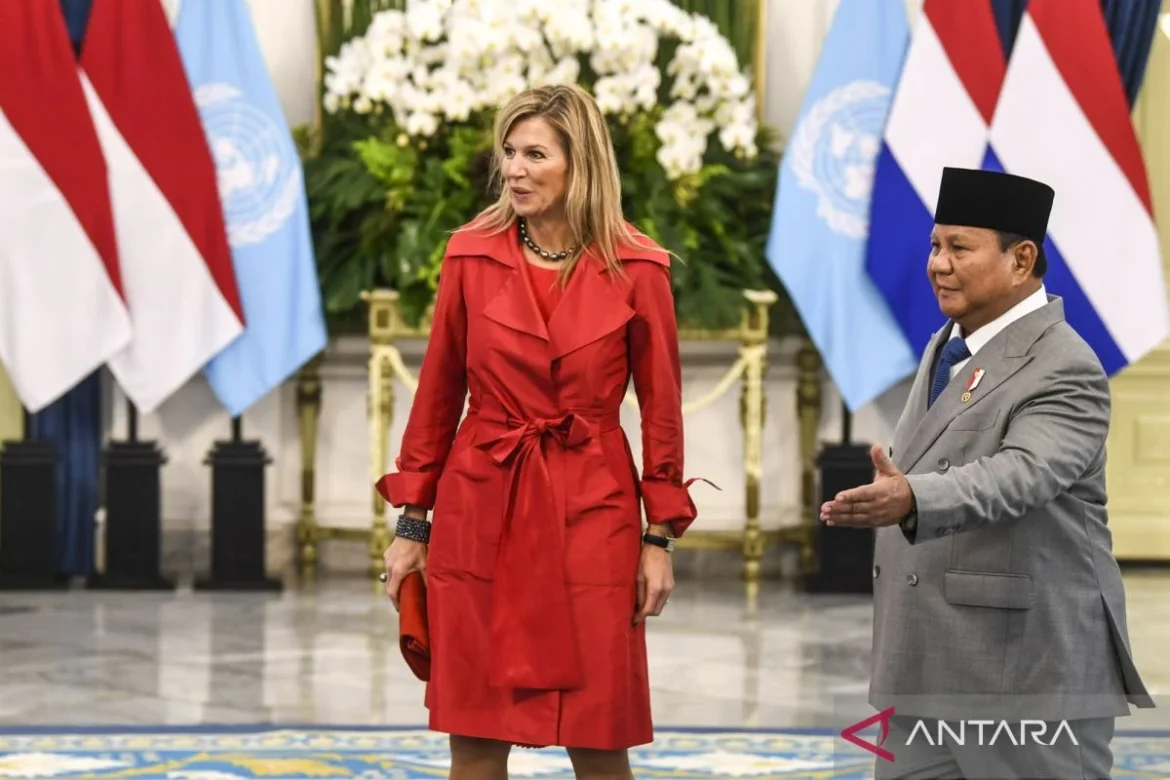
Jakarta (ANTARA) – Queen Máxima of the Netherlands recently concluded a significant working visit to Indonesia, spanning from Monday, November 24, to Thursday, November 27, 2025. Her presence in the archipelago was not in her capacity as the Dutch monarch, but rather as the United Nations Secretary-General’s Special Advocate (UNSGSA) for Inclusive Finance for Development. This distinction underscored the technical and developmental focus of her four-day agenda, which was meticulously designed to promote financial health and broader financial inclusion among Indonesian communities. The visit, her fifth to the nation, highlighted an enduring commitment to fostering economic resilience and prosperity through accessible financial services.
The Mandate of the UNSGSA: A Global Advocate for Financial Inclusion
Queen Máxima’s role as the UNSGSA, a position she has held since 2009, is crucial in global efforts to advance financial inclusion. Her mandate involves advocating for policies, regulations, and programs that enable individuals and small businesses to access and effectively use a range of affordable financial services. These services include savings, credit, insurance, and payments, which are vital tools for managing daily finances, coping with unexpected shocks, investing in opportunities, and building long-term financial security. The UNSGSA works closely with governments, central banks, financial regulators, and the private sector worldwide to achieve these goals, aligning her efforts with the United Nations Sustainable Development Goals (SDGs), particularly SDG 1 (No Poverty), SDG 5 (Gender Equality), SDG 8 (Decent Work and Economic Growth), and SDG 10 (Reduced Inequalities).
Financial inclusion is not merely about access to bank accounts; it encompasses the broader concept of financial health, ensuring that individuals and households can effectively manage their financial lives, absorb financial shocks, and pursue their financial goals. For a developing nation like Indonesia, where a significant portion of the population still operates outside the formal financial system or struggles with financial literacy, the UNSGSA’s advocacy is particularly pertinent. Data from the World Bank’s Global Findex database in 2021 indicated that while Indonesia has made substantial progress in increasing account ownership, with 74% of adults having an account, challenges persist in the active usage of these accounts and in reaching vulnerable segments, especially women, rural populations, and micro, small, and medium-sized enterprises (MSMEs). Queen Máxima’s visit aimed to address these nuances, moving beyond mere access to emphasize the quality and utility of financial services.
A History of Engagement: Queen Máxima’s Enduring Connection with Indonesia
This recent visit marked Queen Máxima’s fifth engagement with Indonesia in her capacity as UNSGSA. Her previous visits as the Special Advocate occurred in 2012, 2016, and 2018, each building upon previous discussions and assessing progress in Indonesia’s financial inclusion landscape. These regular engagements underscore the long-term strategic partnership between the UNSGSA’s office and Indonesian stakeholders. Beyond her role as UNSGSA, Queen Máxima also visited Indonesia in 2020, accompanying King Willem-Alexander during a state visit, which highlighted the broader diplomatic ties between the Netherlands and Indonesia. Born on May 17, 1971, Queen Máxima married King Willem-Alexander in 2002, and her dedicated work as UNSGSA has garnered international recognition for its impact on global development.
Detailed Chronology of the 2025 Visit: From Garment Factories to Presidential Palaces
Queen Máxima’s four-day itinerary was meticulously planned to offer a comprehensive overview of Indonesia’s efforts and challenges in financial inclusion, touching upon various socio-economic segments and geographical regions.
Tuesday, November 25: Focus on Grassroots Empowerment in Central Java
The visit commenced in Central Java, a region vital for its industrial and cultural contributions. Queen Máxima’s first stop was a garment factory in Sragen Regency. This visit was strategically important as the garment sector employs a large workforce, often comprising women, who can significantly benefit from improved financial literacy and access to formal financial services. Discussions likely centered on how factory workers manage their wages, save for the future, and access credit for emergencies or entrepreneurial ventures. The emphasis here was on workplace financial education programs and partnerships with financial institutions to offer tailored products like micro-savings or digital wage payments, which can enhance their financial resilience and reduce reliance on informal, often predatory, lending.
Following this, Queen Máxima traveled to Kampung Batik Laweyan in Solo, a renowned hub for traditional batik production. This visit highlighted the critical role of Micro, Small, and Medium Enterprises (MSMEs) in Indonesia’s economy. Many batik artisans and small business owners in Laweyan face challenges in accessing formal financing, managing cash flow, and adopting digital payment solutions. The discussions here likely explored strategies to empower these entrepreneurs through financial literacy training, facilitating access to business loans, and integrating them into digital financial ecosystems to expand their market reach and improve operational efficiency. The creative economy, exemplified by batik, stands to gain immensely from robust financial infrastructure.
The day concluded with Queen Máxima attending a Women’s World Banking event at the historic Pura Mangkunegaran in Solo. This high-profile gathering brought together young people, students, and entrepreneurs, providing a platform for them to share their experiences with financial products and services. The dialogue emphasized the importance of financial inclusion for women, who are often disproportionately excluded from formal financial systems, despite being key drivers of household and community economies. Discussions likely covered innovative financial products designed for women, the role of digital financial services in bridging gender gaps, and the impact of financial literacy on entrepreneurial success and economic independence. The interactive format allowed the UNSGSA to gain direct insights into the real-world impact and challenges faced by various demographic groups.
Wednesday, November 26: Engaging Policy and Innovative Solutions in Jakarta and West Java
The second day saw Queen Máxima shift her focus to policy discussions and innovative financial solutions, primarily in Jakarta and West Java. Her morning began at a local United Nations office in Jakarta, where she participated in a roundtable discussion with various development organizations. This session provided an opportunity to synthesize findings from grassroots engagements and deliberate on broader strategic approaches to financial inclusion. Topics likely included the role of NGOs in delivering financial education, addressing the digital divide, promoting consumer protection, and scaling up successful pilot programs across different regions of Indonesia.
Subsequently, Queen Máxima visited the International Finance Corporation (IFC), a member of the World Bank Group. The IFC focuses on private sector development in emerging markets, making it a crucial partner in financial inclusion efforts. Discussions at the IFC likely revolved around the development of sustainable lending practices, innovative financing mechanisms that contribute to economic growth, and the promotion of financial health within the private sector. This includes fostering an environment conducive to responsible lending, supporting fintech innovations, and mobilizing private capital towards inclusive development goals, such as green financing and climate-resilient investments, which also contribute to broader financial stability.
A significant highlight of the day was Queen Máxima’s visit to the Gran Harmoni Cibitung subsidized housing complex in Bekasi Regency, West Java. This complex provides low-emission homes for low- and middle-income communities, representing a critical intersection of affordable housing and financial inclusion. During her visit, she interacted directly with residents, including first-time homebuyers, understanding their experiences with mortgage financing. A particularly innovative aspect she observed was the "waste bank" initiative, which allows residents to pay their house installments using sorted waste, thus promoting both environmental sustainability and financial responsibility. She also witnessed the process of signing sale and purchase agreements for dozens of prospective homeowners, underscoring the importance of transparent and accessible homeownership pathways for financial stability. This initiative, which has garnered international attention, was highly praised by Queen Máxima for its dual impact on environmental management and financial empowerment.
The day concluded with a visit to Deloitte Indonesia, where Queen Máxima engaged in discussions with employers about their role in contributing to the financial health of their employees and clients. This session explored corporate strategies for promoting financial literacy among staff, offering accessible financial planning tools, and integrating financial wellness programs into employee benefits packages. The private sector, beyond direct financial services, plays a vital role in fostering a financially healthy workforce, which in turn contributes to increased productivity and reduced financial stress.
Thursday, November 27: High-Level Policy Dialogue and Presidential Engagement
The final day of Queen Máxima’s visit was dedicated to high-level policy dialogue and diplomatic engagement. Her morning agenda included participation in a financial literacy program alongside key Indonesian financial authorities: the Financial Services Authority (OJK), Bank Indonesia (BI), and the Ministry of Finance (Kemenkeu). These institutions are at the forefront of shaping Indonesia’s financial inclusion and literacy strategies. Discussions likely focused on the implementation of the National Strategy for Financial Inclusion (SNKI), accelerating digital financial services adoption, enhancing consumer protection frameworks, and designing effective financial education campaigns to reach underserved populations. The collaborative session aimed to identify gaps, share best practices, and set future priorities for advancing financial health nationwide.
The culmination of her visit was a meeting with President Prabowo Subianto at the Merdeka Palace in Jakarta. This high-level engagement provided Queen Máxima with the opportunity to convey her findings, impressions, and recommendations derived from her extensive engagements across various sectors and regions. The meeting, which included a private session and a luncheon, underscored the diplomatic significance of her visit, even in her non-royal capacity. It served as a platform to reinforce international cooperation on financial inclusion and to discuss how the insights gained could inform national policy and future initiatives. The President likely affirmed Indonesia’s commitment to advancing financial inclusion as a cornerstone of its economic development agenda.
Implications and Future Outlook for Financial Inclusion in Indonesia
Queen Máxima’s 2025 visit to Indonesia as UNSGSA carries significant implications for the country’s ongoing journey towards comprehensive financial inclusion and health. Her consistent engagement provides valuable international validation and expertise, encouraging Indonesian policymakers and financial institutions to redouble their efforts.
Policy Reinforcement and Innovation: The high-level discussions with OJK, BI, and Kemenkeu are expected to reinforce existing policy frameworks and potentially spur new innovations. The focus on digital financial services, for instance, is crucial for an archipelagic nation like Indonesia, where physical access to financial institutions can be challenging. The visit likely highlighted the importance of robust digital infrastructure, cybersecurity, and consumer trust to ensure widespread adoption. Furthermore, the emphasis on financial health moves beyond mere access, encouraging a holistic approach that includes financial planning, debt management, and resilience against economic shocks.
Empowerment of Vulnerable Segments: The visits to the Sragen garment factory, Kampung Batik Laweyan, and the Women’s World Banking event underscore the importance of tailored interventions for industrial workers, MSMEs, youth, and women. These segments are often at the forefront of economic activity but can be particularly vulnerable to financial instability without adequate support. The insights gained are expected to inform programs that provide accessible credit, savings, and insurance products specifically designed for their needs, fostering greater economic stability and entrepreneurial growth.
Sustainable and Inclusive Development: The Gran Harmoni Cibitung housing complex visit, with its innovative waste-to-mortgage payment scheme, exemplifies how financial inclusion can intersect with sustainable development goals. Such models offer practical solutions to affordability challenges while promoting environmental responsibility. The UNSGSA’s appreciation for such initiatives can inspire replication and scaling of similar programs across the country, integrating financial services with broader community development and environmental protection efforts.
International Collaboration: Queen Máxima’s role as UNSGSA facilitates global knowledge exchange. Her visit strengthens Indonesia’s connections with international best practices and resources in financial inclusion. Through her advocacy, Indonesia’s progress and challenges can gain greater visibility on the international stage, potentially attracting further technical assistance and investment from multilateral organizations and development partners.
In conclusion, Queen Máxima’s latest visit to Indonesia, marked by a blend of grassroots engagement and high-level policy dialogue, served as a powerful reaffirmation of the global commitment to financial inclusion and health. As Indonesia continues its trajectory towards becoming a developed nation, ensuring that all its citizens have the tools and knowledge to manage their financial lives effectively will be paramount. The insights and impetus provided by the UNSGSA’s visit are expected to contribute significantly to this crucial national objective, fostering a more resilient, equitable, and prosperous future for the Indonesian people.
