The global smartphone landscape witnessed a significant shift on September 29, 2026, as Xiaomi officially unveiled the Xiaomi 17T Series in Jakarta. This launch marks a strategic pivot for the technology giant, emphasizing a convergence between high-end professional photography and consumer-grade mobile hardware. With the integration of Leica-engineered optics and a focus on "telephoto mastery," Xiaomi is positioning its latest flagship series as a direct challenger to dedicated point-and-shoot cameras, targeting a market segment that increasingly demands professional-grade storytelling tools in a pocket-sized form factor.
The Evolution of Mobile Photography
To understand the significance of the Xiaomi 17T Series, one must first look at the trajectory of mobile photography. According to data provided by the market research firm Statista, approximately 92 percent of all photographs captured globally in 2026 were taken using mobile devices. This statistic underscores a fundamental transformation in how humanity documents its existence. However, the sheer volume of images produced does not necessarily correlate with photographic quality. As the industry matures, consumers have moved beyond the "quantity over quality" phase, seeking devices that can replicate the nuance, depth, and emotional resonance traditionally reserved for full-frame mirrorless cameras.
The Xiaomi 17T Series enters this ecosystem not merely as an upgrade in megapixel counts, but as a deliberate attempt to solve the "empathy gap" in digital imaging—the inability of standard smartphone sensors to capture authentic color science and atmospheric texture. By partnering with Leica, a legendary name in the history of optics, Xiaomi aims to bridge the gap between casual snapshots and visual storytelling.
Technical Architecture: The Telephoto Master
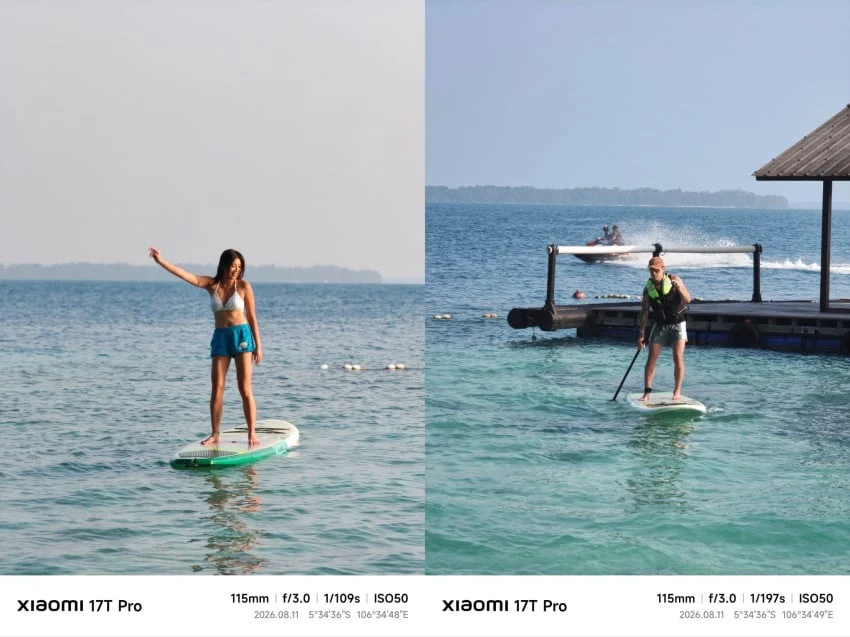
The cornerstone of the Xiaomi 17T Pro is its sophisticated camera system, marketed under the banner of "The Telephoto Master." This system is designed to address one of the most persistent weaknesses in mobile photography: the degradation of image quality when zooming into distant subjects.
Unlike traditional digital cropping, which often results in loss of detail and artificial noise, the 17T Pro utilizes a proprietary optical architecture. The lens array, verified by Leica’s rigorous standards, allows for greater light intake and precise refraction. This enables the device to maintain high levels of detail, color accuracy, and sharpness across multiple focal lengths. The "Leica Authentic Look" and "Leica Vibrant Look" profiles are baked into the software, allowing users to switch between a clinical, modern aesthetic and a classic, high-contrast style that mimics the heritage of Leica film photography.
Chronology of the Development
The partnership between Xiaomi and Leica has been a multi-year project, evolving through several product generations. The timeline of this collaboration provides context for the engineering prowess displayed in the 17T Series:
- Early 2022: Xiaomi and Leica announce a strategic partnership aimed at redefining mobile photography standards.
- Mid-2023: The launch of the Xiaomi 13 series marks the first significant integration of Leica’s color science into a global flagship.
- Late 2024: Xiaomi introduces iterative improvements in computational photography, utilizing AI to enhance low-light performance.
- September 2026: The official unveiling of the Xiaomi 17T Series in Jakarta, featuring the culmination of three years of sensor-lens optimization.
This chronology illustrates a consistent investment in R&D, moving from software-level filters to deep-level integration of hardware optics, sensor size management, and heat dissipation technology to support long-exposure photography.
Market Implications and Industry Response
The launch in Jakarta serves as a barometer for Xiaomi’s regional strategy. Indonesia, a market with a high density of mobile-first content creators, serves as an ideal testing ground for the device’s capabilities. Industry analysts suggest that the 17T Series is aimed at "prosumers"—a demographic that includes social media professionals, journalists, and amateur photographers who require reliability without the bulk of professional equipment.
"The demand for mobile-native storytelling is at an all-time high," said a senior analyst at a leading tech consultancy firm. "When 92 percent of the world’s visual history is being recorded on phones, the device that captures the most ‘truthful’ image becomes the market leader. Xiaomi is betting that Leica’s prestige, combined with their internal computational photography engine, will create a competitive moat that other manufacturers will find difficult to cross."

The Engineering Behind the Emotion
A recurring criticism of mobile photography has been the tendency of AI to over-process images, resulting in a "plastic" look that lacks texture. The Xiaomi 17T Series attempts to bypass this by utilizing a larger primary sensor that relies more on optical physics than on digital reconstruction.
The integration of a specialized telephoto lens, designed specifically for portraiture, allows for a natural bokeh effect that mimics the shallow depth of field of a 50mm or 85mm lens. During the product demonstration, Xiaomi highlighted the device’s ability to retain skin texture, subtle lighting gradients, and the natural blur of the background, even in challenging lighting conditions. This focus on "naturalism" is a direct response to consumer feedback that has become increasingly critical of aggressive AI smoothing algorithms.
Official Statements and Brand Strategy
While specific internal sales projections were not disclosed, executives at the Jakarta launch event emphasized that the Xiaomi 17T Series is a long-term play.
"Our goal is not just to sell a phone; it is to provide a platform for creators," stated a Xiaomi representative during the keynote. "By partnering with Leica, we are bringing the history and the philosophy of professional photography into the pockets of everyday users. Every shot should feel like a memory, not just a data file."
The collaboration also includes a commitment to ongoing software updates that will periodically refresh the Leica "Look" profiles, ensuring that the device remains relevant in a rapidly evolving technological landscape.
Economic and Technological Impact
The release of the 17T Series has broader implications for the smartphone industry. As hardware improvements hit a plateau in terms of raw processing power, manufacturers are shifting their competition to the "software-hardware ecosystem." By locking in partnerships with iconic optical brands, companies like Xiaomi are effectively raising the barrier to entry for smaller competitors.
Furthermore, the emphasis on telephoto performance suggests a shift in how we perceive smartphone utility. As more users engage in mobile videography and high-fidelity photography, the telephoto lens is becoming a "must-have" feature rather than a luxury, forcing mid-range competitors to potentially innovate or risk losing market share to the high-end tier.
Conclusion: A New Standard for Mobile Photography
The Xiaomi 17T Series is more than a hardware refresh; it is a manifestation of the changing relationship between consumers and their devices. By acknowledging that photography is an emotional act, Xiaomi has aligned its engineering efforts with the psychological needs of the user.
Whether the 17T Series can sustain its market position will depend on how well it balances its premium pricing with the evolving demands of a global creator economy. However, as of its launch in late September 2026, the device sets a high benchmark for what can be achieved when computational power meets classic optical principles. For the 92 percent of the world documenting their lives through a screen, the 17T Series offers a compelling promise: that their moments can be captured with the same gravity and clarity as a professional photograph, regardless of the distance between the subject and the lens.
As the technology continues to integrate into the daily workflow of professionals and hobbyists alike, the line between "mobile photography" and "professional photography" will likely continue to blur, until perhaps, the distinction becomes entirely irrelevant.