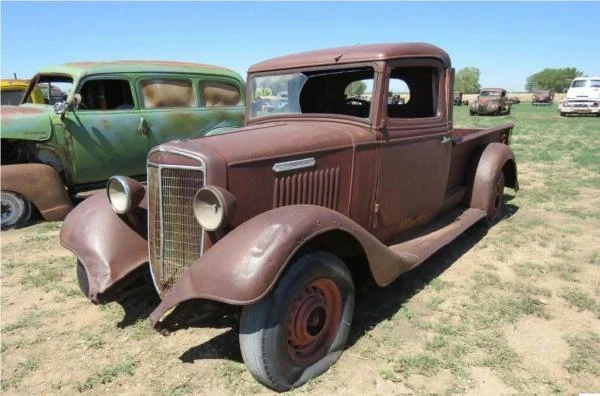
A significant automotive event is set to take place in Eaton, Colorado, on September 19, as approximately 300 classic vehicles, vintage trucks, project cars, and an extensive array of automotive memorabilia are scheduled to go under the hammer. The collection, assembled over three generations by the Born family, offers a unique window into American automotive history, ranging from pristinely restored showpieces to raw restoration projects. Perhaps most eye-catching for collectors and bargain hunters alike is the revelation that some of these vehicles carry an opening bid of just 50 cents, a nominal figure intended to encourage competitive bidding and ensure the clearance of the vast inventory.
The auction, managed by the renowned VanDerBrink Auctions, represents the culmination of decades of diligent hunting, scouting, and acquisition. The late Doug Born, alongside his father and grandfather, spent their lives traversing the United States to source rare parts and vehicles, creating a legacy that is now being dispersed to the next generation of enthusiasts and restorers.
A Legacy Spanning Three Generations
The Born family’s pursuit of automotive history began long before the current craze for vintage restorations took hold. For the Born family, the collection was not merely an investment portfolio but a labor of love that spanned nearly a century of American manufacturing. By focusing heavily on the Ford brand, the family managed to curate a timeline of the company’s evolution, capturing the transition from the pioneering days of the early 20th century to the post-war industrial boom.
Doug Born, who was the final steward of the collection, was well-known in local circles for his keen eye for mechanical detail and his dedication to preserving American iron. His passing prompted the family to partner with VanDerBrink Auctions, a firm specialized in handling large-scale estate dispersals of this nature. The auction house has noted that the sheer volume of the inventory—reaching into the hundreds—is a testament to the family’s unwavering commitment to the hobby.
Auction Logistics and Highlights
The event is scheduled to commence at 9:00 AM local time in Eaton, Colorado. For those interested in inspecting the condition of the vehicles, a comprehensive preview session is slated for September 18, one day prior to the auction. This allows potential buyers to evaluate the structural integrity, engine conditions, and provenance of the various lots before the bidding war begins.
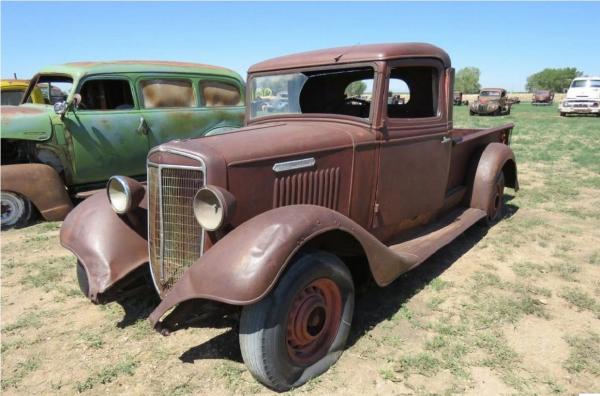
The collection is deeply rooted in Ford’s history. Among the most notable items is a 1912 Ford Model T Touring, a vehicle that symbolizes the dawn of the mass-produced automobile. Alongside it, the auction features several Model A variants and a highly coveted 1932 Ford Roadster custom, a platform that has long served as the foundation for American hot-rodding culture.
Beyond the finished show cars, the inventory includes a vast selection of "project" vehicles—cars that have not yet seen the benefit of a modern restoration. These include 1933 and 1935 coupes, a 1934 three-window coupe, and a vintage 1934 school bus, alongside various models from 1936 and 1937. These units represent a significant opportunity for restorers who specialize in heavy metal fabrication and mechanical rebuilding, as many of these vehicles have been kept in dry storage, preserving their frames from the elements.
Market Implications and the Appeal of Project Cars
The decision to list some vehicles with an opening bid of 50 cents is a strategic move, often employed in high-volume auctions to stimulate activity. In the current market, the demand for classic "project" vehicles has seen a notable resurgence. As parts become more readily available through 3D printing and the growth of specialty reproduction markets, the barrier to entry for restoring a 1930s Ford has lowered, even as the value of completed, numbers-matching vehicles continues to climb.
Economic analysts observe that the classic car market has remained resilient despite broader economic volatility. Auctions of this scale, often referred to as "barn finds" or "estate liquidations," are increasingly popular because they provide transparency. Unlike private sales, public auctions like the one in Eaton provide a clear data point for valuation, helping to stabilize prices for specific models. For many, the thrill of winning a bid at a low starting price is the primary draw, even if the subsequent cost of labor and parts may be significant.
The Role of VanDerBrink Auctions
VanDerBrink Auctions has established itself as a leader in the niche market of estate automotive liquidations. Their approach focuses on creating a festival-like atmosphere that appeals not only to serious collectors but also to hobbyists looking for their first restoration project. By cataloging items ranging from small memorabilia—such as vintage signs, fuel pumps, and engine components—to full-sized heavy-duty trucks, the auction house ensures that the Born collection is accessible to a wide demographic.
The logistics of moving such a large volume of vehicles are immense. The Eaton, Colorado location serves as an ideal hub for this event, given its proximity to major transport routes. Experts suggest that collectors from across the country will likely attend, given the specific scarcity of some of the 1930s-era Ford parts and the rarity of the intact frames being offered.

The Broader Impact on Automotive Preservation
The dispersal of a collection this size serves a greater purpose than mere commerce; it acts as a distribution of automotive heritage. When a single family hoards a large collection, that history is effectively locked away from the public eye. By auctioning these items, the Born family is ensuring that these vehicles have the opportunity to be restored, shown at car meets, or even returned to the road.
Historians often point out that the 1930s and 1940s were a period of rapid innovation in vehicle design and engine performance. The models featured in this auction—the coupes, sedans, and custom roadsters—are prime examples of the shift from utilitarian transportation to aesthetic design. By preserving these vehicles, the new owners are not just buying a machine; they are acting as custodians of a design language that defined an era.
What Potential Bidders Should Know
For those planning to participate in the September 19 auction, preparation is essential. VanDerBrink Auctions advises potential bidders to conduct thorough due diligence. While the 50-cent starting bid is an enticing marketing hook, the ultimate cost of acquiring these vehicles will be determined by market demand on the day of the sale.
Bidders should consider:
- Transportation Costs: Many of the vehicles are in non-running condition and will require professional towing or flatbed transport.
- Restoration Budgeting: The cost of parts for pre-war Fords can fluctuate. Buyers should have a clear budget for both the purchase price and the projected restoration costs.
- Documentation: Potential buyers should verify the status of titles and historical documentation, as these are critical factors in the long-term value of any classic vehicle.
As the date approaches, interest from the classic car community continues to intensify. The Born family’s collection serves as a reminder of the enduring power of the American automotive spirit. Regardless of whether a vehicle fetches 50 cents or thousands of dollars, each lot represents a piece of a story that began nearly a century ago. The upcoming auction in Eaton is not merely a sale; it is a celebration of the mechanical passion that has fueled the Born family through three generations, and a unique opportunity for enthusiasts to own a slice of that history.
In conclusion, the Eaton auction stands as a significant milestone for collectors. By opening the doors to this extensive collection, the family is facilitating a new chapter for these classic machines. Whether they end up in a museum, a private garage, or a home workshop, the vehicles that were once the pride of the Born family will continue to tell the story of American automotive innovation for years to come. The event remains a must-watch for those who appreciate the intersection of history, engineering, and the timeless art of the automobile.