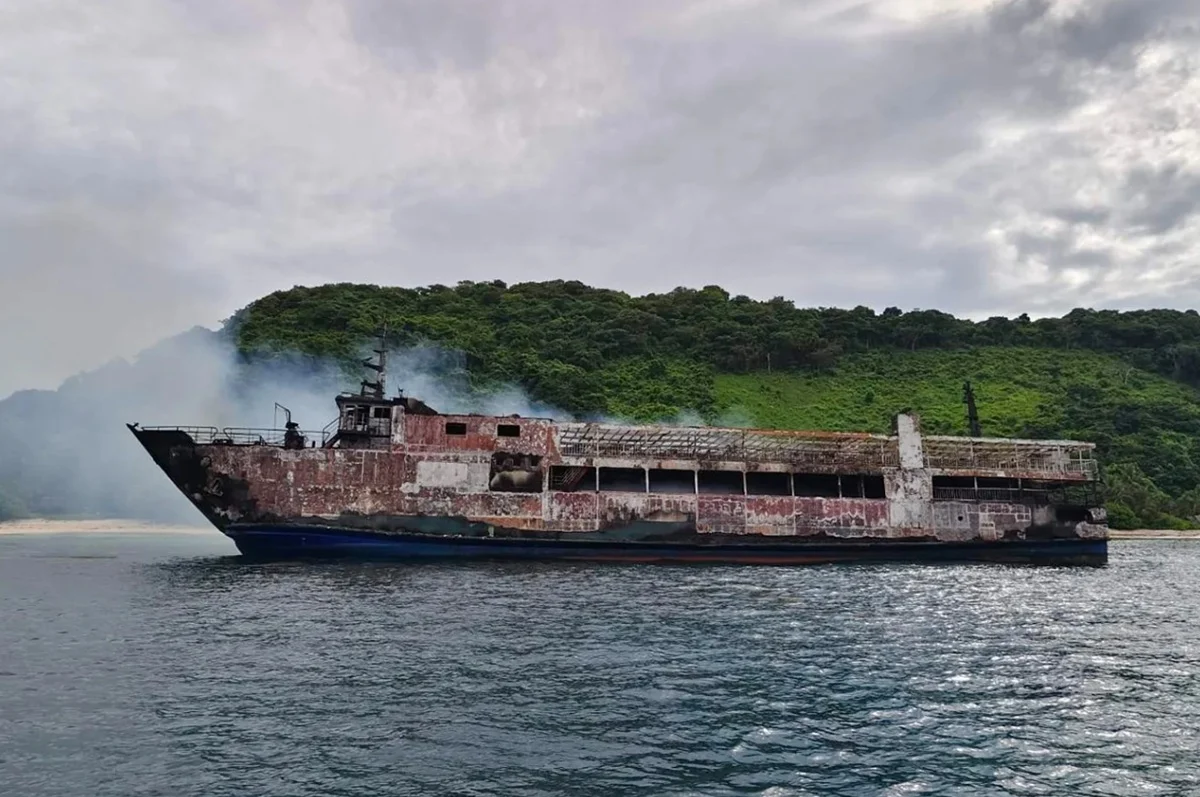
The death toll from the catastrophic fire aboard the M/V June Aster off the coast of the Philippines has surged to 76, authorities confirmed on Saturday, September 12, 2026. This grim development follows a intensive search and recovery operation conducted by the Philippine Coast Guard (PCG), which discovered 41 additional bodies trapped within the charred, skeletal remains of the vessel. The tragedy, which occurred on Wednesday, September 9, has sent shockwaves through the nation, once again highlighting the persistent challenges regarding maritime safety in the archipelagic country.
Chronology of the Disaster
The disaster began late Wednesday morning when the M/V June Aster, a passenger ferry navigating the waters near the tourist destination of Coron, Palawan, suddenly erupted into flames. Initial reports suggested that the fire spread with alarming speed, catching many passengers and crew members off guard. The vessel, now a blackened hulk, is currently grounded approximately 7.5 kilometers (4.5 miles) from the coastline, serving as a stark monument to one of the deadliest maritime incidents in recent memory.
Following the outbreak of the fire, emergency response teams were deployed to the scene. Early efforts were hampered by the intensity of the inferno and the structural instability of the ferry. On the day of the incident, initial reports confirmed only five fatalities, but as the search and rescue teams gained access to the lower decks and interior compartments, the scale of the disaster became painfully apparent.
By Friday, recovery efforts shifted to a recovery operation as hopes for finding survivors dwindled. On Saturday morning, the Coast Guard intensified its sweep, resulting in the discovery of 41 bodies. Earlier that day, 30 additional remains had already been transported to the port of Coron, where a makeshift morgue and disaster management hub have been established to handle the surge of victims.
The Forensic Challenge
The identification process is expected to be a long and arduous endeavor. Given the intensity of the blaze, many of the remains were recovered in a condition that precludes immediate visual identification. The Philippine government has mobilized forensic experts to oversee the process, which will rely heavily on DNA testing and dental records.
Kristine Ablana, a local tourism official acting as a spokesperson for the emergency response committee, stated that authorities have prepared temporary burial plots in the town of Coron. "We have prepared individual grave sites, each a meter deep, to ensure that the victims are treated with dignity while we conduct the necessary forensic procedures," Ablana noted. The process of DNA sampling is essential, as families from various parts of the country are currently awaiting news of their missing relatives. The government has pledged to cover the costs of these procedures and to provide assistance to the families of the victims.
Maritime Safety in the Philippines: A Recurring Crisis
The Philippines, an archipelago comprising over 7,000 islands, is heavily dependent on sea transport. Ferries are the primary mode of transit for millions, but the industry has been plagued by a history of accidents. The M/V June Aster tragedy is the latest in a long line of maritime disasters involving aging fleets, overcrowding, and lapses in safety protocols.
Historically, the Philippine maritime sector has struggled with the "RORO" (Roll-on/Roll-off) ferry culture. While these vessels are efficient for transporting vehicles and passengers, they are prone to rapid capsizing and fire hazards if cargo is not properly secured or if electrical systems are not strictly maintained. Data from the Maritime Industry Authority (MARINA) and international safety organizations indicate that while regulations have been tightened over the last decade, the sheer volume of maritime traffic makes enforcement a gargantuan task.
In the wake of this disaster, public discourse has shifted toward the need for mandatory vessel upgrades and stricter oversight of private ferry operators. Critics argue that despite numerous legislative efforts to modernize the maritime industry, the reliance on older vessels continues to place passengers at unnecessary risk.
Official Responses and Inquiries
The Department of Transportation (DOTr) and the Philippine Coast Guard have initiated a formal investigation into the fire. While the exact cause remains under determination, investigators are looking into potential electrical failures in the engine room, as well as whether safety equipment—such as fire suppression systems and life rafts—was functional and accessible at the time of the fire.
"We are committed to a transparent and thorough investigation," said Coast Guard Commodore Noemie Cayabyab. "Our primary focus right now is the recovery of all victims and ensuring that the families receive the support they need. Once the search operations are concluded, we will pivot fully to uncovering the root cause of this tragedy to prevent a recurrence."
The government has also declared a period of mourning in the province of Palawan, with flags flying at half-mast in local government buildings. Local officials have praised the swift response of nearby fishermen and private vessels that assisted in the initial evacuation, noting that without their immediate intervention, the death toll could have been significantly higher.
Broader Economic and Social Implications
The incident carries significant implications for the tourism industry in Palawan, a province that has consistently ranked as one of the world’s top island destinations. Coron, known for its pristine waters and world-class diving sites, relies heavily on maritime transit for both tourism and the movement of goods. A disaster of this magnitude may lead to a temporary decline in confidence regarding ferry travel, potentially impacting the local economy as the peak tourist season approaches.
Furthermore, the logistical burden of managing such a high number of casualties in a smaller, regional municipality like Coron has highlighted deficiencies in local emergency response infrastructure. While the town has managed the influx of bodies with professionalism, the event has prompted calls for the central government to allocate more resources to regional disaster management offices, specifically for forensic and mortuary capabilities in remote provinces.
Future Outlook
As the investigation continues, the focus will likely turn toward the accountability of the ferry operator. Under Philippine law, owners of vessels involved in fatal accidents face stringent administrative and criminal inquiries. If negligence is proven, the owners could face heavy fines, suspension of their operational licenses, and potential criminal charges for reckless imprudence resulting in multiple homicides.
For the families of the 76 victims, the coming weeks will be characterized by the agonizing wait for DNA results and the eventual funeral services. The tragedy of the M/V June Aster serves as a somber reminder of the delicate balance between the economic necessity of maritime transit and the non-negotiable requirement for passenger safety. As the nation mourns, the clamor for systemic reform within the Philippine maritime industry grows louder, with the hope that the lives lost in this disaster will force a permanent change in how safety is managed, monitored, and maintained in the Philippine seas.
The recovery operation remains ongoing as divers continue to inspect the submerged sections of the hull, and authorities remain on high alert to ensure the vessel does not pose an environmental hazard, such as an oil spill, in the fragile marine ecosystem of the Palawan coast. The world watches as the Philippines grapples with this tragedy, waiting to see what lessons will be learned and, more importantly, what actions will be taken to ensure that the waters of the archipelago become safer for all who traverse them.