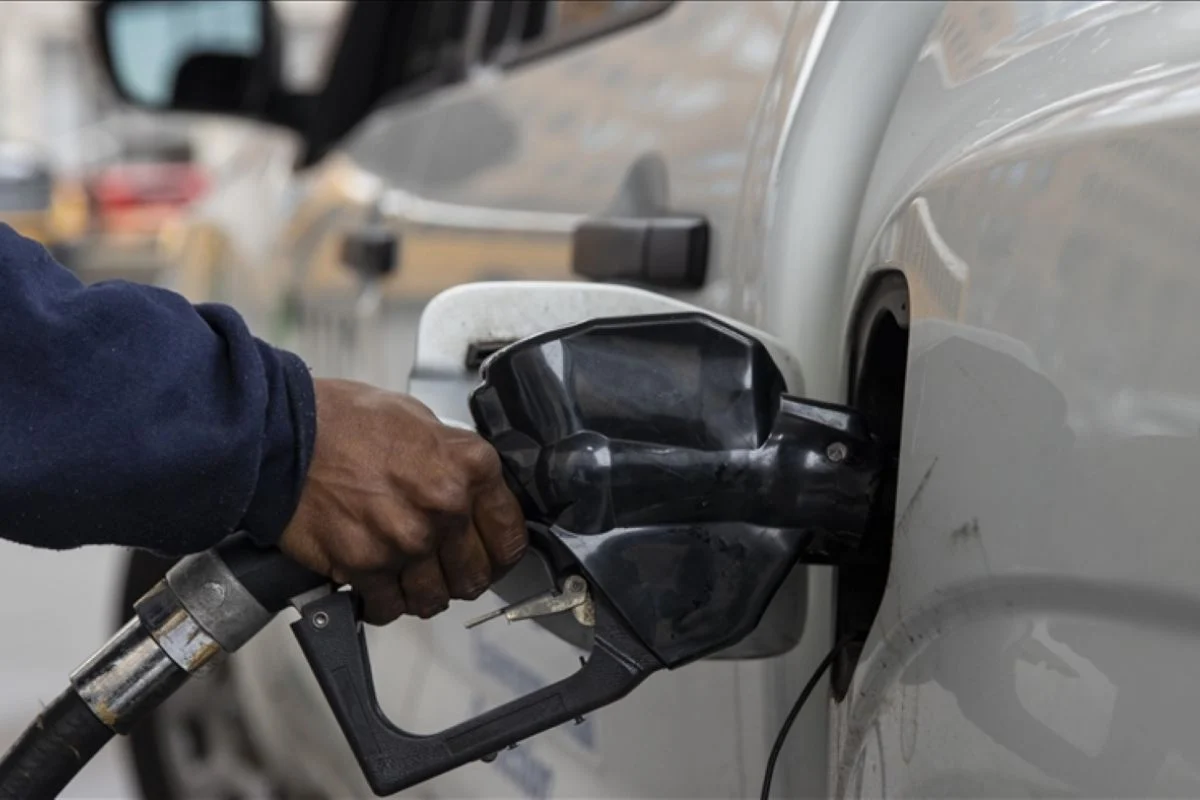
The final days of August 2026 have ushered in renewed economic anxiety across emerging markets, spearheaded by a sharp and unsettling rebound in international crude oil prices. Propelled by escalating geopolitical volatility and persistent threats to critical maritime supply routes, benchmark Brent crude breached the threshold of $90.41 per barrel on Monday, August 31, 2026. For hydrocarbon-reliant importing nations, this upward trajectory sets off immediate policy and fiscal alarms. In Indonesia, Southeast Asia’s largest economy, the shockwave of soaring global energy markets is felt across multiple economic layers, reverberating directly through state budget projections, domestic fuel pricing mechanisms, inflationary pressures, and broader macroeconomic stability.
While global energy markets are inherently volatile, the convergence of multiple supply-side bottlenecks and shifting demand dynamics in the third quarter of 2026 has created a precarious environment. Policymakers, central bankers, and state energy enterprises are now locked in intensive evaluations to balance fiscal health against the purchasing power of ordinary citizens. The central question dominating financial corridors in Jakarta is no longer simply about the cost of a barrel of oil, but rather how deeply the cascading effects will penetrate the domestic economy over the remainder of the fiscal year.
Geopolitical Friction and the Anatomy of the Price Surge
The primary driver behind the late-August price surge is not an explosion in global consumption, but rather a profound tightening of actual and perceived global supply. Geopolitical friction points in the Middle East have once again taken center stage. Disruptions, naval maneuvers, and security threats around the critical Strait of Hormuz—a crucial chokepoint through which a significant fraction of the world’s petroleum is transported—have injected severe risk premiums into the market. Energy traders have increasingly priced in the probability of sudden, protracted supply blockades.
This supply-side constraint unfolds against a nuanced backdrop of global demand. According to comprehensive data tracking by Reuters, global oil demand for 2026 is actually projected to contract by approximately 1 million to 1.6 million barrels per day. This softening is predominantly attributed to a cooling industrial appetite and declining crude imports from China, the world’s second-largest economy. Yet, despite this broader cooling in global demand, the acute specter of supply disruption has thoroughly overwhelmed demand-side relief, maintaining an upward pressure on crude prices that analysts warn could keep Brent hovering above $80 per barrel for the duration of 2026.
The Domestic Dilemma: Non-Subsidized Versus Subsidized Fuel
In Indonesia, the immediate public reaction to rising global oil prices typically centers on domestic fuel costs. However, the architectural design of Indonesia’s energy pricing policy creates a stark dichotomy between subsidized and non-subsidized petroleum products.
Non-subsidized fuels, most notably Pertamax, operate under a market-responsive framework. State-owned energy giant PT Pertamina (Persero), alongside the Ministry of Energy and Mineral Resources (ESDM), continuously monitors global crude benchmarks and refined product indices to determine retail pricing adjustments. The economic cost of Pertamax is directly tethered to the landed cost of crude oil and processing expenditures. Consequently, sustained rallies in the global energy market translate into immediate upward pricing pressures for non-subsidized consumers. Ministry of Energy officials have repeatedly reiterated that while Pertamax follows market realities, retail adjustments require careful calibration to prevent sudden shocks to consumer spending.
Conversely, government-subsidized fuels such as Pertalite operate under strict fiscal insulation. To shield the domestic populace from the immediate brunt of international market shocks, the Indonesian government maintains a steadfast policy of capping subsidized fuel prices. Minister of Finance Purbaya Yudhi Sadewa recently reaffirmed this stance, assuring the public that the retail price of Pertalite will remain untouched, even if international benchmarks like Brent crude temporarily graze or surpass the psychological threshold of $100 per barrel. This structural insulation ensures that while middle-to-upper-income vehicle owners utilizing non-subsidized fuel absorb market fluctuations immediately, the broader lower-income demographic remains temporarily buffered from direct retail price hikes.
Fiscal Repercussions and the Indonesian Crude Price (ICP) Equation
Beneath the surface of retail fuel prices lies a complex web of fiscal accounting managed through the state budget, or Anggaran Pendapatan dan Belanja Negara (APBN). The primary administrative benchmark used by the Indonesian government to calculate its oil and gas fiscal health is the Indonesian Crude Price (ICP).
Data from the Ministry of Energy and Mineral Resources indicates that the ICP stood at $81.68 per barrel in July 2026, registering a slight contraction from $83.45 per barrel in June. However, the sudden surge of Brent past $90 per barrel at the close of August signals that upcoming ICP calculations will likely trend upward, putting strain on budgetary assumptions.
In the formulation of the 2026 State Budget (APBN 2026), the Indonesian government penciled in a conservative baseline ICP assumption of $70 per barrel. When actual market realizations persistently outstrip this baseline assumption, the fiscal math shifts dramatically. If global oil prices remain elevated while subsidized fuel and energy compensation costs are frozen at current domestic levels, the government faces ballooning fiscal liabilities. Subsidies and compensation funds destined for energy distributors must expand, potentially diverting crucial capital away from infrastructure development, social assistance programs, and long-term economic diversification initiatives.
Furthermore, the overall impact on the APBN is dictated by a multi-variable equation. Beyond the raw ICP figure, fluctuations in the exchange rate of the Indonesian rupiah against the United States dollar, domestic fuel consumption volumes, and state revenues derived from upstream oil and gas production collectively determine the ultimate health of the national fiscal posture.
Macroeconomic Tremors: Inflation, Capital Markets, and Purchasing Power
The broader macroeconomic implications of prolonged high energy prices extend far beyond government ledgers, seeping directly into the daily lives of citizens and the operational frameworks of local businesses.
Inflationary pressure remains one of the most immediate macroeconomic threats. When the costs of energy and fuel rise—particularly impacting logistics, freight forwarding, and commercial transportation—the increased overhead is inevitably passed down the supply chain. From the distribution of staple agricultural goods to urban public transit and industrial manufacturing output, higher energy input costs ripple across all sectors. If unmitigated, this cost-push inflation erodes the real purchasing power of households, dampening domestic consumption, which has historically served as the primary engine of Indonesian economic growth.
Financial markets have also registered immediate sensitivity to the energy shock. Regional equities across Asia, including the Jakarta Composite Index (IHSG), experienced notable downward pressure toward the end of August. Market analysts noted that foreign capital outflows and cautious domestic sentiment were heavily influenced by the macroeconomic headwinds generated by surging global commodity prices, illustrating how deeply integrated domestic capital markets are with global energy trends.
Strategic Outlook and Government Vigilance
As Indonesia navigates the closing months of 2026, the resurgence of global oil prices serves as a stark reminder of the nation’s ongoing vulnerability to external geopolitical shocks. While domestic fiscal cushions and energy subsidies provide vital short-term relief to vulnerable populations, the structural costs associated with high energy imports and expanding fiscal subsidies demand rigorous, long-term vigilance.
Policymakers face the delicate task of balancing fiscal prudence with social protection. Maintaining the affordability of subsidized fuels protects the immediate welfare of the masses, but it simultaneously increases the burden on state finances if global prices remain structurally high. For businesses and consumers alike, the current economic climate underscores the urgency of transitioning toward energy efficiency, domestic renewable alternatives, and enhanced supply-chain resilience. Ultimately, Indonesia’s ability to weather the current oil market turbulence will depend on disciplined fiscal management, strategic energy reserves, and adaptive macroeconomic policies designed to insulate the domestic economy from external storms.