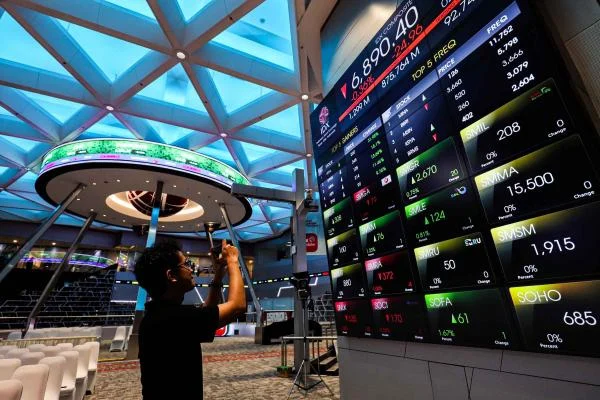
The Jakarta Composite Index (Indeks Harga Saham Gabungan, or IHSG) closed its trading session in negative territory on Friday, September 11, 2026, succumbing to widespread selling pressure that affected almost every sector on the Indonesia Stock Exchange (IDX). The benchmark index finished the day down 47.96 points, or 0.73 percent, settling at the 6,541.38 level. Throughout the session, the local market experienced pronounced volatility, reflecting ongoing cautious sentiment among institutional and retail investors alike as macroeconomic headwinds and shifting global liquidity conditions continued to weigh heavily on emerging markets.
Main Facts and Market Summary
The trading day on Friday painted a decidedly bearish picture for the Indonesian capital market. Out of the total equities actively traded on the floor, the vast majority experienced downward revisions. Market breadth heavily favored the bears, with 471 stocks closing lower, while only 197 counters managed to secure gains, and 295 stocks remained stagnant relative to their previous closing prices.
Despite the downward trajectory of the primary index, market liquidity remained robust. The total transaction value reached Rp14.71 trillion, supported by a heavy trading volume of 28.61 billion shares changing hands. Market participants were exceptionally active, recording a total frequency of 1.916 million transactions. Following Friday’s contraction, the total market capitalization of the Indonesia Stock Exchange stood at approximately Rp11,446 trillion, underscoring the deep cushion and sheer scale of the domestic bourse despite the day-to-day fluctuations.
Chronology of the Trading Day
The trading session on Friday did not begin with the severe pessimism that ultimately characterized the closing bell. Earlier in the week, sentiment had shown intermittent sparks of resilience; notably, on Thursday, September 10, 2026, the IHSG had opened on a firmer footing at the 6,888 level, driven by selective buying in top-gainer equities. However, that early momentum proved fragile.
As the opening bell rang on Friday, September 11, the index immediately faced persistent distribution. Selling pressure intensified as the morning session progressed, driving the IHSG into a steep downward spiral. The domestic market hit its lowest intraday level at 6,462.96, triggering algorithmic stop-losses and heightening anxiety among short-term traders.
Nevertheless, a wave of bargain-hunting emerged as institutional investors stepped in to accumulate blue-chip stocks at more attractive valuations. This buying support helped the index pare some of its deeper losses during the afternoon session, allowing the market to claw its way back to an intraday high of 6,552.70. Ultimately, however, the recovery lacked the sustained volume required to break into positive territory, forcing the index to settle at 6,541.38 as profit-taking and defensive portfolio rebalancing dominated the final minutes of trade.
Comprehensive Transaction Data and Sectoral Performance
A closer examination of the sectoral performance reveals the depth of the market correction. The Indonesia Stock Exchange categorizes listed companies into 11 distinct economic sectors. On Friday, the sell-off was so comprehensive that out of those 11 sectors, 10 closed in the red, dragged down by capital outflows and risk-off sentiment.
The lone bright spot in an otherwise gloomy trading day was the healthcare sector. Bucking the broader market trend, the healthcare index managed to eke out marginal gains, supported by defensive buying as investors sought shelter in non-cyclical, demand-inelastic industries such as pharmaceuticals, medical equipment, and healthcare providers. Conversely, interest rate-sensitive sectors, cyclical consumer goods, and basic materials bore the brunt of the selling pressure, mirroring broader concerns over domestic purchasing power and external borrowing costs.
The hefty transaction value of Rp14.71 trillion, combined with a high transaction frequency of over 1.9 million hits, indicates that the market correction was not merely a result of a dry market, but rather a reflection of active portfolio adjustments, heavy block trades, and aggressive position-shuffling by large-scale market participants ahead of the weekend.
Background Context and Macroeconomic Pressures
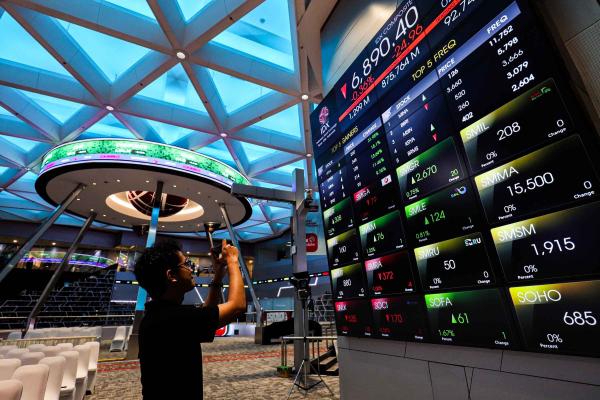
The struggles faced by the IHSG on September 11, 2026, cannot be viewed in a vacuum. They are closely tied to a complex interplay of domestic fiscal policies, monetary adjustments by central banks, and fluctuating commodity prices on the global stage. Emerging market equities, including Indonesia, have faced persistent scrutiny throughout the year as global investors weigh the trajectory of global interest rates, currency volatility against the US dollar, and domestic inflation metrics.
In the weeks leading up to this trading session, market analysts had repeatedly pointed out that the IHSG was traversing a critical psychological resistance zone. While earlier sessions—such as the strong open near 6,888 earlier in the week—demonstrated that domestic capital retained strong buying power, structural uncertainties continued to cap prolonged rallies. Foreign capital flows, which traditionally serve as a major catalyst for large-cap banking and mining stocks on the IDX, have exhibited intermittent volatility, responding sensitively to shifts in US Treasury yields and geopolitical developments.
Furthermore, domestic sentiment has been influenced by corporate earnings expectations, fourth-quarter fiscal outlooks, and Bank Indonesia’s monetary stance in maintaining macroeconomic stability while supporting sustainable economic growth. As corporations navigate shifting input costs and changing consumer demand patterns, equity valuations have faced periodic recalibration.
Market Analysis: Implications for Investors
The sharp intraday swing from a low of 6,462.96 to a high of 6,552.70 before settling at 6,541.38 highlights the high-beta nature of the current market environment. Financial analysts and market strategists suggest that such volatility underscores the importance of a disciplined investment strategy, robust risk management, and careful fundamental analysis.
-
Short-Term Volatility vs. Long-Term Fundamentals: For short-term day traders, the wide intraday range offered ample trading opportunities, particularly in high-liquidity banking, telecommunications, and energy counters. However, for long-term investors, the corrective phase is viewed as a natural consolidation period following earlier gains. The resilience of the healthcare sector points to a classic defensive rotation, where capital moves away from growth-oriented or cyclical assets into stable, cash-generating sectors during periods of heightened uncertainty.
-
Liquidity Resilience: The fact that daily transaction values remained elevated at Rp14.71 trillion proves that domestic liquidity remains strong. Unlike periods of market stress in previous decades where low volume accompanied price drops, modern Indonesian capital markets feature robust domestic retail and institutional participation that cushions severe systemic crashes. The strong base of over 28 billion shares traded demonstrates that market depth is actively absorbing liquidations.
-
Outlook for Subsequent Trading Weeks: Looking ahead, market observers anticipate that the IHSG will continue to test key support and resistance levels. Much will depend on upcoming macroeconomic data releases, including monthly trade balance figures, foreign reserve updates, and corporate financial disclosures. If macroeconomic indicators continue to signal steady economic growth and controlled inflation, the market is expected to build a solid base for a potential recovery in the subsequent weeks. Conversely, persistent global headwinds could prolong the consolidation phase, keeping the index range-bound as investors adopt a wait-and-see approach.
Official Responses and Exchange Commentary
Responding to the recent market dynamics, officials from the Indonesia Stock Exchange and market regulatory bodies have consistently emphasized the importance of maintaining market transparency, fairness, and investor education. IDX representatives have routinely reminded market participants that market corrections are a normal part of economic cycles and capital market maturation.
While regulatory bodies do not typically comment on day-to-day price movements, macroeconomic policymakers, including representatives from the Ministry of Finance and Bank Indonesia, maintain a vigilant watch over domestic capital market stability. Continuous coordination between fiscal and monetary authorities aims to insulate the domestic economy from external shocks, ensuring that the banking sector remains well-capitalized, liquidity remains adequate, and investor confidence in Indonesia’s long-term economic narrative stays intact.
Conclusion
The trading session on Friday, September 11, 2026, serves as a vivid reminder of the dynamic and fluctuating nature of equity markets. With the IHSG closing down 0.73 percent at 6,541.38 amid broad sectoral weakness, investors are reminded of the necessity of diversification and risk awareness. Despite the day’s losses, the high transaction volume and robust market capitalization indicate that the foundational pillars of the Indonesian capital market remain resilient, poised to navigate upcoming global and domestic challenges as the market heads toward the final quarter of the year.