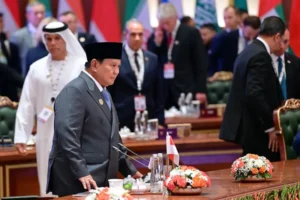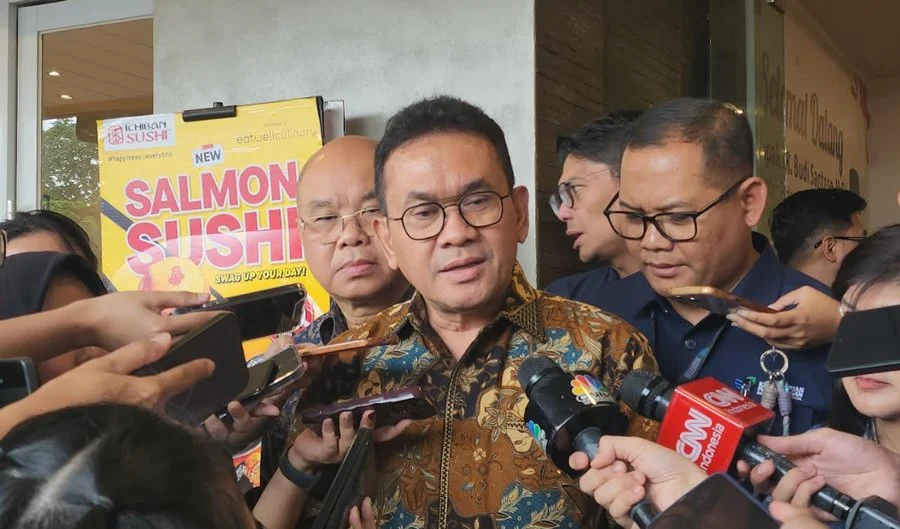
In an increasingly digitized global economy, the Indonesian Ministry of Trade has officially called upon the nation’s Micro, Small, and Medium Enterprises (MSMEs) to aggressively adopt artificial intelligence (AI) to revolutionize their marketing strategies and scale their operations internationally. During a briefing in Jakarta on Saturday, September 12, 2026, Minister of Trade Budi Santoso underscored that the intersection of traditional craftsmanship and advanced technological integration represents the only viable path for local businesses to remain competitive in an era defined by rapid digital transformation.
The Minister, widely known as Busan, emphasized that while the fundamental quality of a product remains the cornerstone of any business venture, the mechanism of market penetration has shifted irrevocably. For Indonesian MSMEs to transition from domestic players to global entities, they must move beyond traditional retail and embrace the predictive and analytical capabilities offered by modern AI tools.
The Strategic Imperative of Digital Transformation
The shift toward AI-driven commerce is not merely a modern trend but a structural necessity. According to recent data from the Ministry of Trade, Indonesian MSMEs contribute approximately 61% to the national Gross Domestic Product (GDP) and absorb nearly 97% of the total national workforce. Despite these robust figures, the contribution of these enterprises to the nation’s total exports remains disproportionately low, hovering around 15%. This gap indicates that while the domestic market is saturated with high-quality goods, the pathways to international markets are often obstructed by ineffective marketing, language barriers, and a lack of data-driven consumer insight.
Minister Budi Santoso argued that AI serves as a "great equalizer" for small businesses. By leveraging generative AI, a small business owner in a rural village can now produce high-quality, localized marketing content in multiple languages, analyze global market trends, and optimize advertising spend with the same precision as a multinational corporation.
"Product excellence is the primary requirement, but it is incomplete without a sophisticated sales strategy," Minister Budi stated. "Quality goods must be balanced with effective marketing to ensure they reach the intended consumer, particularly those in the highly competitive international markets. AI is no longer a luxury; it is a tool for survival and growth."
The Chronology of Digital Adoption in Indonesia
The government’s push for AI adoption is the latest chapter in a multi-year digital integration campaign. Since 2022, the Ministry of Trade, in coordination with the Ministry of Cooperatives and SMEs, has launched several initiatives aimed at digital onboarding.
- 2023: The government launched the "Go Digital" initiative, focusing on moving MSMEs onto e-commerce platforms. While successful in increasing domestic digital presence, many businesses struggled with customer acquisition costs.
- 2024: Focus shifted toward "Digital Literacy," providing training on social media marketing and basic search engine optimization (SEO).
- 2025: Initial pilot programs for AI-assisted business management were introduced, targeting selected MSMEs in the creative and handicraft sectors.
- September 2026: The current directive represents a formal shift in policy, moving from basic digital adoption to advanced AI-led marketing optimization as a key performance indicator for the Ministry’s trade promotion division.
How AI Reshapes MSME Marketing
Minister Budi highlighted four critical areas where AI can fundamentally transform the operations of small-scale businesses:
- Automated Market Research: Instead of hiring expensive consultants, MSMEs can utilize AI tools to analyze international search trends, identifying what products are in high demand in specific countries. This allows businesses to tailor their production cycles to global market needs.
- Multilingual Content Creation: Through generative AI, businesses can instantly translate product descriptions, create compelling social media captions in foreign languages, and produce visual assets that resonate with local customs and cultural norms in target export markets.
- Predictive Ad Strategy: AI algorithms can optimize advertising budgets by identifying the most effective time, platform, and demographic for digital ads, significantly reducing "burned" marketing spend and increasing return on investment (ROI).
- Customer Relationship Management (CRM): AI-powered chatbots and automated inquiry systems allow small businesses to maintain 24/7 engagement with international buyers across different time zones, providing instant answers and streamlining the purchasing process.
Economic Implications and Expert Analysis
Economic analysts have weighed in on the Ministry’s directive, noting that while the potential for growth is immense, the barriers to entry remain significant. Dr. Aris Pratama, a senior trade analyst at the Jakarta Institute of Economic Research, noted that while the tools are available, "the infrastructure of data literacy among MSME owners is the primary bottleneck."

"The government is right to push for AI," Dr. Pratama observed. "However, simply telling MSMEs to ‘use AI’ is not enough. There needs to be a sustained commitment to infrastructure development—better internet connectivity in outer regions—and, more importantly, a comprehensive training curriculum that demystifies AI. For a weaver in a remote area, the concept of a ‘large language model’ is abstract until they see it selling their fabric to a buyer in Paris."
The Ministry of Trade has acknowledged these concerns. In response, they have announced plans to integrate AI training modules into their regional trade offices, providing workshops that demonstrate the practical application of these tools. The strategy is to move from theory to implementation, ensuring that MSMEs do not merely observe the digital revolution but participate in it as active contributors to the global trade value chain.
Bridging the Gap to Global Markets
The Indonesian government’s target is ambitious: to increase the share of MSME contributions to exports to 20% by the end of 2028. Minister Budi Santoso believes that AI will be the catalyst for this growth. By removing the friction associated with international communication and market research, the government aims to democratize export opportunities.
"When a local producer can communicate effectively with a buyer in Germany or Japan, and when they can predict the design trends that will be popular in those markets next season, they stop being a local artisan and start being a global supplier," the Minister emphasized.
The implications of this move are far-reaching. Beyond the immediate benefit to individual business owners, the widespread adoption of AI could stabilize the Indonesian economy against global volatility. By diversifying their markets and leveraging technology to reach a broader, more resilient customer base, Indonesian MSMEs can insulate themselves from the fluctuations of the domestic economy.
Future Outlook and Next Steps
As the Ministry of Trade proceeds with this initiative, the next several months will be critical. The focus will be on monitoring the "AI-adoption rate" among registered MSMEs and evaluating the impact on export volume. The government is expected to release a series of white papers and case studies highlighting "early adopters"—small businesses that have successfully utilized AI to enter new international markets—to serve as templates for others to follow.
The directive issued on September 12 is a clear signal that the era of passive digital presence is ending. For Indonesian MSMEs, the future of commerce is predictive, automated, and global. As they embark on this transition, the synergy between government guidance and individual entrepreneurship will determine whether Indonesia can successfully transition its vast small-business sector into a powerhouse of the digital-first global economy.
The Ministry concludes that the transformation is not merely about using computers; it is about changing the mindset of the business owner. In the coming months, the Ministry of Trade intends to host a national "Digital Export Summit," where technology providers and trade experts will work directly with MSME owners to integrate AI-ready tools into their business models, marking a decisive step toward a more integrated, digitally-savvy Indonesian export sector.