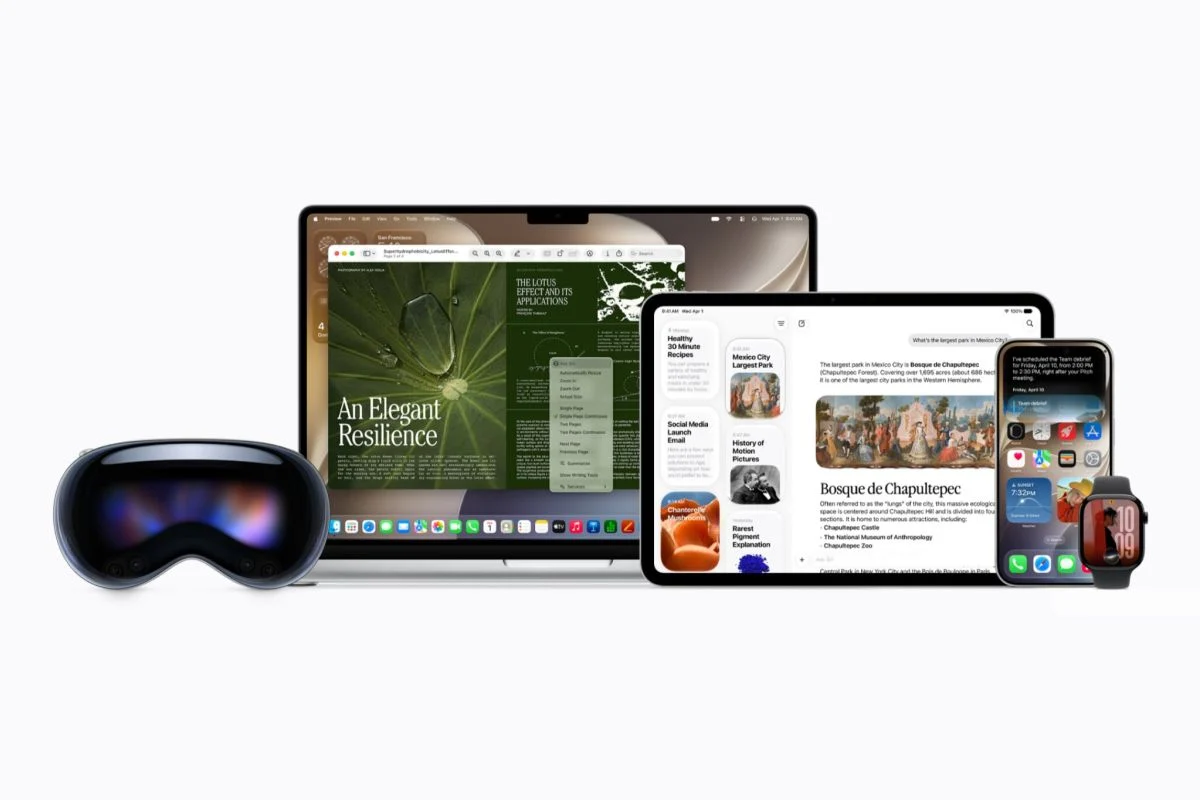
The integration of artificial intelligence into consumer electronics has fundamentally shifted how users interact with their daily devices, and Apple’s proprietary entry into this space, known as Apple Intelligence, stands as a defining milestone in the evolution of the iPhone. First introduced to the public during Apple’s Worldwide Developers Conference (WWDC) in June 2024, Apple Intelligence was conceived not merely as an isolated software novelty, but as a deeply integrated personal intelligence system. Designed to operate natively across iOS, iPadOS, and macOS, this suite of AI tools aims to streamline productivity, enhance creativity, and simplify communication while maintaining strict adherence to user privacy. As the technology rolls out across global markets with successive software updates throughout 2024, 2025, and into 2026, understanding its capabilities, hardware dependencies, and operational mechanics has become essential for Apple ecosystem enthusiasts and tech industry analysts alike.
The journey toward Apple Intelligence began years prior to its official unveiling, rooted in Apple’s sustained acquisitions of boutique artificial intelligence startups and its aggressive hardware investments into custom silicon. For generations, Apple’s Neural Engine—first introduced in the A11 Bionic chip back in 2017—served as the quiet workhorse behind Face ID, computational photography, and on-device machine learning tasks. However, the explosive rise of generative artificial intelligence models, exemplified by OpenAI’s ChatGPT in late 2022, placed immense market pressure on hardware giants to deliver conversational, generative, and context-aware capabilities directly to the edge. Apple approached this challenge with a distinct philosophy: rather than relying entirely on massive, distant server farms, the company sought to maximize on-device processing power to safeguard user data. This strategy culminated in the rollout of Apple Intelligence, a dual-layer ecosystem that balances local, on-device neural processing with secure, cloud-based infrastructure when heavier computational loads are demanded.
Hardware Compatibility and System Requirements
One of the most critical aspects of Apple Intelligence is its strict hardware dependency. Unlike traditional software updates that are often extended to older device generations for several years, generative AI models require substantial processing overhead, high memory bandwidth, and immense neural compute capacity. Consequently, Apple Intelligence is not universally available across all active iPhone models.
Market availability is strictly limited to devices equipped with advanced neural architectures capable of executing billions of operations per second efficiently. Officially, the feature set is supported exclusively by the iPhone 15 Pro, the iPhone 15 Pro Max, and the entire lineup of iPhone 16 models, alongside newer iterations released subsequently. Furthermore, consumers must note that enabling these capabilities depends heavily on the device’s operating system version, the chosen system language, and the user’s geographic region. While initial rollouts prioritized US English, subsequent software updates have progressively expanded language support and regional compatibility, though regulatory hurdles in regions like the European Union have occasionally created fragmented deployment timelines.
Transforming Textual Productivity with Advanced Writing Tools
Among the most heavily utilized components of Apple Intelligence is the comprehensive suite of Writing Tools integrated directly into the operating system. Designed to assist users across native and third-party applications—ranging from Apple Mail and Notes to third-party messaging platforms and web browsers—these tools function as an omnipresent editorial assistant.
When drafting emails, preparing professional correspondence, or compiling academic notes, users can invoke the system to proofread text for grammatical errors, restructure sentences for clarity, or completely rewrite paragraphs to match a specific tone, such as professional, concise, or friendly. Furthermore, the summarization engine allows users to condense lengthy multi-paragraph essays or chaotic email threads into concise bullet points with a single tap. This capability significantly reduces cognitive fatigue for professionals and students who process hundreds of digital communications daily.
Streamlining Digital Noise: Notification Summarization and Smart Replies
In an era defined by digital hyper-connectivity, smartphone notifications often overwhelm users, fragmenting attention throughout the day. Apple Intelligence addresses this notification fatigue by deploying intelligent sorting and summarization algorithms. Instead of forcing users to read dozens of individual alerts from messaging apps, news outlets, and social media platforms, the system analyzes incoming traffic and surfaces a prioritized summary of what is most important on the Lock Screen.
Within the Messages application, this intelligence extends further by generating context-aware conversation summaries and proposing Smart Replies. By analyzing the flow of a chat, the system can draft appropriate responses, allowing users to acknowledge messages or answer questions rapidly without typing out full sentences. This seamless integration ensures that users remain responsive while minimizing the time spent interacting with repetitive digital clutter.
Unleashing Creativity: Genmoji and Image Playground
Beyond productivity and communication, Apple Intelligence introduces powerful creative dimensions to the iPhone experience through tools like Genmoji and Image Playground. Standard emojis, while globally ubiquitous, often fail to capture the precise emotional nuance or situational context of a conversation. Genmoji bridges this gap by enabling users to generate custom, expressive emojis dynamically based on text descriptions. Whether an user wants a dinosaur wearing a top hat or a smiling avocado wearing sunglasses, the system synthesizes a unique graphic that can be used just like a standard emoji or shared as a sticker.
Simultaneously, Image Playground serves as a dedicated platform for visual creation. Integrated into apps like Messages, Notes, and a standalone application, it allows users to generate whimsical, illustrative, or sketch-style images based on themes, costumes, and locations. While Apple deliberately avoided entering the hyper-realistic deepfake generation space—focusing instead on stylized, non-photorealistic artistic outputs—these creative features provide everyday users with accessible, lightweight graphic design capabilities directly on their mobile devices.
Advanced Computational Photography: Clean Up and Natural Language Search
The iPhone camera has long been a benchmark in mobile photography, and Apple Intelligence enhances this domain by introducing sophisticated post-processing capabilities. Chief among these is the Clean Up tool within the Photos app. Similar to magic eraser functions seen in competing ecosystems, Clean Up allows users to identify and eliminate distracting background elements—such as stray tourists, power lines, or unwanted clutter—from their captured images. The underlying generative model intelligently fills in the erased space, seamlessly blending the background textures to preserve visual integrity.
Additionally, Apple Intelligence revolutionizes how users navigate vast personal photo libraries. Traditional photo searches relied heavily on manual tagging, dates, or basic metadata like locations. With the new semantic search capabilities, users can employ natural, conversational language to find specific moments, such as "Maya wearing her red jacket at the beach" or "sunset over the mountains during the camping trip." The system parses the visual content and contextual metadata of images and videos to retrieve exact matches instantly.
Visual Intelligence and Contextual Camera Awareness
Transforming the camera viewfinder into an active information-retrieval tool, Visual Intelligence bridges the physical and digital worlds. By pointing the iPhone camera at objects in the immediate environment, users can leverage on-device AI to interpret their surroundings. The system can identify specific breeds of animals, recognize plant species, translate foreign text in real time, or pull opening hours and reviews when pointed at a restaurant storefront.
Furthermore, Visual Intelligence can interact with event posters or flyers, automatically parsing dates, times, and venue details to populate calendar entries with a single prompt. For complex queries, users can seamlessly bridge local visual data to external cloud models, such as querying ChatGPT for deeper contextual analysis of an observed landmark or scientific specimen.
Audio Transcription, Summarization, and Meeting Management
For professionals, journalists, and students who frequently record lectures, interviews, or conferences, Apple Intelligence introduces robust audio transcription and summarization capabilities. Integrated natively into applications like Notes and Voice Memos, the system can convert spoken dialogue into searchable, written text.
Once transcribed, Apple Intelligence processes the text to extract key action items, decision points, and comprehensive summaries. In supported jurisdictions and operating environments, this functionality extends to phone calls and FaceTime audio sessions, allowing users to review missed details without listening to lengthy recordings from beginning to end. This automation significantly reduces administrative overhead in corporate and academic workflows.
The Evolution of Siri: Contextual Awareness and Conversational Fluidity
Siri, Apple’s pioneering virtual assistant, receives its most substantial architectural overhaul since its inception through Apple Intelligence. Historically criticized for its rigid command structure and inability to maintain conversational context, Siri now possesses deep language understanding capabilities. Users can stumble over their words, correct themselves mid-sentence, or change requests dynamically without confusing the assistant.
Moreover, Siri’s enhanced personal context allows it to pull information across multiple apps—such as locating a flight number mentioned in an email, cross-referencing it with a flight status online, and calculating whether a friend’s incoming train will arrive on time to pick them up. While some of Siri’s more deeply personalized, cross-app execution capabilities continue to roll out across iterative software releases, the foundational shift marks a major leap toward truly proactive digital assistance.
Privacy Architecture: On-Device Processing and Private Cloud Compute
A defining pillar of Apple’s strategy regarding Apple Intelligence is its unwavering commitment to user privacy. In an industry where artificial intelligence models frequently rely on massive data harvesting and perpetual cloud logging, Apple has constructed a bifurcated architecture designed to keep user data confidential.
The vast majority of everyday AI tasks—such as rewriting text, summarizing notifications, and organizing photos—are processed entirely on-device, leveraging the neural processing power of the Apple Silicon chip without transmitting data externally. For more complex queries that exceed the computational limits of a smartphone, Apple introduced Private Cloud Compute (PCC). Operating on dedicated Apple Silicon servers, PCC extends the device’s security framework into the cloud, ensuring that user data is never stored, logged, or accessible to Apple or third parties. Requests are used exclusively to fulfill the user prompt and are immediately discarded. Furthermore, independent security researchers are granted regular access to inspect the virtualized code of PCC servers, establishing an unprecedented standard of verifiable transparency in cloud-based AI processing.
Industry Implications and Analytical Perspective
The introduction of Apple Intelligence marks a critical turning point for the consumer technology market. By marrying high-end generative AI capabilities with uncompromising privacy frameworks and strict hardware prerequisites, Apple has catalyzed a new upgrade cycle for the iPhone. Industry analysts note that while Android competitors have offered generative AI features for several years, Apple’s ecosystem lock-in, combined with its trusted brand reputation regarding data privacy, positions Apple Intelligence for rapid mainstream adoption among millions of conservative enterprise and consumer users.
Nevertheless, experts urge caution regarding the absolute reliability of generative artificial intelligence. Like all current large language models, Apple Intelligence remains susceptible to hallucinations, inaccuracies, and contextual misinterpretations. Consequently, users are advised to treat the system as a powerful assistant rather than an infallible authority, particularly when dealing with critical legal, financial, or medical information.
Ultimately, Apple Intelligence elevates the iPhone from a sophisticated communication and entertainment terminal into an active, cognitive partner. By seamlessly embedding artificial intelligence into the fabric of daily workflows—from drafting prose and cleaning photographs to managing notifications and interpreting the physical world—Apple has established a new baseline for what consumers can expect from personal computing devices in the modern era.