The landscape of funeral services is undergoing a profound transformation as technological advancements intersect with the increasing global demand for sustainable end-of-life options. In the Netherlands, Crematech, a prominent manufacturer of cremation equipment, has recently garnered international attention for its introduction of electric cremation—a process scientifically known as alkaline hydrolysis or "resomation." This development marks a significant departure from traditional combustion-based cremation, which has been the industry standard for decades, by utilizing a water-based dissolution process to manage human remains in a manner that advocates describe as carbon-neutral and environmentally efficient.
The Mechanism of Alkaline Hydrolysis
At the core of this innovation is a sophisticated chemical process that replicates the natural decomposition of the human body at an accelerated rate. Unlike traditional cremation, which relies on gas-fueled furnaces reaching temperatures between 800 and 1,200 degrees Celsius to reduce remains to bone fragments, alkaline hydrolysis utilizes a specialized pressurized vessel.
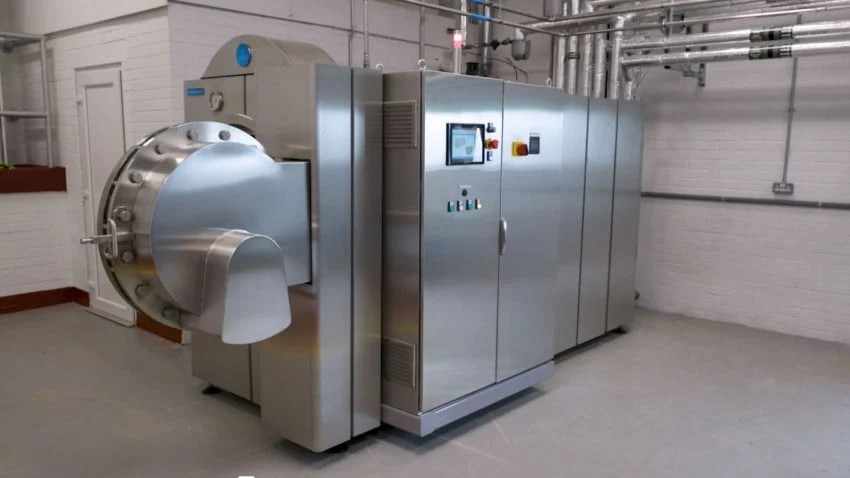
Within this stainless-steel chamber, the deceased is immersed in a mixture of water and a potassium hydroxide solution. The chamber is then pressurized and heated to approximately 150 degrees Celsius. Through the application of this thermal and alkaline environment, the body’s soft tissues are hydrolyzed into their fundamental chemical building blocks—amino acids, sugars, and salts—within a cycle that typically lasts between three to four hours.
The output of this process is twofold: a sterile, nutrient-rich liquid effluent and the remaining calcium phosphate bone structure. The liquid, which is entirely free of DNA and pathogens, is typically processed through standard municipal wastewater treatment systems, acting as a nitrogen-rich fertilizer. The skeletal remains are then dried and pulverized into a fine, white mineral powder, which possesses a different texture and color compared to the gray, coarser ash produced by flame cremation.
Chronology and Development of the Technology
While the introduction of resomation by companies like Crematech is a contemporary headline, the underlying scientific principle is not entirely new. The process of alkaline hydrolysis was originally patented in the late 19th century as a method for disposing of animal carcasses, primarily for agricultural research and fertilizer production.
It was not until the early 21st century that the technology was adapted for human funeral rites. The journey to public acceptance began in the United States and the United Kingdom, where early adopters sought an alternative to the heavy carbon footprint associated with natural gas cremation. In 2011, the first funeral home in the United States began offering the service, though it faced significant legal and religious pushback in several jurisdictions.
In the Netherlands, Crematech’s entry into the market represents a strategic shift toward formalizing this practice within the European regulatory framework. Over the past decade, European authorities have been evaluating the safety, ethical implications, and environmental impact of water-based cremation. The current push by Crematech follows years of pilot studies and legislative lobbying aimed at aligning funeral technology with the European Union’s broader sustainability goals, specifically the reduction of greenhouse gas emissions.
Supporting Data: Environmental and Efficiency Metrics
The primary driver behind the adoption of electric cremation is its superior environmental profile. Traditional flame-based cremation is a carbon-intensive process. According to the Cremation Association of North America (CANA), a single traditional cremation produces roughly 240 kilograms of carbon dioxide, equivalent to the emissions of a 500-mile car trip. Furthermore, the combustion process releases mercury—often from dental fillings—into the atmosphere, necessitating expensive filtration systems to remain compliant with environmental air quality standards.
In contrast, data regarding alkaline hydrolysis indicates a significantly lower environmental impact:
- Energy Consumption: Resomation consumes approximately one-seventh of the energy required for flame cremation.
- Carbon Emissions: The process produces no direct carbon dioxide emissions, and when powered by renewable energy sources, it is considered carbon-neutral.
- Mercury Capture: Because there is no combustion, mercury remains in a liquid state, allowing it to be filtered and disposed of safely rather than being vaporized into the atmosphere.
These metrics are increasingly attractive to municipal governments in densely populated areas like Amsterdam, where land for burial plots is at a premium and air quality regulations are becoming progressively more stringent.
Official Responses and Stakeholder Perspectives
The reception of this technology has been multifaceted. Industry experts and environmental scientists have largely praised the shift, citing it as an inevitable evolution in "green funeral" practices. Proponents argue that as the global population grows and urbanization continues, society must move toward more efficient methods of handling remains that do not rely on fossil fuels.
However, the transition has not been without opposition. Religious organizations, particularly those with long-standing traditions regarding the sanctity of the body and specific requirements for burial or cremation, have expressed concerns. In several regions, Catholic and Orthodox leaders have questioned whether the dissolution of the body in an alkaline solution respects the dignity of the deceased, arguing that the process may be perceived as "industrial" rather than "reverent."
Crematech and its supporters have responded by emphasizing that the process is a dignified, clean, and silent alternative. They argue that the focus should be on the finality and the return of the remains to the family, noting that the end result—the mineral remains—is functionally identical to the ashes provided by traditional cremation. Many families, particularly those with a preference for environmentally conscious living, have reportedly embraced the option as a way to minimize their final footprint on the planet.
Broader Impact and Global Implications
The introduction of electric cremation technology by companies like Crematech signifies a shift in the global funeral industry’s business model. As the "death-care" sector continues to modernize, the focus is moving toward automation, sustainability, and transparency.
1. Regulatory Evolution
The legal status of resomation remains a patchwork across the globe. While it is legal in several states in the U.S., Canada, and parts of the U.K., it is still undergoing legislative review in many European nations. The Dutch government’s willingness to entertain the technology sets a precedent that could influence broader EU legislation, potentially standardizing the practice across the continent within the next decade.
2. The "Green" Funeral Movement
Electric cremation is part of a larger ecosystem of sustainable end-of-life services, which includes natural organic reduction (human composting) and biodegradable burial options. This movement is driven by a demographic of aging baby boomers who are increasingly concerned about the environmental legacy they leave behind.
3. Economic Considerations
From a business standpoint, the initial capital expenditure for alkaline hydrolysis equipment is significantly higher than that of traditional gas furnaces. However, proponents argue that the long-term operational costs—specifically the lower fuel consumption and reduced need for sophisticated air filtration systems—make it a financially viable investment for crematoriums in the long run.
4. Public Health and Safety
The sterile nature of the process is an additional benefit. By utilizing high-pressure, alkaline-induced hydrolysis, the process eliminates the risk of airborne pathogens, making it a safe choice in the event of death caused by contagious diseases. This aspect of the technology gained particular relevance in the post-pandemic era, where health authorities have sought safer, more efficient methods for handling large numbers of remains.
Conclusion
The introduction of electric cremation by Crematech is more than just a technological curiosity; it is a signal of the changing priorities of modern society. By merging chemistry with compassion, the industry is providing an alternative that satisfies both the logistical needs of urban centers and the ethical demands of a climate-conscious public.
As the technology matures and becomes more widely available, the debate will likely shift from whether it is an acceptable practice to how it can be integrated into existing funeral home infrastructures globally. Whether it will replace traditional cremation remains to be seen, but the data suggests that the trajectory of the funeral industry is firmly pointed toward efficiency, sustainability, and innovation. As with any significant shift in social or religious custom, the adoption of resomation will require time and public discourse, but its arrival marks the beginning of a new era in the management of human mortality.