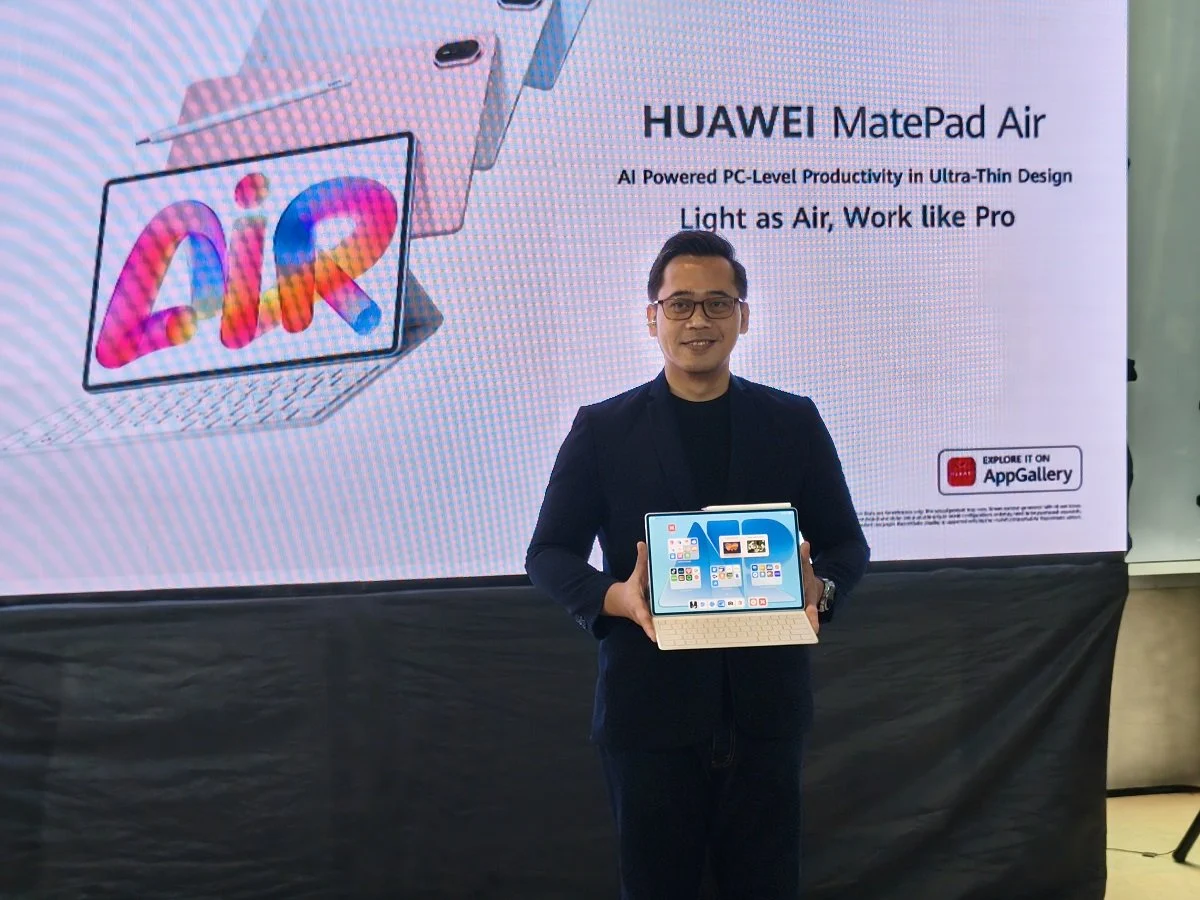
HUAWEI has officially expanded its premium tablet portfolio in the Indonesian market with the launch of the MatePad Air (2026), a device that seeks to redefine the intersection of extreme portability and high-performance computing. Unveiled in Jakarta on Friday, September 18, 2026, the new tablet is engineered to cater to the growing demographic of mobile professionals, students, and digital creators who require a device capable of handling intensive productivity tasks without the burden of traditional laptop hardware.
The launch marks a significant milestone for Huawei’s presence in the Southeast Asian tech landscape. As the industry shifts toward AI-integrated workflows and hybrid work environments, the MatePad Air (2026) arrives as a strategic response to the demand for lightweight, high-utility hardware.
Design Philosophy and Structural Innovation
The core appeal of the MatePad Air (2026) lies in its aggressive focus on ergonomics. With a chassis thickness of only 5.3 mm and a weight of 509 grams, the device is among the thinnest and lightest in its class. Huawei has utilized a sophisticated material science approach, employing the Pearlescent Sheen E-Coating Process 2.0. This finish serves a dual purpose: it provides a distinct, elegant aesthetic that shifts under different lighting conditions while simultaneously offering enhanced resistance against fingerprints, oils, and minor abrasions—a common pain point for users who frequently carry their devices in transit.
When configured with the proprietary Smart Magnetic Keyboard, the total weight remains an impressive 817 grams. This configuration is intentional, designed to fit comfortably within the constraints of modern commuters and travelers who prioritize weight reduction without sacrificing the tactile experience of a physical keyboard.
Advanced Display Technology: The PaperMatte Evolution
Perhaps the most significant hardware upgrade in this iteration is the 12-inch OLED Eye-Soothing PaperMatte Display. With a resolution of 2.8K and a high refresh rate of 144 Hz, the display aims to minimize the trade-offs often associated with tablets—namely, eye fatigue during prolonged use and visibility issues in bright environments.
The PaperMatte technology incorporates anti-glare properties that reduce light reflection by up to 20%. This is not merely a superficial coating; it is a structural adjustment to the screen surface that creates a tactile sensation akin to writing on physical paper when paired with a stylus. By achieving a 92% screen-to-body ratio, Huawei has maximized the viewing area, effectively bridging the gap between tablet portability and the expansive workspace typically provided by entry-level laptops.

Technical Specifications and Performance Metrics
Under the hood, the MatePad Air (2026) is powered by the Kirin T93C chipset. While specific benchmarks are often subject to internal testing, the chipset is optimized for thermal efficiency and multitasking. To support the high-performance display and processor, Huawei has integrated a 10,100 mAh battery.
Independent testing indicates that the device can sustain up to 10 hours of continuous video playback or 8 hours of intensive virtual conferencing. To mitigate downtime, the tablet supports 66 W HUAWEI SuperCharge technology, allowing for rapid replenishment of power during short breaks. Connectivity is future-proofed with the inclusion of Wi-Fi 7, ensuring that users can leverage the latest wireless standards for faster data transfers and more stable cloud-based collaboration—a prerequisite for the device’s heavy reliance on AI-driven software.
The Integration of Artificial Intelligence
The MatePad Air (2026) is marketed as an "AI-first" device. Recognizing that modern productivity is no longer just about raw processing power, Huawei has embedded intelligence directly into the operating system’s core.
Key features include:
- PC-Level WPS Office AI: This suite allows users to perform complex document editing, data analysis, and presentation generation that would typically require a desktop environment. The AI assistance helps in summarizing long documents, formatting data, and providing predictive text suggestions.
- AI-Powered HUAWEI Notes: This application leverages machine learning to improve handwriting recognition, offer smart organization of notes, and facilitate real-time voice-to-text transcription. The integration aims to reduce the time between idea conception and final execution.
These software features are designed to create a cohesive ecosystem where the tablet acts as an intelligent assistant rather than a passive screen. By offloading repetitive tasks to AI, Huawei aims to help users maintain focus on creative and strategic work.
Market Context and Strategic Implications
The timing of this release in Indonesia is strategic. As the Indonesian digital economy continues to mature, there is an increasing demand for "Prosumer" devices—gadgets that occupy the space between consumer electronics and professional workstations.
The launch follows a period of aggressive market research by Huawei regarding the changing habits of Indonesian professionals. Data suggests that the hybrid workforce in major urban centers like Jakarta and Surabaya is increasingly moving away from bulky 15-inch laptops in favor of modular setups. The MatePad Air (2026) directly addresses the "portability versus performance" dilemma that has hindered tablet adoption in corporate settings for years.

Industry Reception and Future Outlook
While it is too early to measure the long-term impact on market share, industry analysts have noted that Huawei’s commitment to the "PaperMatte" ecosystem provides a competitive edge. By focusing on eye health and the tactile experience of writing, Huawei is targeting a demographic that is increasingly aware of the health implications of excessive screen time.
Furthermore, the integration of 6 speakers with HUAWEI SOUND and the 50 MP rear camera suggests that the device is also being positioned as a media production hub. With dual microphones and high-fidelity audio, the tablet is well-suited for content creators who need to edit video or audio on the go.
Chronology of the 2026 Product Lifecycle
The development cycle for the MatePad Air (2026) began in late 2024, with a focus on refining the Kirin chipset’s thermal management. Throughout the first half of 2026, beta testing was conducted in select markets to ensure that the AI software features were localized for different languages and regional work styles. The Jakarta launch represents the final stage of the global rollout, signaling that the device is now entering the mass-market phase.
Broader Economic and Productivity Implications
The broader implication of this release is the potential shift in workplace standards. As AI becomes embedded in mobile hardware, the necessity for a traditional PC setup is slowly diminishing for specific roles, such as researchers, writers, and administrative staff. If the MatePad Air (2026) proves successful in providing a seamless "PC-like" experience, it may force competitors to accelerate their own AI-integrated hardware roadmaps.
For the Indonesian consumer, the availability of such advanced technology underscores the country’s status as a priority market for high-end consumer electronics. With the inclusion of Wi-Fi 7 and advanced cooling systems, Huawei is ensuring that the device remains relevant for several years, effectively mitigating the risk of premature hardware obsolescence.
Conclusion
The HUAWEI MatePad Air (2026) represents a balanced synthesis of industrial design and software intelligence. By prioritizing a lightweight form factor without compromising on battery longevity or display quality, Huawei has created a compelling proposition for the modern, mobile-first user. As the lines between work and leisure continue to blur, devices that offer high-level productivity tools wrapped in a consumer-friendly, portable package are poised to dominate the next era of personal computing. Whether this tablet will successfully replace the traditional laptop for the average professional remains to be seen, but it undoubtedly sets a high benchmark for the standards of tablets in the latter half of the decade.