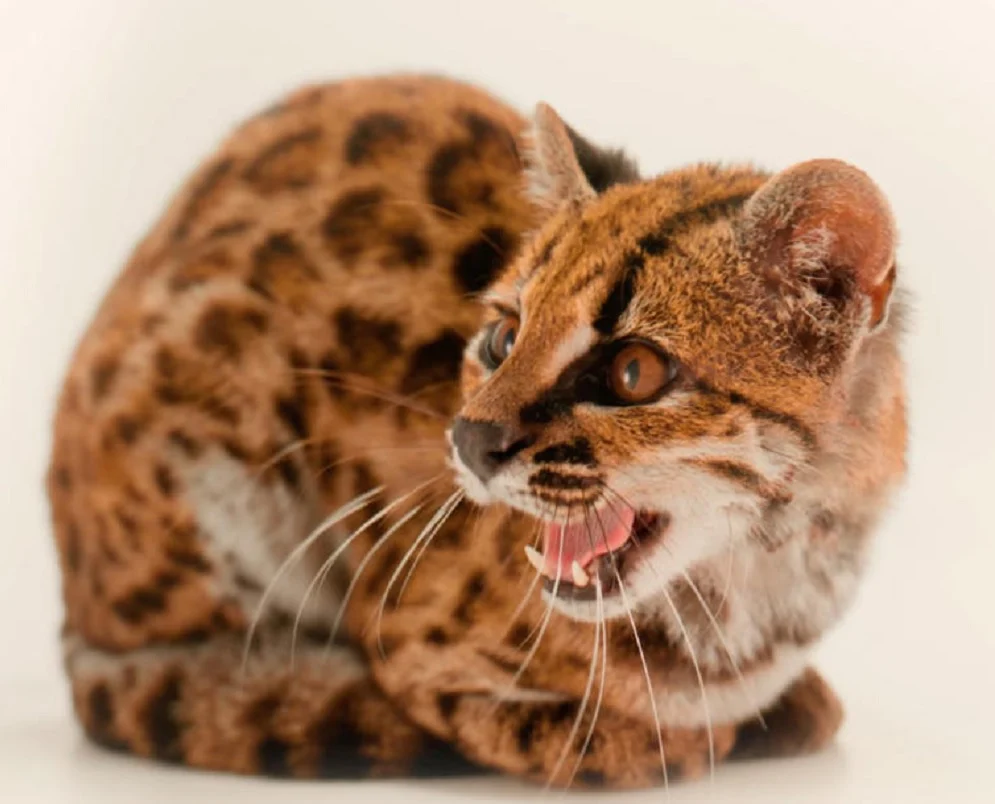
In a landmark discovery that has sent ripples through the international biological community, scientists have formally identified a new species of wild cat, the Leopardus tilcayo, inhabiting the dense, mist-shrouded forests of Bolivia’s Yungas region. This finding marks the first time in over a century that a new species of living cat has been scientifically named and classified, providing a rare glimpse into the hidden biodiversity of one of South America’s most elusive ecosystems. The discovery not only adds a new branch to the feline family tree but also underscores the critical need for continued exploration and conservation in the tropical Andean landscapes.
A Taxonomic Milestone in Felid Research
The identification of Leopardus tilcayo represents the culmination of years of rigorous taxonomic research. For decades, the small, spotted felines of the Americas—often referred to as "tiger cats"—were grouped under a single taxonomic umbrella. However, persistent questions regarding morphological and genetic variations led an international team of researchers to re-examine the specimens. The resulting study, published in the scientific community, confirms that what was once perceived as a single, widespread species is, in fact, a complex of five distinct, genetically unique species.
The Leopardus tilcayo, locally known as the "Tilcayo," is remarkably diminutive. Standing at roughly 46 centimeters in length and weighing a mere 1.4 kilograms, the feline is smaller than the average domestic house cat. Its physical characteristics are distinct, featuring a light-brown coat adorned with irregular, rosette-shaped spots that allow it to blend seamlessly into the dappled light of the cloud forests.
The Chronology of Discovery
The journey to identifying the Tilcayo began with a realization that the feline populations in the Bolivian Yungas did not align perfectly with existing descriptions of the oncilla or other related tiger cat species. Paola Nogales-Ascarrunz, a National Geographic Explorer and a lead author of the study, noted that the visual inconsistencies were the initial catalyst for the investigation.
The process of validation was methodical and extensive:
- Initial Observation (2018–2020): Field researchers noticed discrepancies in the coat patterns and physical dimensions of specimens in the Yungas region compared to those in Brazil or Colombia.
- Specimen Collection and Museum Review: Researchers cross-referenced their findings with eight historical specimens housed in museums across the continent, some of which had been misclassified for decades.
- Genetic Sequencing (2021–2025): The team performed comprehensive DNA analysis on 38 individual cats from across South America. By comparing the mitochondrial and nuclear DNA, the researchers were able to delineate clear evolutionary boundaries between the five species.
- Formal Description (2026): After peer review and extensive morphological analysis, the team officially described Leopardus tilcayo as a new species, distinguishing it from its closest relatives through its unique genetic signature and ecological niche.
Comparative Data and Morphological Analysis
The classification of the Leopardus tilcayo rests on a foundation of comparative biology. In the genus Leopardus, which includes iconic cats like the ocelot and the margay, the tiger cat group—previously known as Leopardus tigrinus—has long been a source of confusion for mammalogists.
Current data suggests that the five species within this complex, including the newly identified Tilcayo, evolved in relative isolation due to the geographical barriers presented by the Andes Mountains and major river systems. Unlike the larger felids, these small cats have highly specialized diets and habitat requirements, which likely contributed to their rapid speciation.
The weight and size metrics provided by the research team highlight the extreme miniaturization of the Tilcayo. In comparison, the Southern Tiger Cat (Leopardus guttulus) and the Northern Tiger Cat (Leopardus tigrinus) exhibit slight differences in limb length and skull shape, further confirming that the Tilcayo is not merely a regional variation, but a genetically distinct lineage that has been diverging for hundreds of thousands of years.
Official Reactions and Scientific Significance
The scientific community has lauded the discovery as a "triumph of modern molecular biology." Dr. Eduardo Echeverria, a biologist specializing in neotropical felids, noted that the discovery is a reminder that the world’s most biodiverse regions still hold many secrets. "We have been looking at these animals for a long time, but we haven’t been looking closely enough," Echeverria stated. "The DNA data is incontrovertible. This is a new chapter in the history of South American wildlife."
For the Bolivian authorities, the discovery has sparked immediate interest in habitat protection. The Yungas region is currently under pressure from agricultural expansion and climate change. Local environmental agencies are already discussing potential corridors to protect the limited range of the Tilcayo, which appears to be confined to the high-altitude cloud forests.
Broader Implications: Conservation and Ecology
The identification of the Leopardus tilcayo carries significant weight for conservation policy. When a species is newly described, it is often immediately flagged as "data deficient" or "threatened" by organizations such as the International Union for Conservation of Nature (IUCN). Because the Tilcayo has a restricted range, it is highly likely that it will be classified as vulnerable or endangered in the near future.
"The discovery of a new species is not just a taxonomic exercise," says Dr. Nogales-Ascarrunz. "It changes the landscape of conservation. If we realize that a group of cats is actually five species instead of one, we have to re-evaluate the population size, the threats, and the protection status of each one individually. A species that seemed common yesterday may be critically rare today."
The implications extend to the broader understanding of evolutionary biology in the Andes. The "sky island" nature of the Yungas—where isolated patches of forest are separated by deep valleys—acts as an evolutionary laboratory. The Tilcayo serves as a sentinel species; its health is inextricably linked to the integrity of the cloud forest ecosystem. If the cloud cover shifts due to global warming, the specialized habitat of the Tilcayo could vanish, potentially leading to extinction before we fully understand the creature’s life cycle.
The Path Forward
With the official naming of Leopardus tilcayo, the next phase of research will focus on behavioral ecology. Very little is known about the cat’s breeding habits, dietary preferences, or social structure. Preliminary camera-trap footage suggests that the cat is primarily nocturnal and solitary, relying on its keen sense of smell and hearing to navigate the dense, damp undergrowth of its home.
Future expeditions are being planned to conduct population surveys. Using non-invasive methods such as fecal DNA analysis and motion-activated thermal imaging, scientists hope to establish an accurate estimate of the total population. This data will be vital for the Bolivian government as they weigh the economic demands of regional development against the ecological necessity of preserving a unique piece of global heritage.
As the scientific community celebrates this monumental find, the case of the Leopardus tilcayo serves as a poignant reminder of the fragility of the natural world. In an era where biodiversity loss is a global concern, finding a new species is a beacon of hope. It suggests that while the impact of human activity is profound, the resilience and complexity of nature remain vast and largely unexplored. The Tilcayo is no longer just a ghost in the Bolivian mist; it is now a recognized member of the global biological family, and its future is a shared responsibility of the international community.