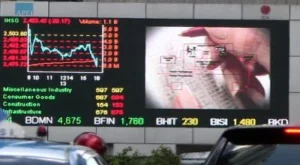
Facing mounting capital outflows driven by shifting global financial conditions and intensifying market volatility, the Indonesian government took decisive action by implementing a key element of its Crisis Management Protocol (CMP). The Ministry of Finance executed a direct buyback of government bonds, known locally as Surat Utang Negara (SUN), totaling Rp100 billion. This intervention, carried out in the secondary market through the dealing room facilities of the Directorate General of Debt Management (DJPU), underscores the state’s proactive stance in maintaining domestic financial stability during periods of external pressure.
The strategic maneuver comes at a time when emerging market economies are grappling with sudden shifts in investor sentiment. As foreign capital continues to recede from domestic equity and fixed-income markets, the implementation of structured crisis protocols provides a critical cushion. By absorbing supply in the secondary market, the government aims to mitigate severe price disruptions, restore market confidence, and ensure the continued smooth functioning of Indonesia’s sovereign debt framework.
Chronology of the Intervention and Transaction Specifics
The execution of the buyback operation was formally announced through an official press release issued by Yudi Pramadi, Head of the Bureau at the Ministry of Finance, in Jakarta. According to the regulatory disclosure, the transaction took place on Wednesday, September 14, 2011, reflecting immediate responses to prevailing liquidity pressures in the secondary market.
The specific financial instruments involved in the operation centered on a single series of government securities. The Ministry of Finance repurchased SUN series FR0030, which carried a total nominal value of Rp100 billion. This particular series features a coupon rate of 10.75 percent and was transacted at a weighted average price of 1,118.10 percent. Series FR0030 carries a scheduled maturity date of May 15, 2016.
Settlement procedures for the direct transaction were scheduled to take place on September 16, 2011, adhering strictly to prevailing market regulations and operational timelines. In accordance with standard sovereign debt management practices, the government securities successfully repurchased through this intervention will be formally declared fully paid, retired, and rendered invalid, effectively reducing the outstanding volume of that specific series in circulation.
Regulatory Framework and Crisis Management Protocols
The legal foundation for executing direct sovereign bond transactions is explicitly outlined within national financial regulations. The operation was conducted under the authority of Finance Minister Regulation (Peraturan Menteri Keuangan or PMK) Number 92/PMK.08/2010. This regulation serves as an amendment to the preceding PMK Number 170/PMK.08/2008, which governs direct transactions involving State Treasury Notes and Government Bonds.
These regulatory instruments empower the Ministry of Finance to act decisively during periods of market stress. The Crisis Management Protocol (CMP) provides a structured decision-making framework designed to identify, monitor, and respond to systemic financial risks before they escalate into broader economic instability. By utilizing the DJPU dealing room for direct intervention, authorities can bypass standard auction mechanisms when rapid execution is required to stabilize yields and support market liquidity.
Broader Economic Context: Capital Outflows and Market Pressures
The decision to execute the Rp100 billion buyback did not occur in a vacuum; rather, it was a direct reaction to deteriorating conditions across domestic financial markets. In the days leading up to the announcement, Indonesian financial markets experienced a sharp acceleration in foreign capital flight.
Market data from the period highlighted an intensifying trend of foreign investor divestment, particularly within the domestic equity market. Net foreign selling surged significantly, reaching a notable volume of Rp1.345 trillion. This exodus of foreign capital was largely attributed to a combination of external macroeconomic headwinds, including escalating debt concerns in Europe, shifting monetary policy expectations in advanced economies, and a general global flight to safety among institutional investors.
When foreign capital exits emerging markets at an accelerated pace, local asset prices frequently experience downward pressure, sovereign bond yields spike, and domestic liquidity tightens. For a developing economy reliant on foreign portfolio inflows to finance current account dynamics and budget needs, such volatility poses a formidable challenge. The Ministry of Finance’s intervention was designed precisely to counteract these adverse dynamics, signaling to market participants that the state possesses both the tools and the resolve to manage liquidity strains effectively.
Implications for Sovereign Debt Management and Investor Sentiment
The execution of a targeted sovereign bond buyback carries profound implications for both the management of public debt and overall market psychology. From a debt management perspective, repurchasing debt instruments ahead of maturity allows the government to optimize its debt profile, reduce future refinancing risks, and manage interest rate burdens more efficiently. Although the initial transaction size of Rp100 billion is relatively modest within the broader context of Indonesia’s total outstanding sovereign debt, its symbolic and signaling value is substantial.
By stepping into the secondary market as a buyer during a period of distress, the government provides a clear price floor for securities, which can help prevent cascading sell-offs and panic pricing among institutional and retail investors. Furthermore, the transparent application of the Crisis Management Protocol reinforces institutional credibility, demonstrating that regulatory frameworks established to handle market shocks are operational and effective when deployed.
Market analysts note that while direct interventions like the DJPU dealing room buybacks cannot single-handedly reverse global macroeconomic trends, they play an essential role in smoothing out short-term volatility. Maintaining orderly market conditions ensures that primary auctions for new government debt can continue to proceed with predictable participation and manageable yields, safeguarding the fiscal integrity of the state budget.
As global financial markets remain interconnected and susceptible to sudden sentiment shifts, the events of September 2011 serve as an important case study in modern emerging market debt management. The combination of clear regulatory authority, rapid operational execution, and transparent communication remains the cornerstone of Indonesia’s strategy to navigate external financial shocks while preserving long-term macroeconomic stability.