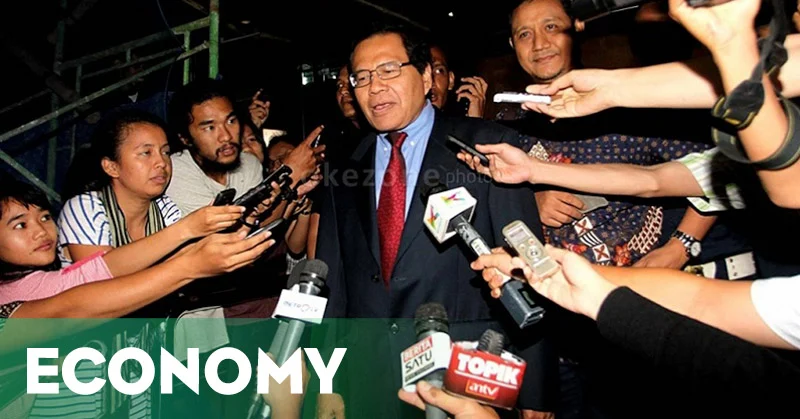
JAKARTA — In a striking display of diplomatic evasion, Coordinating Minister for Maritime Affairs and Resources Rizal Ramli chose silence over commentary regarding the definitive dismantling of Pertamina Energy Trading Limited (Petral), a milestone corporate governance decision that marked the end of an era for Indonesia’s state-owned energy sector. The official reticence occurred on a Monday afternoon in November 2015, immediately following a high-level administrative meeting at his ministry headquarters in central Jakarta.
Despite overseeing the energy portfolio that houses the Ministry of Energy and Mineral Resources (ESDM)—the very institution responsible for officially pulling the plug on the controversial trading arm—Ramli deflected all media queries. As reporters pressed for his perspective on the complex machinations behind Petral’s liquidation and the explosive findings of third-party interference in the procurement of crude oil and refined petroleum products, the veteran economic policymaker merely raised both hands with an enigmatic smile. Flanked by security and administrative aides, he bypassed the press corps and hastened toward a waiting vehicle, citing an urgent command performance at the State Palace to welcome Italian President Sergio Mattarella on a formal state visit.
This calculated deflection underscored the high-stakes political sensitivities, corporate intrigue, and sweeping institutional reforms surrounding the eradication of Petral, a Singapore-based subsidiary that had long been viewed as the opaque epicenter of Indonesia’s oil mafia syndicates.
The Anatomy of a Corporate Death: Understanding the Petral Controversy
To comprehend the significance of Rizal Ramli’s silence and the broader implications of Petral’s dissolution, one must examine the institutional architecture that governed Indonesia’s oil imports for decades. Established as a trading vehicle for PT Pertamina (Persero), Petral was ostensibly created to facilitate the procurement of crude oil and petroleum products on the international market to meet domestic energy shortfalls in Southeast Asia’s largest economy.
However, over the years, Petral evolved into a massive operational black box. Critics, energy experts, and government reformers frequently targeted the entity for its lack of transparency, susceptibility to political capture, and inflated procurement costs. Because Indonesia had transitioned from a net oil exporter to a net importer, the country relied heavily on imported crude and fuel to satisfy surging domestic demand. Petral and its subsidiary, Pertamina Energy Services Pte. Ltd. (PES), headquartered in Singapore, sat squarely at the nexus of these multi-billion-dollar transactions.
The tipping point for the subsidiary arrived when comprehensive governance audits commissioned by the Indonesian government exposed deep-seated systemic flaws. Investigators revealed that PES was heavily influenced by unauthorized third-party brokers, middlemen, and shadowy intermediaries who manipulated tender processes, drove up transaction premiums, and systematically bypassed direct government-to-government or major producer negotiations. These revelations transformed Petral from a routine corporate subsidiary into a national symbol of systemic corruption and resource inefficiency.
A Chronology of Reform: From Audit to Elimination
The dismantling of Petral did not happen in a vacuum; it was the culmination of mounting public pressure, strategic political will, and rigorous investigative auditing executed during the early administration of President Joko Widodo.
The timeline of Petral’s final chapter unfolded through several critical phases:
- Late 2014 to Early 2015: Following the inauguration of President Joko Widodo and Vice President Jusuf Kalla, the new administration launched a sweeping audit of state-owned enterprises, prioritizing the energy sector to curb massive trade deficits and stamp out rent-seeking behaviors. The governance review focused sharply on Pertamina’s upstream and downstream subsidiaries.
- May 2015: The Ministry of Energy and Mineral Resources, alongside the newly appointed leadership of PT Pertamina, publicly signaled the restructuring of Petral. Authorities announced that Petral’s trading functions would be systematically absorbed back into the parent company in Jakarta to ensure absolute transparency, direct oversight, and accountability.
- August 2015: Independent forensic audits conducted by international auditors confirmed widespread irregularities. The findings verified that third-party intermediaries had systematically entrenched themselves within PES’s procurement chain, heavily skewing pricing models and costing the Indonesian state billions of dollars over the years.
- November 2015: The Ministry of Energy and Mineral Resources officially announced the complete and irreversible dissolution of Petral and its Singaporean arm, PES. All remaining contractual obligations were ordered to be wound down, and trading responsibilities were formally transferred to Integrated Supply Chain (ISC), a newly established internal division within Pertamina designed to operate under strict domestic regulatory frameworks and transparency mandates.
The Economic Implications of Internalizing Energy Trading
The liquidation of Petral and the subsequent transfer of trading operations to Pertamina’s Integrated Supply Chain division carried profound economic and geopolitical ramifications for Indonesia. For decades, the reliance on an offshore trading hub in Singapore meant that crucial decisions regarding multi-billion-dollar energy purchases occurred outside the direct purview of Indonesian tax authorities, anti-corruption watchdogs, and domestic legal frameworks.
By bringing trading activities back to Jakarta, the Indonesian government aimed to achieve several strategic objectives:
- Cost Reduction and Efficiency: Eliminating the layer of third-party brokers and intermediaries instantly removed unnecessary transactional premiums. Direct engagement with National Oil Companies (NOCs) and major international producers allowed Pertamina to secure more competitive pricing for crude oil and refined fuels like Premium gasoline and Diesel (Solar).
- Enhanced Transparency: Operating under Indonesian jurisdiction subjected the energy procurement process to the scrutiny of the Supreme Audit Agency (BPK), the Corruption Eradication Commission (KPK), and public disclosure laws. This dramatically reduced the maneuverability of rent-seekers.
- Strengthening Foreign Exchange Reserves: By streamlining import channels and curbing systemic leakages, the government preserved vital foreign exchange reserves, easing pressure on the Indonesian rupiah during periods of global financial volatility.
- Cultural Transformation within State-Owned Enterprises: The move served as a powerful signal to other bureaucratic and corporate arms of the state that entrenched practices of rent extraction would no longer be tolerated under the Widodo administration.
Official Stances and Political Dynamics
While Coordinating Minister Rizal Ramli maintained a guarded silence on the specific day of the announcement—preferring to let the formal institutional declarations speak for themselves—his broader policy posture throughout his tenure was aggressively reform-minded. Ramli, known for his vocal opposition to monopolistic practices and bureaucratic inefficiency, had consistently advocated for sweeping structural changes within the energy sector. His reluctance to engage with journalists on November 9, 2015, was interpreted by political analysts not as an indication of hesitation regarding the policy itself, but rather as a tactical choice to avoid preempting diplomatic schedules and to allow the technical execution of the dissolution to proceed without political noise.
Meanwhile, representatives from the Ministry of Energy and Mineral Resources emphasized that the closure of Petral was irreversible and legally binding. Pertamina’s corporate management echoed this sentiment, assuring the public and international market stakeholders that the transition of trading portfolios to the Integrated Supply Chain division was proceeding smoothly without disrupting national fuel security or supply chain continuity.
Industry observers and energy economists widely praised the political courage required to shutter Petral, noting that previous administrations had contemplated similar reforms for years but backed down due to the formidable political and financial clout wielded by beneficiaries of the status quo.
Broader Impact on Indonesia’s Energy Landscape
The permanent closure of Pertamina Energy Trading Limited fundamentally reshaped how Indonesia interacts with global energy markets. It established a precedent for corporate governance reform across other state-owned enterprises, proving that systemic transformation was achievable even when confronted with entrenched bureaucratic and commercial resistance.
As Indonesia continued to navigate its energy transition in the years following the 2015 dissolution, the foundational transparency established by moving trading operations onshore provided a more resilient platform for addressing subsequent energy security challenges. Although structural issues related to domestic refining capacity and subsidy management persisted, the elimination of the Petral bottleneck removed one of the most persistent drains on the nation’s fiscal health.
Ultimately, while Rizal Ramli’s silent departure from his office left reporters without a soundbite, the institutional action he helped coordinate spoke far louder than words. The death of Petral signaled the dawn of a new era of accountability in Indonesia’s state-backed economic architecture—one where transparency superseded opacity, and national interest prevailed over brokerage cartels.