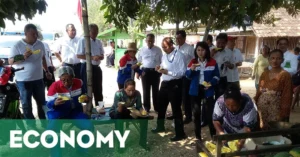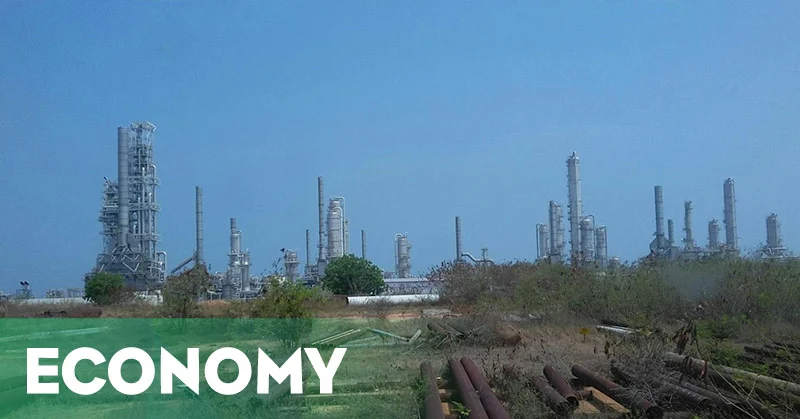
President Joko Widodo traveled to Tuban, East Java, to conduct a comprehensive on-site inspection of the Trans Pacific Petrochemical Indotama (TPPI) refinery, marking a critical milestone in Indonesia’s ongoing efforts to secure domestic energy independence. The presidential visit, which took place on Wednesday, November 11, 2015, underscored the high-level government attention given to domestic refining assets capable of reducing the nation’s heavy reliance on imported fuels. President Widodo was accompanied by several key government and corporate officials, including State-Owned Enterprises (SOE) Minister Rini Soemarno, Pertamina President Director Dwi Soetijpto, and Director General of Oil and Gas IGN Wiratmaja Puja.
The primary objective of the inspection was to evaluate the operational status of the TPPI facility following its official reactivation by state-owned energy giant PT Pertamina (Persero). The plant had faced years of financial turbulence, legal complexities, and operational dormancy before the government intervened to bring the facility back under state control and operational readiness. By integrating the refinery into Pertamina’s downstream and upstream supply chain network, the administration aimed to stabilize domestic fuel supplies, conserve foreign exchange reserves, and strengthen national energy security.
Background Context and Historical Significance of the TPPI Facility
The Trans Pacific Petrochemical Indotama refinery in Tuban has long been recognized as one of the most strategic petrochemical and refining complexes in Southeast Asia. Conceptualized decades prior, the facility was designed not only to produce finished petroleum products such as Premium gasoline, diesel, and kerosene, but also to yield vital petrochemical feedstocks including paraxylene, benzene, orthoxylene, and liquefied petroleum gas (LPG). These petrochemical products serve as essential raw materials for Indonesia’s domestic manufacturing, plastics, and textile industries, reducing the need for costly industrial imports across multiple sectors.
However, despite its immense strategic potential, the TPPI complex struggled with prolonged financial liabilities, complex ownership disputes, and operational halts. For years, the facility operated intermittently or remained completely shut down, forcing Indonesia to rely heavily on finished fuel imports to meet surging domestic demand. The reliance on imported fuel exposed the state budget and the national trade balance to severe vulnerabilities, particularly during periods of high global crude oil prices.
Recognizing these vulnerabilities, the administration under President Joko Widodo prioritized the rescue and reactivation of idle strategic assets. Through a coordinated effort involving the Ministry of BUMN, regulatory bodies, and Pertamina, a financial and operational restructuring scheme was engineered. This intervention allowed Pertamina to assume control of the facility, clearing the path for the resumption of refining operations and setting a precedent for state-led recovery of critical national infrastructure.
Chronology of the Reactivation and Presidential Inspection
The journey toward the full operational revival of the TPPI Tuban refinery involved a meticulous sequence of regulatory approvals, debt restructuring agreements, and technical overhauls managed primarily by Pertamina.
In the months leading up to the November 2015 presidential inspection, Pertamina worked intensively to resolve outstanding legal and financial hurdles associated with TPPI’s debt obligations to state institutions, including PT Perusahaan Pengelola Aset (PPA) and SKK Migas. Once the structural framework was established, technical teams executed comprehensive safety checks, pipeline clearances, and maintenance protocols to restart the complex units safely.
By late 2015, the refinery successfully commenced production runs, feeding crude oil and condensate into its distillation and processing units. The successful resumption paved the way for the official high-level visit on November 11, 2015.
During the visit, President Joko Widodo toured the sprawling refinery complex, inspecting the control rooms, processing units, and storage terminals. The presidential entourage engaged directly with engineers, plant operators, and corporate leadership to assess the efficiency of the restart phase. The presence of Minister Rini Soemarno and Pertamina CEO Dwi Soetijpto highlighted the cross-sectoral collaboration required to bring the facility back to life, signaling to local and international markets that the Indonesian government was fully committed to optimizing domestic energy processing capabilities.
Strategic Data and Financial Impact
The economic rationale behind the revitalization of the TPPI Tuban refinery is anchored in impressive production figures and substantial foreign exchange savings. According to official data released by Pertamina during the presidential visit, the reactivation of the facility yielded immediate and quantifiable benefits for the national economy.

Wianda Pusponegoro, who served as Vice President of Corporate Communication at Pertamina during the event, detailed the operational capacity and financial dividends of the renewed facility. "This refinery is capable of cutting imported supplies of Premium-grade fuel (RON 88) by up to 20 percent, with a total production output reaching 61,000 barrels per day," Wianda stated during a press briefing at the Tuban complex.
To contextualize this output within the broader macroeconomic framework, energy analysts evaluated the savings based on prevailing global market prices. Assuming an average crude and gasoline price benchmark of USD 60 per barrel, the domestic production generated by TPPI translated to an estimated annual import substitution savings of USD 1.2 billion, which equated to approximately IDR 16 trillion at the time.
Beyond finished motor fuels, the refinery’s petrochemical output provided critical relief to domestic manufacturers. By producing paraxylene and benzene locally, Indonesian polyester and plastics producers secured a stable, domestic source of raw materials, insulating them from global supply chain disruptions and foreign exchange fluctuations.
Official Responses and Stakeholder Perspectives
The successful restart of the TPPI facility drew widespread praise from government officials, industry experts, and economic analysts, who viewed the development as a major triumph for state-managed industrial policy.
President Joko Widodo emphasized that the revitalization of idle national assets is a core mandate for state-owned enterprises. The administration maintained that BUMNs must act as agents of development and economic stabilization rather than passive corporate entities. By leveraging Pertamina’s balance sheet and operational expertise, the government demonstrated a viable blueprint for rescuing distressed strategic infrastructure without relying entirely on foreign direct investment or protracted legal liquidation processes.
Pertamina leadership reiterated their commitment to maintaining high operational standards at the Tuban complex. Executives stressed that the integration of TPPI into Pertamina’s refining footprint—alongside facilities in Cilacap, Balongan, Dumai, Plaju, Balikpapan, and Kasim—significantly enhanced the company’s supply chain flexibility. This integration allowed Pertamina to optimize crude procurement, balance domestic product inventories more effectively, and respond swiftly to regional demand shifts across the Indonesian archipelago.
Energy sector observers also noted that the move aligned with broader national policy goals aimed at reducing the Current Account Deficit (CAD). Since fuel imports historically constituted one of the largest drains on Indonesia’s foreign exchange reserves, curbing these imports through domestic refining directly strengthened the rupiah and improved macroeconomic resilience.
Broader Implications for Indonesia’s Energy Landscape
The inspection of the TPPI Tuban refinery by President Joko Widodo and his cabinet ministers served as a watershed moment for Indonesia’s energy policy in the mid-2010s, establishing long-term implications that extended far beyond the immediate production metrics.
First, the event reinforced the strategic paradigm shift toward domestic value addition. Rather than exporting raw condensate or crude oil and subsequently re-importing finished petroleum products at a premium, the government solidified its stance that national resources should be processed domestically to maximize multiplier effects across the economy.
Second, the successful turnaround of TPPI acted as a catalyst for subsequent modernization projects across Indonesia’s downstream sector. Buoyed by the momentum of the Tuban reactivation, Pertamina advanced its Refinery Development Master Plan (RDMP) and Grass Root Refinery (GRR) initiatives, aiming to upgrade existing facilities and construct new complexes to meet future environmental standards and rising domestic consumption demands.
Finally, the operational stability achieved at TPPI provided a psychological and economic boost to the domestic energy market. It proved that complex, debt-laden state assets could be successfully rehabilitated through decisive political will, regulatory harmonization, and competent corporate management. As the presidential delegation concluded its inspection and departed Tuban, the revived refinery stood as a tangible symbol of Indonesia’s persistent drive toward energy independence, fiscal prudence, and sustainable industrial growth.