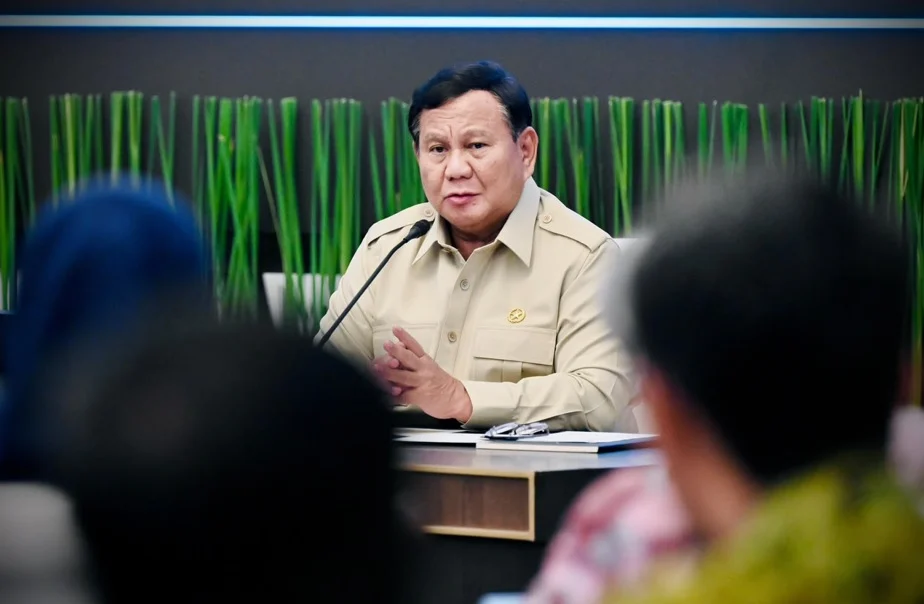
President Prabowo Subianto has issued a stern directive calling for an immediate overhaul of regional regulations that permit the burning of land, labeling such policies as deceptive and a major catalyst for the country’s recurring forest and land fire (Karhutla) crises. During a high-level mitigation meeting held at the Presidential Palace in Jakarta on Friday, September 25, 2026, the President emphasized that the persistence of local bylaws allowing small-scale burning is fundamentally incompatible with national environmental safety standards.
The President’s comments were directed specifically at eight regional regulations (Perda) currently in effect at the district level, which include provisions allowing residents to clear up to two hectares of land through controlled burning. President Prabowo argued that these "loopholes" are being exploited, leading to uncontrolled infernos that devastate peatlands and threaten national air quality.
The Legislative Loophole and the President’s Critique
At the heart of the controversy is the interpretation of traditional agricultural practices versus modern environmental legal frameworks. For years, several provincial and district governments in Indonesia have cited the need to accommodate smallholder farmers who lack the capital for mechanical land clearing as the rationale for permitting limited burning. However, the President categorically rejected this justification, characterizing it as a systemic failure that facilitates environmental destruction.
"We must correct these regulations immediately," President Prabowo stated during the briefing. "It is absurd that eight regencies still cling to the loophole that allows burning two hectares of land. This is a form of deception against the public and the environment. We cannot allow local regulations to undermine national efforts to protect our peatlands and forests."
The President’s frustration stems from the technical reality of fire behavior in tropical environments. Experts have long warned that "controlled" burning in peatland areas is a misnomer; the high carbon content of the soil, combined with seasonal drought, means that small fires frequently escape containment, spreading rapidly through underground peat layers where they become nearly impossible to extinguish.
Chronology of the Karhutla Crisis in 2026
The year 2026 has been particularly challenging for Indonesia’s environmental agencies. Since the onset of the dry season in May, the National Disaster Management Agency (BNPB) has recorded a significant spike in hotspots across the islands of Sumatra and Kalimantan.
- May 2026: Initial reports of early-season hotspots emerged, prompting the Ministry of Environment and Forestry to issue early warnings to high-risk provinces.
- July 2026: Smoke haze began to affect air quality in several regencies, leading to the mobilization of water-bombing helicopters.
- August 2026: Satellite monitoring revealed that while large-scale industrial plantations had largely complied with no-burn policies, smallholder clearing operations accounted for nearly 60% of new fire detections.
- September 25, 2026: President Prabowo convenes the emergency mitigation meeting, resulting in the public rebuke of local administrative loopholes.
Supporting Data and Environmental Impact
Data from the Ministry of Environment and Forestry indicates that forest and land fires are the primary drivers of Indonesia’s annual carbon emissions. In previous cycles, massive fires have not only destroyed biodiversity but have also resulted in billions of dollars in economic losses due to the suspension of transportation, the impact on public health, and the damage to agricultural productivity.
Peatlands act as a vital global carbon sink. When these lands are burned, they release centuries of stored carbon into the atmosphere, contributing significantly to global climate change. Scientific analysis suggests that even small, two-hectare fires, when multiplied by thousands of occurrences across a province, create a cumulative environmental impact equivalent to large-scale industrial deforestation.

Critics of the current system point out that the "two-hectare rule" was originally intended to support indigenous and local livelihoods but has since been misused by land speculators who use the cover of small-scale burning to clear larger areas illegally. By legitimizing any form of burning, the Perda create a "gray zone" that makes enforcement by local police and environmental agencies difficult.
Official Responses and Regulatory Implications
The directive from the Presidential Palace is expected to trigger a nationwide review of all regional bylaws related to land clearing. The Ministry of Home Affairs is likely to be tasked with drafting a circular that mandates the revocation or immediate amendment of any Perda that permits the use of fire for land preparation.
Legal experts have noted that under the current hierarchy of laws, national regulations—such as those stipulated in the Law on Environmental Protection and Management—should supersede local bylaws. However, in practice, local governments often maintain these rules to appease local political constituencies. The President’s intervention signals a shift toward a more centralized approach to environmental enforcement, where the central government is prepared to challenge regional administrations that fail to align with national sustainability goals.
"The logic of allowing fire as a tool for clearing is outdated," said a climate policy analyst who requested anonymity. "By forcing a review of these eight regencies, the President is signaling that the era of ‘permissive’ environmental management is over. The challenge will be providing alternative, cost-effective mechanical solutions for the farmers who were previously reliant on fire."
Broader Economic and Global Implications
The environmental crisis in Indonesia does not occur in a vacuum. As a major producer of palm oil and pulp and paper products, Indonesia faces intense scrutiny from global markets and environmental watchdogs. Regulations that appear to condone forest burning can lead to trade barriers and international sanctions, particularly from the European Union, which has implemented stringent deforestation-free supply chain requirements.
By taking a firm stance against the loopholes, the Indonesian government is also attempting to bolster its international reputation as a serious participant in global climate negotiations. The commitment to reducing land fires is a cornerstone of the nation’s contribution to the Paris Agreement and its long-term Net Zero goals.
Next Steps for Policy Implementation
Moving forward, the focus will shift from rhetoric to administrative enforcement. The following steps are expected in the coming weeks:
- Administrative Audit: A comprehensive audit of all 514 regencies and cities in Indonesia to identify any other "hidden" provisions that allow for land burning.
- Economic Incentives: The Ministry of Agriculture and the Ministry of Environment and Forestry are expected to announce a subsidy program to provide smallholder farmers with access to tractors and other mechanical clearing equipment to replace the need for fire.
- Strict Enforcement: Enhanced patrols by the Manggala Agni (the national fire brigade) and the police to ensure that the revocation of these bylaws is matched by an increase in surveillance.
- Community Engagement: A national education campaign to inform farmers about the long-term dangers of soil degradation caused by burning and the benefits of sustainable agricultural practices.
President Prabowo’s address marks a critical juncture in the government’s approach to environmental governance. By directly challenging the legislative framework that has allowed these fires to persist, the administration is moving toward a strategy that prioritizes national ecological stability over local administrative convenience. As the country moves deeper into the dry season, the efficacy of these new directives will be tested by the reality on the ground, but the message from the Palace is clear: the era of burning land as a quick-fix solution is effectively at an end.