The government of Indonesia has issued a resolute call for the international community to shift its focus from mere conflict mitigation to the comprehensive reconstruction of the Gaza Strip, emphasizing that peace is hollow without the restoration of basic human dignity. Speaking at the High-Level Roundtable on Gaza Early Recovery, titled "From Sharm El-Sheikh to Phase II – Consolidating Peace and Early Recovery," held on the sidelines of the 81st United Nations General Assembly in New York, Indonesian Minister of Foreign Affairs Sugiono articulated a vision where humanitarian aid serves as the bridge to long-term stability and economic self-sufficiency for Palestinians.
The Imperative of Early Recovery
Minister Sugiono’s address marked a pivotal shift in diplomatic discourse, moving beyond the traditional ceasefire-focused narrative. While Indonesia continues to champion an immediate and permanent cessation of hostilities as the prerequisite for any progress, the government now argues that the "early recovery" phase must commence in parallel with security efforts.
"For the people of Gaza, peace must signify far more than the mere absence of violence," Sugiono stated during the session on Friday, September 25, 2026. "True peace is defined by the ability of a population to rebuild their lives, restore their social fabric, and live with the dignity that is inherently theirs under international law."
The Indonesian delegation emphasized that the humanitarian crisis in Gaza has evolved into a systemic collapse of civil society. Without functional schools, hospitals, and basic infrastructure, the region risks becoming a perpetual aid-dependent zone, a scenario that Jakarta argues is unsustainable and morally indefensible.
Contextualizing the Conflict: A Chronological Overview
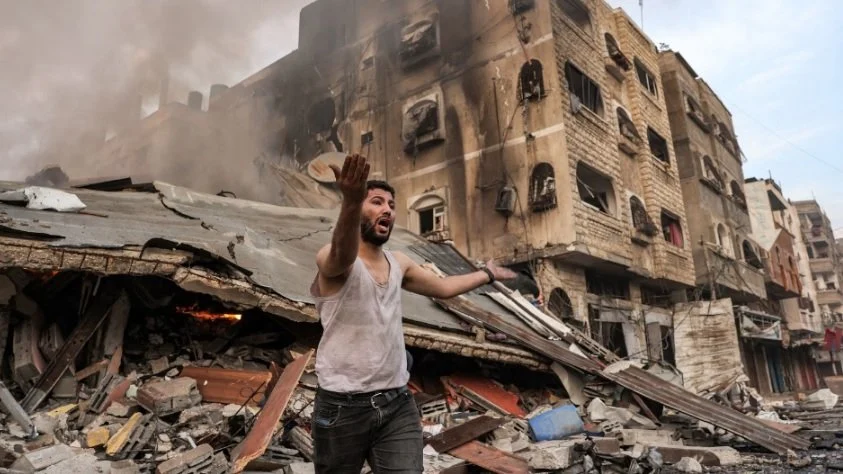
To understand the urgency of the Minister’s message, one must look at the trajectory of the conflict that has decimated Gaza’s landscape. Since the escalation in late 2023, the physical infrastructure of the enclave has faced unprecedented destruction. By the time of the 81st UN General Assembly in September 2026, the cumulative impact of three years of active conflict had left nearly 70 percent of housing units either destroyed or rendered uninhabitable.
The chronology of this crisis is punctuated by failed diplomatic breakthroughs, starting with the initial mediation efforts in late 2023, which saw temporary humanitarian pauses that failed to transition into a durable political solution. By 2024, international organizations reported that the collapse of the energy grid and the destruction of water treatment facilities had effectively erased decades of development. The 2025 period was characterized by a stalemate, where aid deliveries were hampered by both security concerns and the total disintegration of local administrative capacity.
The current diplomatic push in 2026 represents a coordinated effort by middle-power nations, including Indonesia, to bypass the political gridlock by focusing on technical and structural recovery programs, often referred to as "Phase II" of the post-conflict strategy.
Economic and Humanitarian Data: The Scale of Ruin
The scale of the destruction necessitates a recovery plan that goes beyond traditional humanitarian assistance. According to data synthesized by various international agencies and cited during the Roundtable, the reconstruction requirements for Gaza are estimated to reach tens of billions of dollars.
- Infrastructure: Over 80 percent of the commercial and industrial sector has been incapacitated. The loss of electrical capacity has made the restoration of health services nearly impossible without constant external fuel shipments.
- Education: UNICEF and other partners have noted that more than 600,000 children in Gaza have faced prolonged disruptions to their schooling, creating a "lost generation" scenario that poses a long-term threat to the region’s stability.
- Public Health: The destruction of sanitation infrastructure has led to the resurgence of preventable diseases, placing an overwhelming burden on the remaining, albeit severely depleted, medical facilities.
Indonesia’s position is that these data points are not just statistics but indicators of a systemic failure that requires an "indigenous" solution. Minister Sugiono specifically highlighted the role of the National Committee for the Administration of Gaza, arguing that local governance must be empowered to manage these recovery funds and projects to ensure transparency and accountability.
The Palestinian-Led Framework
A cornerstone of the Indonesian proposal is the doctrine of "Palestinian-led and Palestinian-owned" recovery. This approach seeks to avoid the pitfalls of external reconstruction models that have historically struggled with a lack of local legitimacy or coordination.

"The entire process of reconstruction must be directed by the people of Palestine," Sugiono reiterated. "External actors can provide the capital, the technical expertise, and the diplomatic cover, but the vision for Gaza’s future must be authored by those who live there."
This stance resonates with many Global South nations that have expressed frustration with the "top-down" approach often favored by major powers. By advocating for the National Committee for the Administration of Gaza to play a central role, Indonesia is attempting to lay the groundwork for a transition from a security-based administration to a civil-led governance model.
Diplomatic Implications and Regional Reactions
The Indonesian proposal, while broadly supported by members of the Organization of Islamic Cooperation (OIC) and several European partners, faces significant geopolitical hurdles. Observers note that any large-scale reconstruction effort remains contingent on a sustainable ceasefire and a political horizon that guarantees the safety of aid workers and contractors on the ground.
Critics of the "Early Recovery" approach argue that without a finalized political agreement regarding the status of the Palestinian territories, infrastructure projects are vulnerable to being targeted again in future cycles of violence. However, proponents, including the Indonesian government, contend that waiting for a perfect political climate is a recipe for further humanitarian catastrophe.
"We cannot hold the lives of two million people hostage to a political stalemate," a senior diplomatic analyst noted. "Indonesia’s intervention provides a pragmatic path forward that prioritizes human security while maintaining pressure for a broader political settlement."
Broader Impact: Indonesia’s Role on the Global Stage
Indonesia’s proactive stance at the 81st UN General Assembly serves as a clear indication of its evolving foreign policy. Under the current administration, Jakarta has increasingly used its status as a non-aligned, democratic, and populous nation to bridge the divide between warring factions in the Middle East.
By championing the rights of the Palestinian people, Indonesia is not only fulfilling a constitutional mandate to support global independence and justice but is also positioning itself as a reliable mediator in complex international disputes. The emphasis on "early recovery" is a sophisticated shift—it demonstrates an understanding that humanitarian aid is a temporary palliative, whereas sustainable development is the only viable path to lasting peace.
Conclusion: A Call for International Solidarity
As the roundtable concluded, the consensus remained clear: the international community is at a crossroads. The choice is between continuing the status quo of emergency relief, which barely staves off famine and disease, or committing to a robust, long-term reconstruction strategy that empowers the local population.
Minister Sugiono’s final remarks served as a stern reminder to the UN delegates: "The world is watching. Our credibility as an international community will not be measured by the promises we make in these halls, but by the tangible improvements in the daily lives of the families in Gaza. It is time to move from words to works, and from emergency aid to the rebuilding of a nation."
As the international community moves into the final quarter of 2026, the Indonesian initiative provides a blueprint for what a post-conflict Gaza might look like—one that is not merely surviving, but actively rebuilding its future. Whether this vision gains enough momentum to overcome the entrenched political obstacles remains the defining challenge of the current diplomatic cycle. The commitment of resources, the protection of civilian infrastructure, and the empowerment of local administrative bodies will serve as the litmus test for the global community’s sincerity in resolving one of the most enduring crises of the 21st century.