The Indonesian Communist Party (Partai Komunis Indonesia, or PKI) stands as one of the most pivotal and controversial subjects in the modern history of the Indonesian archipelago. Once a formidable political force that commanded millions of supporters, the party’s trajectory—from its anti-colonial origins in the early 20th century to its systematic dismantling following the 1965 crisis—remains a defining chapter in the formation of the Indonesian state. Understanding the PKI requires a nuanced examination of its structural evolution, its role in the democratic experiment of the 1950s, its integration into the Guided Democracy era, and the violent aftermath of the 1965 upheaval that fundamentally reshaped the nation’s political landscape.
The Genesis and Early Struggles of the Communist Movement
The roots of the communist movement in the Dutch East Indies can be traced back to 1914, with the establishment of the Indische Sociaal-Democratische Vereeniging (ISDV) by Dutch socialist Henk Sneevliet. The organization initially sought to mobilize the burgeoning urban labor force against colonial exploitation. By 1920, the organization underwent a pivotal transformation, rebranding itself as the Perserikatan Komunis di Hindia, which eventually became the Partai Komunis Indonesia (PKI).
The early years of the party were defined by radicalism and direct confrontation with the colonial administration. In 1926, the PKI orchestrated an ambitious, albeit disorganized, uprising against the Dutch authorities. The failure of this revolt triggered a brutal crackdown by the colonial police, leading to the mass arrest and exile of key party figures, including the movement’s pioneers. Throughout the remainder of the Dutch colonial era, the PKI operated under extreme duress, with its infrastructure dismantled and its leadership forced into clandestine activity.
The 1948 Madiun Conflict: A Failed Bid for Power
Following the declaration of Indonesia’s independence in 1945, the PKI re-emerged as a major political player. However, the fragile stability of the newborn Republic was soon tested by internal ideological friction. In September 1948, the "Madiun Affair" erupted, representing a critical fracture within the nationalist struggle.
Led by figures such as Musso, who had recently returned from the Soviet Union, the PKI and the Front Demokrasi Rakyat (FDR) declared a "Republic Soviet Indonesia" in Madiun, East Java. This move challenged the authority of the Sukarno-Hatta government at a time when the Republic was fighting for international recognition against the Dutch. The government viewed the move as an act of treason. In the ensuing months, military forces loyal to the Republic launched a decisive counter-offensive. The rebellion was crushed by the end of 1948, resulting in the execution or capture of most of the party’s top leadership. This event marked a dark chapter in the nation’s history, establishing a deep-seated distrust between the military establishment and the communist movement that would persist for decades.
The 1950s: Resurgence and Parliamentary Success
Despite the devastation of 1948, the PKI displayed remarkable resilience. In the early 1950s, under the pragmatic and charismatic leadership of D.N. Aidit, the party pivoted toward a strategy of "mass work," focusing on grassroots mobilization among farmers, laborers, and women. By de-emphasizing armed revolution in favor of parliamentary participation, the PKI transformed itself into a well-oiled political machine.
The success of this strategy was confirmed during the 1955 General Election, Indonesia’s first democratic legislative vote. The PKI secured over 6.17 million votes, capturing 16.36 percent of the national tally. This placed the party in fourth position, behind the Nationalist Party (PNI), Masyumi, and the Nahdlatul Ulama (NU). With 39 seats in the House of Representatives and 80 seats in the Constituent Assembly, the PKI became an indispensable pillar of the parliamentary system, effectively normalizing its presence in the Indonesian political discourse.
Guided Democracy and the Nasakom Era
The transition to "Guided Democracy" in 1959, following President Sukarno’s decree, fundamentally altered the rules of the game. Sukarno sought to balance the competing power blocs—the military, the religious groups, and the communists—under the banner of "Nasakom" (Nasionalisme, Agama, Komunisme).
During the early 1960s, the PKI flourished within this framework. By 1965, the party claimed a membership of over three million, with an additional ten million people affiliated with its mass organizations, such as the BTI (Indonesian Peasant Front) and Gerwani (Indonesian Women’s Movement). This rapid expansion brought the party into direct, violent conflict with the military leadership, particularly the Army, over issues ranging from land reform to the proposed creation of a "Fifth Force" (arming workers and peasants).
The 1965 Upheaval and the Fall of the PKI
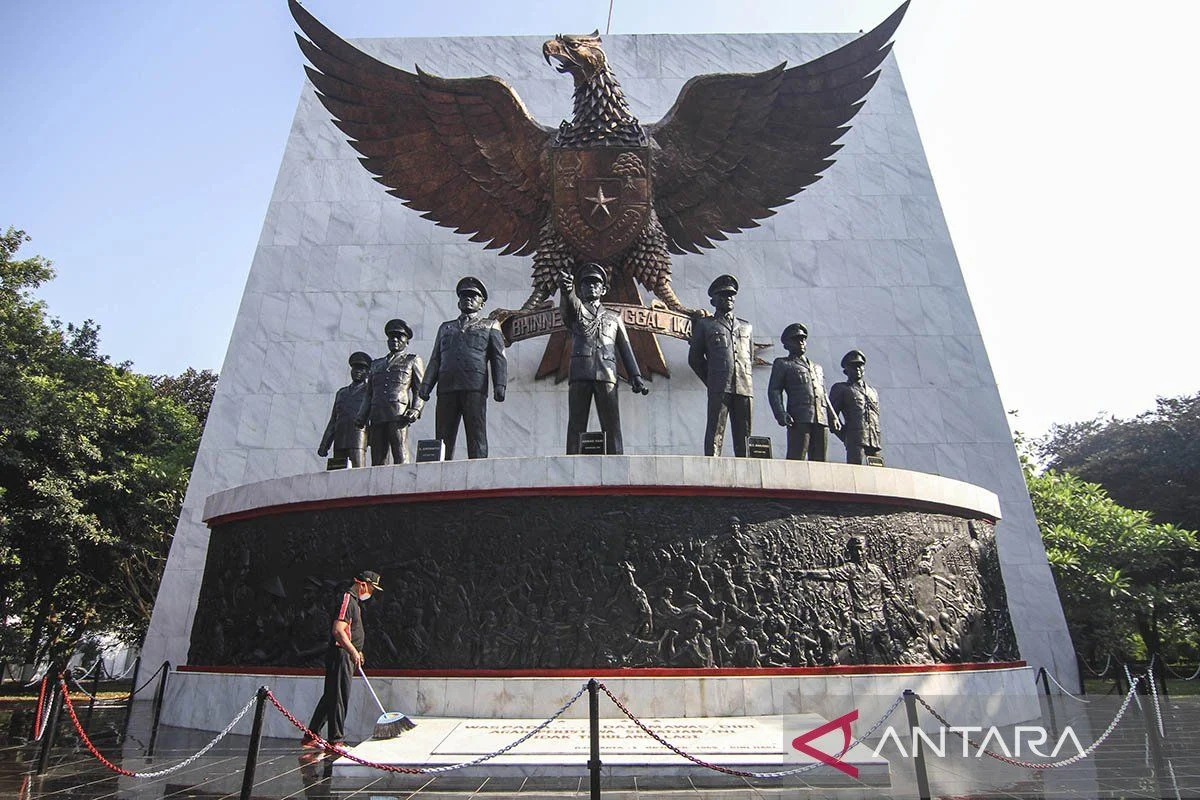
The trajectory of the PKI reached a violent, cataclysmic conclusion with the events of the night of September 30, 1965. A group of military officers, claiming to act to prevent a coup by a "Council of Generals," kidnapped and murdered six top Army generals. The bodies were dumped in an area known as Lubang Buaya.
The aftermath of this event was swift and devastating. Major General Soeharto emerged as the key figure in the counter-operation, moving to stabilize the situation and consolidate control. He systematically blamed the PKI for the killings, igniting a wave of mass anti-communist purges across the country. Between late 1965 and 1966, an estimated 500,000 to one million people—including PKI members, suspected sympathizers, and their families—were killed in one of the 20th century’s most significant acts of mass violence.
Legal Dissolution and Historical Interpretations
On March 12, 1966, Soeharto issued a decree officially banning the PKI. This was subsequently codified into law via MPRS Decree No. XXV/1966, which prohibited the party and the dissemination of communist, Marxist, and Leninist ideologies. This decree remains in effect to this day, serving as the legal bedrock for the state’s stance on communism.
In the decades since, the historiography of the 1965 events has remained a subject of intense debate. While the "New Order" government maintained a single narrative emphasizing the PKI’s treachery, modern historical scholarship—utilizing declassified archives from the United States, Japan, and the domestic records held by the National Archives of the Republic of Indonesia (ANRI)—suggests a much more complex web of actors, including international Cold War interests and internal military rivalries.
The Legacy of a Fragmented Past
The implications of the PKI’s dissolution extend far beyond the immediate political purge. The event effectively ended the parliamentary democracy experiment and ushered in the 32-year authoritarian rule of the New Order under Soeharto. Furthermore, the human rights violations committed during 1965–1966—including extrajudicial killings, mass detention, and forced disappearances—remain a sensitive issue in Indonesian national discourse.
Today, the PKI is no longer a political actor, yet it remains a central, albeit polarizing, topic in historical studies. Institutions like the National Commission on Human Rights (Komnas HAM) have documented the abuses of the era, advocating for a broader reconciliation process. As Indonesia continues to mature as a democracy, the effort to reconcile the official historical narrative with the lived experiences of survivors and the findings of rigorous academic research remains an ongoing process, essential for the nation to fully grapple with its complex and often turbulent 20th-century history.