The landscape of the global electric vehicle (EV) market is poised for a significant shift as BYD, the world’s leading manufacturer of new energy vehicles, prepares to launch the second generation of its highly successful Seagull hatchback. Recent official design sketches released by the company indicate a departure from the compact, entry-level aesthetics of the current model toward a more aggressive, spacious, and technologically advanced vehicle. Known in various markets under names such as the "Great Seagull" or "Atto 1," this next-generation model represents a strategic effort by BYD to capture a larger segment of the global demographic that demands affordability without sacrificing space or modern design.
Evolution of the BYD Seagull Lineup
The original BYD Seagull debuted as a revelation in the budget-friendly EV segment. By leveraging BYD’s proprietary blade battery technology and vertical integration, the company was able to offer a vehicle at a price point that decimated the competition in China and emerged as a top-selling model in international markets. However, market feedback suggested that while the first generation excelled in efficiency and urban maneuverability, it was somewhat limited by its compact dimensions.
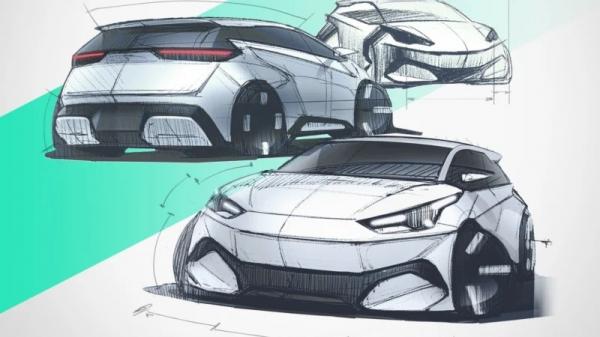
The revelation of the second-generation sketches, shared by Zhang Zhuo, general manager of the Ocean series sales division, confirms that BYD is addressing these limitations directly. The transition from the "Seagull" to the "Great Seagull" nomenclature is not merely a marketing pivot; it is a structural redesign. The new sketches reveal a vehicle that retains the hatchback silhouette but incorporates more pronounced physical proportions. This suggests that the second generation will likely sit on an updated platform designed to maximize interior volume, addressing the primary consumer demand for a more practical family vehicle.
A Radical Design Language Shift
The visual language of the upcoming model is perhaps its most striking feature. Where the current Seagull utilizes soft, rounded lines intended to appeal to a younger, urban audience, the second-generation sketches depict a vehicle characterized by sharp, angular, and aggressive design choices.
The front fascia is dominated by what appear to be trident-shaped headlamps, a design element that gives the vehicle a more authoritative road presence. The body panels feature deep, sculpted character lines that imply enhanced aerodynamics—a critical factor in extending the range of an electric vehicle. The wheel arches have been widened significantly, housing 16-inch wheels with a distinct eight-spoke design. This adjustment, combined with a lower beltline, suggests a vehicle that is not only physically larger but also sits lower to the ground, potentially offering improved handling and a more stable center of gravity compared to its predecessor.
At the rear, the design team has opted for a slim, continuous light bar that stretches across the width of the vehicle, a signature look for modern high-end EVs. This minimalist approach serves to elongate the appearance of the car, reinforcing the impression that the second-generation model is significantly larger than the original iteration.
Strategic Market Positioning and Global Implications
The decision to upscale the Seagull is a calculated move in the context of the global automotive trade. As BYD faces increasing scrutiny and protectionist tariffs in markets like the European Union and North America, its strategy is shifting toward providing more "value-for-size" products. By offering a larger, more versatile hatchback, BYD can position itself as a direct competitor to traditional internal combustion engine (ICE) hatchbacks that have historically dominated the B-segment in Europe and parts of Asia.

From a technical perspective, the expansion of the interior space implies a new chassis configuration. BYD’s R&D division has likely prioritized modularity, allowing for the integration of larger battery packs without encroaching on passenger legroom or cargo capacity. Given that the current Seagull already utilizes BYD’s sophisticated LFP (Lithium Iron Phosphate) Blade Battery, the second generation is expected to continue this trend, offering improved energy density and faster charging capabilities.
Chronology and Expected Timeline
The development of the second-generation Seagull follows a rapid development cycle characteristic of the Chinese EV industry. The initial Seagull (Dolphin Mini) became a global hit in 2023 and 2024. Throughout 2025, industry analysts observed a decline in the growth rate of compact EVs, leading to speculation that manufacturers would pivot toward "larger compacts"—vehicles that offer the parking ease of a city car with the interior comfort of a subcompact SUV.
By mid-2025, Zhang Zhuo began signaling the arrival of the "Great Seagull," a project aimed at bridging the gap between the entry-level Seagull and the more premium Dolphin. The release of the official sketches in late 2026 marks the final stage of the pre-production phase. Market analysts expect an official physical unveiling at a major international auto show in late 2026 or early 2027, with domestic sales in China commencing shortly thereafter. International availability, including in key markets like Indonesia, is expected to follow within 6 to 12 months of the domestic launch.
Analysis of Technical and Economic Impact
The implications of this launch extend beyond aesthetic changes. For the consumer, the primary benefit of the second-generation Seagull is the promise of a more "complete" vehicle. Many budget-conscious buyers in emerging markets like Indonesia, where the BYD brand is expanding rapidly, often view compact hatchbacks as secondary vehicles. By increasing the dimensions and enhancing the interior design, BYD is positioning the new Seagull to serve as a primary vehicle for families.

Economically, the scale at which BYD operates allows it to absorb the costs of this platform overhaul while maintaining a competitive price. Because the company manufactures its own semiconductors, batteries, and motors, the "Great Seagull" will likely maintain a price advantage over Western competitors, even as its material quality and size increase. This vertical integration is the primary driver of BYD’s success, and the new model serves as a case study in how to optimize product lineups for diverse market demands.
Regulatory and Environmental Considerations
As urban centers globally implement stricter emissions regulations and low-emission zones, the demand for affordable, electric hatchbacks is surging. The second-generation Seagull is designed to meet these urban requirements perfectly. Its compact footprint—even with the increased size—remains suitable for dense urban environments, while the improved range efficiency makes it viable for suburban commuting.
Furthermore, the shift toward a more modern, aggressive design suggests that BYD is attempting to shed the "budget car" stigma that often accompanies entry-level EVs. By styling the vehicle with elements typically reserved for higher-tier models, BYD is appealing to a broader demographic that values status and aesthetics alongside economic and environmental considerations.
Future Outlook and Conclusion
The unveiling of the second-generation BYD Seagull sketches confirms that the company is not resting on its laurels. By listening to consumer feedback regarding interior space and aesthetic appeal, BYD is demonstrating a level of agility that many legacy automakers struggle to match. As the automotive industry transitions away from fossil fuels, the success of the EV transition will largely depend on the availability of vehicles that are not only sustainable but also practical and desirable.

With the "Great Seagull," BYD appears to be hitting the "sweet spot" of the market: a vehicle large enough to be functional, stylish enough to be desirable, and technologically advanced enough to be future-proof. Whether this model will repeat the global sales success of its predecessor remains to be seen, but the initial response to the design sketches suggests that the company is on the right track. As more technical specifications—such as battery capacity, range, and infotainment features—are revealed in the coming months, the industry will be watching closely to see if BYD can once again redefine the standards of the affordable EV segment.
In summary, the transition from the first to the second generation of the Seagull signifies a maturation of the electric vehicle market. It reflects a shift from the era of "first-generation adoption" to "mainstream integration," where the primary drivers of purchase are no longer just the novelty of electricity, but the inherent quality, utility, and design of the vehicle itself. BYD’s latest move is a clear signal that the company intends to dominate this new phase of the global automotive evolution.