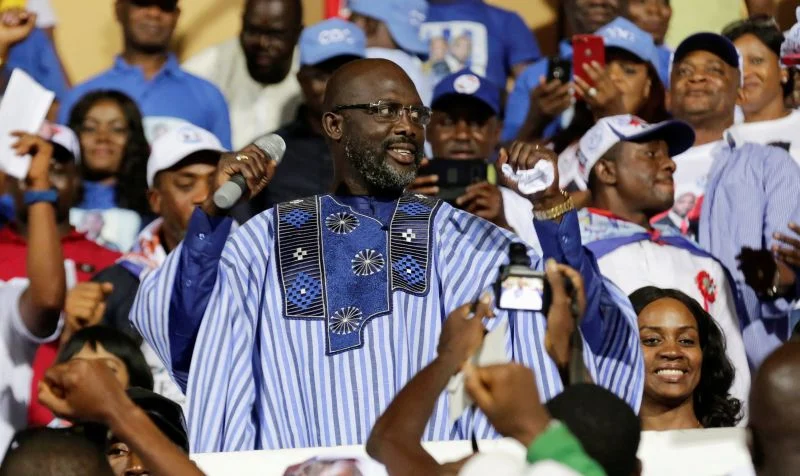
The transition from the pinnacle of professional sports to the highest office of state is a rare trajectory in modern history, yet few have achieved it with the symbolic weight and global resonance of George Tawlon Manneh Oppong Ousman Weah. Long before he assumed the presidency of Liberia in December 2017, Weah was a household name across the globe, celebrated as one of the greatest African footballers of all time and the only African player to win both the FIFA World Player of the Year and the Ballon d’Or. His journey from the sandy fields of Monrovia to the elite stadiums of Europe, and ultimately to the Executive Mansion in Monrovia, stands as a testament to exceptional athletic prowess, relentless perseverance, and an enduring commitment to public service in a nation scarred by decades of civil conflict.
Main Facts and Historical Context
Born on October 1, 1966, in Monrovia, the capital of Liberia, George Weah grew up in the Clara Town neighborhood during a period when the nation was relatively stable compared to the tumultuous decades that would follow. Raised largely by his grandmother, Emma Klonh Wleh, in a modest environment, Weah discovered his passion for football at an early age. He spent countless hours refining his technical skills on makeshift pitches, developing a rare combination of physical strength, blistering pace, and exceptional ball control that would eventually captivate the international sporting community.
Liberia’s modern political history is deeply intertwined with Weah’s life story. The West African nation, founded by freed American and Caribbean slaves in the 19th century, experienced profound political upheaval in the late 20th century. The overthrow of President William Tolbert in 1980 by Samuel Doe initiated a period of military rule, culminating in two devastating civil wars from 1989 to 2003. These conflicts resulted in the loss of hundreds of thousands of lives, the displacement of millions, and the near-total destruction of the country’s infrastructure. While Weah was achieving fame and fortune in Europe, his homeland was suffering immense trauma. It was this deep-seated patriotism and desire to heal his fractured nation that eventually drew Weah away from the glittering lights of European football and into the murky, high-stakes arena of Liberian politics.
Early Chronology and Domestic Rise
Weah’s football career began in the local leagues of Liberia, where his undeniable talent quickly caught the attention of domestic scouts. He played for several Liberian clubs, including Invincible Eleven, Mighty Barolle, Bongrange Bonguine, and Young Survivors from Clara Town. During his teenage years, his leadership qualities emerged organically. Notably, he led Young Survivors—a team that famously operated without a formal coach—to promotion into the nation’s top-tier division.
His performances in the Liberian domestic league showcased a raw, unpolished talent that demanded a larger stage. In 1987, Weah made his first major international move, signing a three-contract with Tonnerre Yaoundé, a prominent club in Cameroon. The transition from Liberian football to the Cameroonian top flight was seamless for the young striker. In his debut season, he played a pivotal role in helping Tonnerre secure the Cameroonian league title. His ability to adapt rapidly to higher levels of competition and his lethal instinct in front of goal caught the discerning eye of French talent scouts, setting the stage for his migration to European football.
The European Conquest: Monaco and Paris Saint-Germain
In 1988, at the age of 22, Weah made the monumental leap to European football, signing with AS Monaco, then competing in the French Division 1. Under the tutelage of renowned manager Arsène Wenger, who would become a lifelong mentor and father figure to Weah, the young Liberian striker flourished. Wenger meticulously worked with Weah to harness his immense physical gifts, refining his positional awareness and tactical discipline.
During his five-season tenure with Monaco from 1987 to 1992, Weah established himself as one of the most lethal and feared forwards in French football. He netted 57 goals across all competitions, terrorizing opposing defenses with his long, powerful strides and clinical finishing. One of the defining moments of his time at Monaco came in 1991, when he helped the club capture the Coupe de France (French Cup). His stellar performances on the pitch earned him the prestigious African Footballer of the Year award for the first time in 1989, marking the official arrival of African football talent on the global stage.
Seeking new challenges and greater success, Weah transferred to Paris Saint-Germain (PSG) in 1992. In the French capital, his career reached new heights. At PSG, Weah became a global superstar, enchanting fans at the Parc des Princes with his breathtaking solo runs and unforgettable goals. Most notably, during the 1994–1995 UEFA Champions League campaign, Weah finished as the tournament’s top scorer, guiding PSG to the semi-finals, where they were narrowly defeated by AC Milan. His contributions helped PSG capture the French Division 1 title in 1994 and the Coupe de France in 1993 and 1995. Across 123 appearances for the Parisian club, Weah tallied 37 goals and numerous assists, cementing his legacy as a French football legend.
The Zenith of Athletic Achievement: AC Milan and Global Glory
In the summer of 1995, Italian giants AC Milan secured Weah’s signature, bringing him to the high-intensity and tactically rigorous environment of the Serie A. It was in Milan that Weah achieved the absolute pinnacle of his athletic career. Donning the famous red and black jersey, he instantly adapted to Italian football, forming a formidable partnership in the Rossoneri attack.
During his initial stint with AC Milan from 1995 to 2000, Weah played 114 matches and scored 51 goals. He led Milan to Serie A titles in the 1995–1996 and 1998–1999 seasons. His crowning personal achievement occurred in late 1995 when he was awarded the FIFA World Player of the Year, the Ballon d’Or, and his third African Footballer of the Year award. To this day, Weah remains the only African player in history to win the prestigious Ballon d’Or and the FIFA World Player of the Year accolades in the same year.
Among his most iconic moments in Italy was the legendary coast-to-coast goal he scored against Hellas Verona on September 8, 1996. Receiving the ball deep inside his own penalty area from a corner kick, Weah embarked on an astonishing 85-yard run, leaving a trail of bewildered defenders in his wake before slotting the ball past the opposing goalkeeper. This masterpiece of individual skill is widely regarded as one of the greatest goals in the history of association football.
Later Playing Career and Transition to Humanitarian Work
Following his successful spell in Italy, Weah experienced brief stints in the English Premier League with Chelsea and Manchester City, followed by a period with Marseille in France and Al-Jazira in the United Arab Emirates, before officially hanging up his boots in 2003.
Even while playing at the highest levels of European football, Weah never detached himself from the realities of his homeland. Throughout the 1990s and early 2000s, while Liberia was ravaged by civil war, Weah utilized his personal wealth and global platform to finance the Liberian national football team (the Lone Stars), paying for equipment, travel expenses, and player bonuses out of pocket. Furthermore, he served as a UNICEF Goodwill Ambassador, utilizing his immense popularity to promote children’s rights, education, and health initiatives across war-torn regions in Africa. This deep involvement in social welfare laid the groundwork for his eventual transition into politics.
Political Career: From Opposition to the Presidency
Following the conclusion of the Second Liberian Civil War in 2003 and the departure of President Charles Taylor, Weah made the momentous decision to formally enter politics. In 2005, he announced his candidacy for the presidency of Liberia, running under the banner of the Congress for Democratic Change (CDC).
Weah’s initial political foray was met with skepticism from the traditional political establishment, who questioned his lack of formal education and political experience. Despite winning the first round of the 2005 presidential election, Weah was ultimately defeated in the runoff election by Ellen Johnson Sirleaf, a Harvard-trained economist who would become Africa’s first elected female head of state. Rather than retreating from public life, Weah demonstrated political maturity by returning to school. He pursued formal education in the United States, earning a high school diploma and subsequently degrees in business administration from DeVry University and a master’s degree in public administration from Keller Graduate School of Management.
Over the next decade, Weah meticulously built his political credentials. He served as a Senator for Montserrado County from 2014 to 2018, using his legislative platform to advocate for infrastructural development, youth empowerment, and educational reform. When President Sirleaf’s second term concluded in 2017, Weah positioned himself as the definitive candidate for change, running on a populist platform centered on economic revitalization, job creation, and the fight against corruption.
In the October 2017 presidential election, competing alongside his vice-presidential running mate Jewel Taylor (former wife of Charles Taylor), Weah led the initial polls. In the subsequent December 2017 runoff election, Weah secured a decisive victory against the incumbent Vice President Joseph Boakai, capturing over 61% of the vote. On January 22, 2018, George Tawlon Manneh Oppong Ousman Weah was sworn in as the 25th President of the Republic of Liberia, marking the country’s first peaceful and democratic transfer of power in over seven decades.
Official Responses and Global Reactions
The election of George Weah as president sent shockwaves of inspiration across the African continent and the global sports community. International leaders, humanitarian organizations, and football governing bodies lauded the peaceful transition of power in a nation that had struggled so profoundly with democratic governance.
FIFA President Gianni Infantino issued a statement praising Weah’s historic victory, noting that the football world celebrated the triumph of one of its most emblematic ambassadors. Former managers, including Arsène Wenger, expressed immense pride in Weah’s achievements, emphasizing that the intelligence and discipline that made him a world-class athlete were the same qualities that propelled him to national leadership.
Domestically, reactions were mixed yet predominantly hopeful. Supporters viewed Weah as a man of the people—a national hero who understood the plight of the common citizen because he had risen from the exact same impoverished neighborhoods. Conversely, political opponents and international financial institutions closely monitored his administration, emphasizing the monumental economic and structural challenges facing the country, including widespread poverty, hyperinflation, and the lingering scars of the Ebola epidemic and civil wars.
Broader Impact and Socio-Economic Implications
Weah’s presidency marked a profound turning point for Liberia’s political culture, proving that a leader could emerge from outside the traditional political elite and ascend to the highest office through democratic means. His ascent inspired a new generation of African youth, athletes, and civil society leaders to engage actively in the political processes of their respective nations.
However, the implications of Weah’s presidency extended far beyond symbolism. Taking office during a period of acute economic hardship, his administration faced intense scrutiny regarding governance, fiscal transparency, and public service delivery. Economists and policy analysts pointed out that while Weah possessed unmatched popularity and goodwill, managing a sovereign state required complex macroeconomic strategies, foreign investment attraction, and institutional reform.
Throughout his tenure, Weah’s government focused heavily on infrastructure development, constructing roads, hospitals, and educational facilities to connect rural communities to economic hubs. Programs aimed at improving youth literacy, reducing maternal mortality, and stabilizing the national currency became central pillars of his policy agenda. Despite facing criticism regarding governance challenges and economic headwinds, Weah’s administration maintained a commitment to democratic principles, freedom of the press, and the rule of law.
Conclusion
The journey of George Weah—from kicking a makeshift ball in the dusty streets of Clara Town to hoisting the Ballon d’Or in Paris and Milan, and finally taking the oath of office as President of Liberia—remains one of the most remarkable human stories of the modern era. It bridges the worlds of high-performance sport and statecraft, illustrating that extraordinary talent, resilience, and an unwavering commitment to one’s people can transcend the boundaries of sport. As both a sporting legend and a former head of state, Weah’s legacy is permanently etched into the global consciousness as a symbol of hope, perseverance, and the transformative power of ambition.